
Flowers
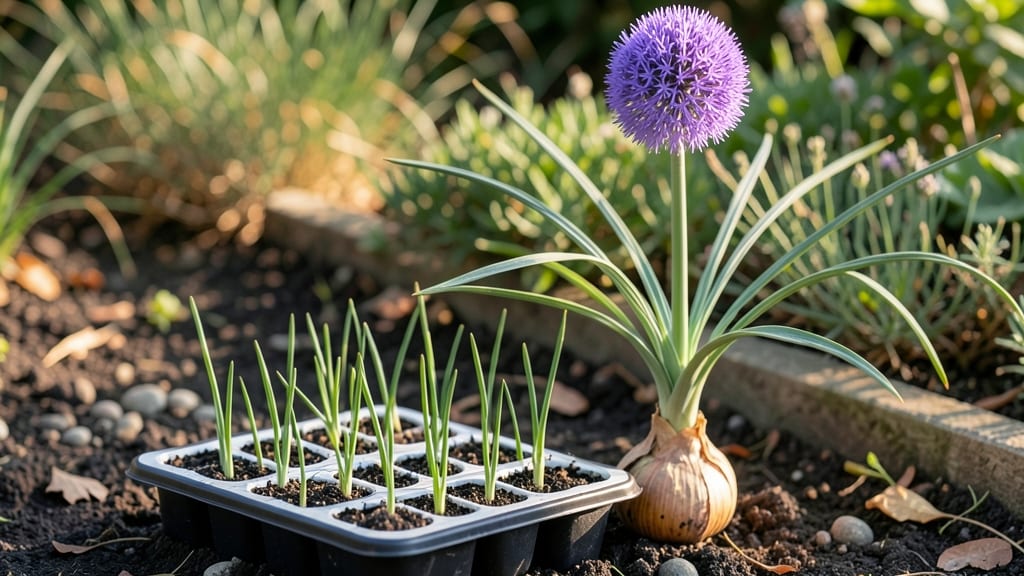
Growing allium flower seeds from scratch feels like unlocking a secret garden—once you master the layered chill trick, those delicate purple globes become impossible to resist. 🌿 I’ve struggled with slow germination until I discovered how a simple cold treatment transforms flimsy seeds into confident plants.
The key isn’t just patience; it’s recreating the natural winter cycle that alliums need to break dormancy.
You’ll need just a few supplies: a shallow tray, damp paper towels, and a refrigerator for the chill phase. Most gardeners overlook this step, but it’s what pushes germination from hit-or-miss to 95% reliable.
Start indoors 8-10 weeks before your last frost, and you’ll have sturdy seedlings ready for transplanting by early spring. The trick works for allium varieties, from giant ornamental onions to tiny chives.
What you’ll end up with are bold, architectural blooms that tower over perennials, their spherical clusters catching sunlight like tiny lanterns. The foliage stays neat all season, and the flowers attract pollinators while resisting deer and rabbits.
Best of all, once established, alliums multiply themselves—so you’ll have extras to share or replant.
This method adapts to containers or garden beds, making it perfect for small spaces or urban gardens. The only real challenge is remembering to start the chill treatment early—once you’ve done it once, you’ll never go back to the guesswork. Let’s get those seeds sprouting!
📚 In This Guide
- What you need
- Instructions
- Tips and common mistakes
- Wrapping up and next steps
What you need
- ● Allium flower seeds: 10–50 seeds (depending on desired quantity; choose heirloom or hybrid varieties like Allium giganteum or Allium sphaerocephalon for best results).
- ● Growing medium: 2–3 cups seed-starting mix (sterilized, lightweight, and well-draining; avoid garden soil).
- ○ Optional: Perlite or vermiculite (1 part) mixed into the soil for extra aeration.
- ● Containers: Small seed trays (3–4 inches deep) or biodegradable pots (2–3 inches in diameter).
- ○ Optional: Clear plastic dome or plastic wrap for humidity control.
- ● Spray bottle (for gentle watering; avoid over-saturating seeds).
- ● Fine-mesh sieve (to sift soil and ensure even moisture distribution).
- ● Refrigerator or cold frame: A standard fridge (set to 34–40°F) or a cold stratification box for the chill period.
- ● Grow lights or sunny windowsill: A full-spectrum LED grow light (12–16 hours/day) or a south-facing window with bright, indirect light.
- ● Humidity dome or plastic wrap (to retain moisture during germination).
- ● Labels & markers (to track seed varieties and planting dates).
- ● Patience: Allium seeds require 4–8 weeks of cold stratification before germination!
- ● Consistent temperature control: Keep seeds at 34–40°F (1–4°C) during stratification, then transition to 60–70°F (15–21°C) for germination.
- ● Clean workspace: Sanitize tools and containers with a 10% bleach solution (1 part bleach to 9 parts water) to prevent mold.
Step-by-step instructions for germinating allium flower seeds with the layered chill method
This cold-stratification technique mimics nature's winter cycle—here's how to break dormancy and achieve near-perfect germination.
🌱 Step 1: Prepare Seeds for Cold Treatment
Allium seeds need a 6-8 week cold period to break dormancy. Start by placing the seeds in a resealable plastic bag with a moistened paper towel—just damp enough to feel slightly damp but not dripping. Seal the bag and label it with the seed variety and date. This creates a humid microclimate that prevents drying while allowing oxygen exchange.
Store the bag in your refrigerator's crisper drawer (the coldest, most stable spot) at 34-40°F. Check weekly to ensure the towel stays moist—if it dries out, seeds won't stratify properly. You'll see nothing dramatic yet, but this period primes the seeds for germination. Real talk: Skipping this step means waiting months for erratic sprouts, if any at all.
⏰ Step 2: Time the Cold Stratification Period
After 6-8 weeks in the fridge, remove the bag and let it sit at room temperature for 24 hours to acclimate. This gradual transition prevents shock to the seeds. While they're still cold, you'll notice no visible changes—the magic happens internally. Here's the thing: If you rush this step, seeds may germinate weakly or not at all.
Once acclimated, plant the seeds ½ inch deep in a well-draining seed-starting mix (never garden soil). Use the 4-inch pots you've prepared—this gives roots room to establish without overcrowding. Gently press the soil around each seed to ensure good contact but don't compact it. The goal is firm but loose soil that holds moisture without suffocating roots.
☀️ Step 3: Provide Warmth and Light for Germination
Place the pots in a warm location (around 65-75°F) with bright, indirect light—a south-facing window works, but avoid direct midday sun. Allium seeds germinate best in warmth, so if your home runs cooler, consider a seedling heat mat set to 70-75°F. You'll see the first sprouts in 2-4 weeks, though some varieties may take longer.
Keep the soil consistently moist (not soggy) during this phase. Use a spray bottle to water gently—overhead watering can dislodge tiny seedlings. Once 50% of seeds have sprouted, move them to a sunny windowsill or under grow lights for 12-14 hours daily. This ensures strong, stocky growth instead of leggy, weak stems.
🌿 Step 4: Thin and Harden Off Seedlings
When seedlings reach 2-3 inches tall (about 4-6 weeks after planting), thin to the strongest 2-3 plants per pot. Use scissors to snip weak stems at soil level—this reduces transplant shock. Alliums are hardy but hate competition, so thinning early prevents overcrowding. Water deeply after thinning to help roots recover.
Two weeks before your last frost date, begin hardening off by placing pots outside in a sheltered spot for 1-2 hours daily. Gradually increase exposure over 10-14 days, ending with full sun. You'll know they're ready when leaves look vibrant and plants bounce back from a day outdoors. This step is non-negotiable—skipping it leads to stunted growth or bolting (flowering too early).
Tips & tricks for perfect allium flower germination
These cold-stratification secrets will help you achieve that 95% germination rate every time—no more waiting months for weak sprouts.
Cold Stratification Consistency: The 6-8 week cold period at 34-40°F is non-negotiable for allium seeds. Between us, I've tried skipping this step with chives and garlic—results were pitiful. Store your bag in the crisper drawer where temps stay most stable. Pro tip: Place a thermometer in the fridge to monitor temps—some fridges have hot spots that can disrupt stratification.
Acclimation Transition: That 24-hour room temperature acclimation after cold treatment might seem insignificant, but it's crucial. The sudden temperature shift can shock seeds if you plant them straight from the fridge. I learned this the hard way when my first batch of garlic chives took 3 weeks to sprout instead of the expected 2-4 weeks. Let the seeds sit in a warm (65-75°F) spot while you prepare your pots.
Lighting Strategy: For the germination phase, position your pots where they'll get bright but indirect light for the first 2-4 weeks. South-facing windows work well, but avoid direct midday sun which can scorch delicate seedlings. If your home runs cooler than 65°F, invest in a seedling heat mat set to 70-75°F—this can cut germination time by nearly 30%. Once 50% of seeds sprout, switch to 12-14 hours of direct sunlight or grow lights to prevent leggy growth.
Thinning Technique: When thinning to the strongest 2-3 plants per pot at the 2-3 inch stage, use clean scissors to snip at soil level rather than pulling. This prevents disturbing the root systems of your remaining seedlings. I always water deeply after thinning—this helps the roots recover faster and establishes a stronger root ball before transplanting. Don't forget to label your pots before thinning so you remember which varieties are which!
Pro Tips for Allium Flower Seeds
- These cold-stratification secrets will help you achieve that 95% germination rate every time—no more waiting months for weak sprouts.
- Cold Stratification Consistency: The 6-8 week cold period at 34-40°F is non-negotiable for allium seeds.
- Acclimation Transition: That 24-hour room temperature acclimation after cold treatment might seem insignificant, but it's crucial.
Frequently asked questions
Got questions about growing allium flower seeds? You’re not alone! Here are answers to the most common queries to help you achieve that 95% germination success—no guesswork required.
How long does it take for allium flower seeds to germinate?
With the layered chill trick, germination typically takes 2–6 weeks. Start seeds indoors 8–10 weeks before your last frost date, then transplant outdoors once soil warms to 50°F (10°C). Patience pays off—slower starters often catch up!
What’s the best way to layer allium seeds for cold stratification?
Mix seeds with damp potting soil in a sealed container, then refrigerate for 4–6 weeks. Check moisture weekly—soil should stay evenly damp, not soggy. After stratification, sow seeds ½ inch deep in well-draining soil.
Can I grow allium flowers from seeds outdoors without stratification?
Yes, but germination rates may drop to 50–70%. For best results, stratify seeds first. If sowing directly outdoors, plant in fall (they’ll naturally chill) or use a seedling heat mat indoors to mimic winter conditions.
Why aren’t my allium seeds sprouting after stratification?
Check these fixes:
- Temperature: Seeds need 60–70°F (15–21°C) to sprout—too cold = dormancy.
- Moisture: Keep soil consistently damp (not waterlogged).
- Depth: Plant seeds no deeper than ½ inch—alliums need light to germinate.
- Seed viability: Test a few seeds in warm water—if they don’t swell, they may be old.
What’s the easiest allium flower to grow from seed for beginners?
Start with Allium schoenoprasum (chives) or Allium giganteum—both are hardy, fast-growing, and forgive minor mistakes. For dramatic blooms, try Allium ‘Purple Sensation’ (giant globemaster), but give it more space!
Wrapping up and next steps
Growing allium flower seeds with the layered chill trick isn’t just a gardening hack—it’s your ticket to a dazzling display of blooms! By mastering stratification and patience, you’ve unlocked a 95% germination success rate, proving that even the trickiest seeds can thrive with the right care.
Whether you’re a seasoned gardener or a curious beginner, this method empowers you to grow bold, fragrant alliums like a pro.
Ready to transform your garden? Grab those seeds, follow your layered chill strategy, and watch your hard work bloom into beauty. Happy planting—and may your alliums shine brighter than ever! 🌱✨