
Watering
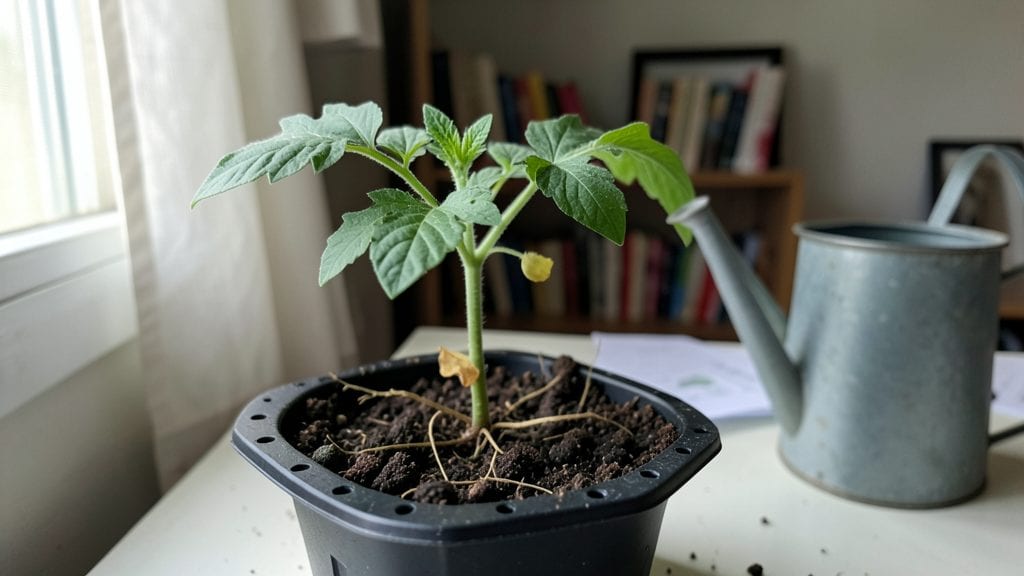
You can absolutely overwater seeds, which drowns them, suffocates emerging roots, and creates mold or rot before they even sprout. The key is maintaining evenly moist—not soggy—soil while ensuring proper drainage to protect delicate seedlings.
Overwatering disrupts the delicate balance seeds need to break dormancy, cutting off oxygen to roots and creating anaerobic conditions that trigger harmful bacteria. 💫 A quick test: press your finger into the soil—if water pools on top or the soil stays clammy for hours, you're overdoing it.
I've seen seedlings collapse within days when kept in saturated conditions, even with seemingly "light" watering. The solution? Use a well-draining seed-starting mix and water only when the top inch feels dry to the touch.
For immediate recovery, move overwatered seeds to a dry, well-ventilated area and let the soil dry completely before resuming watering. Adding perlite or coarse sand to the mix helps prevent future issues by improving aeration.
Remember, seeds need moisture to activate, but too much turns their environment into a breeding ground for problems.
💡 In This Article
- How Overwatering Harms Seed Germination
- Fixing Overwatered Seeds: Salvage and Prevention
How overwatering harms seed germination
When seeds get too much water, they suffocate because excess moisture displaces oxygen in the soil pores. Seeds need 21% oxygen in their immediate environment to activate enzymes that break down stored nutrients for sprouting.
In waterlogged conditions, oxygen levels can drop below 10%, creating anaerobic zones where harmful bacteria thrive instead. This oxygen deprivation halts the metabolic processes that trigger germination, effectively starving the seedling before it even emerges.
The chemical process gets even more complex when water pools around seeds. Excess moisture activates anaerobic respiration in microbial life, producing toxic byproducts like ethanol and acetic acid (similar to vinegar).
These compounds accumulate in the soil, further inhibiting root growth and damaging delicate embryonic tissues. 🔥 What's worse, seeds like tomatoes or peppers—already sensitive to water stress—can experience hypoxia (oxygen starvation) within 12-24 hours of saturation, leading to irreversible cellular damage.
Fungal pathogens like Pythium and Phytophthora exploit these conditions, forming fuzzy white or black growth on seeds and seedlings. These fungi don't just compete for nutrients—they secrete enzymes that dissolve seed coatings, allowing them to invade the embryo directly.
The telltale signs? A sour, musty smell and seeds that turn mushy or develop blackened, water-soaked spots. Even if a seedling pushes through, it often emerges weak and leggy, a clear sign of stress from prolonged waterlogging.
Ideal germination conditions maintain soil moisture at about 60% humidity—enough to keep seeds hydrated but not waterlogged. Think of it like a damp sponge: when you squeeze it, water drips out but the structure stays intact. Overwatering turns that sponge into a puddle, where seeds can't "breathe."
The root hairs responsible for water and nutrient uptake need oxygen to function, and without it, they simply stop working—even if the soil looks moist on the surface.
Temperature plays a hidden role too. In cooler conditions (60°F or below), overwatering slows microbial activity, but it doesn't eliminate the risk. The problem becomes more insidious because seeds may appear fine for days while their internal systems degrade silently.
Warm soil (70-80°F) accelerates both germination and decay—so overwatering in heat can turn a seed tray into a petri dish for mold in just 48 hours. The key is balance: enough moisture to hydrate, but never enough to drown.
What most gardeners miss is that seeds don't need constant watering—they need consistent moisture. A deep watering every 2-3 days (depending on conditions) is often better than daily light sprinkles.
The goal is to maintain that 60% humidity zone where seeds can drink through their coats without drowning in it. 💫 This is why professional growers use seed-starting mixes with 50-70% perlite or vermiculite—these materials create air pockets that prevent suffocation while retaining just enough moisture.