
Propagation
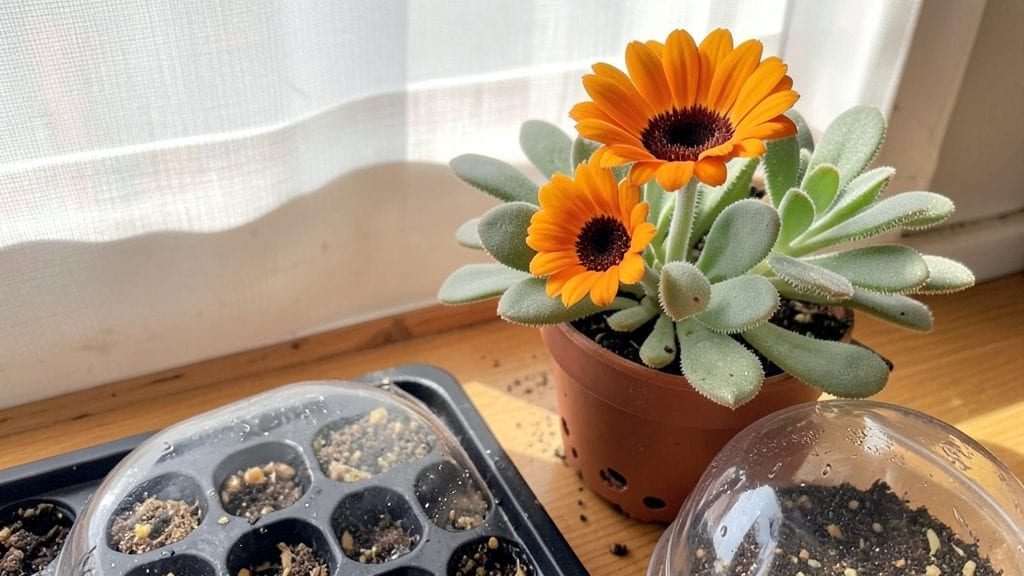
Germinating gazania seeds starts with a damp, chilly surprise—these finicky seeds need a moist cold spell to wake up. 🌱 I learned the hard way that rushing them with heat leads to rot, not growth.
The secret lies in mimicking their natural winter dormancy, where cool temperatures and consistent moisture trigger those stubborn little seeds to finally crack open.
You’ll need just three things: a shallow tray, a mix of peat moss and perlite for airflow, and a refrigerator shelf. Keep the soil damp (not soggy) and patient—germination can take 3-6 weeks, with some seeds waiting even longer.
The key is consistency: check moisture weekly without disturbing the seeds, and avoid letting them dry out or bake under grow lights too soon.
Once those first pale green shoots appear, you’ll know you’ve done it right. They’ll be delicate at first, so keep them under bright, indirect light until they’ve got two true leaves.
That’s when you can gradually introduce them to sunlight, hardening them off for their big move outdoors in late spring.
This method works for both annual and perennial gazanias, though perennials may take longer to bloom their first year. The payoff? A garden bursting with daisy-like blooms that last from morning sun until afternoon shade—without the fuss of buying transplants every season.
📚 In This Guide
- What you need
- Instructions
- Tips and common mistakes
- Wrapping up and next steps
What you need
- ● Gazania seeds: Fresh, high-quality seeds (aim for 10–20 seeds per container for optimal spacing).
- ● Seed-starting mix: Lightweight, sterile peat-based or coco coir blend (avoid garden soil—it’s too dense!). 1–2 gallons per container.
- ● Containers: Small seed trays (2–3 inches deep) OR
- ● Plastic nursery pots (4–6 inches in diameter) with drainage holes.
- ● Misting bottle or spray nozzle: For gentle, even moisture (a 16 oz. spray bottle works perfectly).
- ● Plastic wrap or humidity dome: To retain moisture during germination (clear wrap or a clear plastic lid for trays).
- ○ Plastic bag (optional but helpful): A ziplock or gallon-sized bag for the cold-moist stratification step.
- ● Refrigerator: A cool (35–40°F) spot for the cold-moist trick (no freezer needed!).
- ● Grow lights or sunny windowsill: A south-facing window or LED grow light (12–14 hrs/day) for post-stratification growth.
- ● Pencil or toothpick: For gently pressing seeds into the soil (no need to bury them!).
- ○ Heating mat (optional): A seedling heat mat (55–65°F) to speed up germination after stratification.
- ● Fertilizer (weak): A balanced liquid fertilizer (5-5-5 or 10-10-10) diluted to ¼ strength for post-germination feeding.
- ● Labels & marker: To track seed varieties and planting dates.
- ● Tweezers: For delicate seed handling if they’re extra tiny.
Step-by-step instructions for germinating gazania seeds
Here's the foolproof cold-moist method I use every year to break gazania dormancy and get vibrant seedlings ready for spring.
🌱 Step 1: Prepare the Seeds and Moisture Medium
Gazania seeds need this special cold-moist treatment to simulate natural winter conditions. Start by placing the seeds in a small container with a damp paper towel—not soaking wet, just enough to feel moist when squeezed. I fold the towel loosely and place it in a sealed plastic bag with a tiny air gap.
The key here is maintaining consistent moisture without drowning the seeds. Check daily and mist lightly if the towel feels dry. Keep the container in your refrigerator's crisp drawer (around 35-40°F) for 4-6 weeks. You'll see slight swelling in the seeds after about 2 weeks—that's your signal the cold treatment is working.
💧 Step 2: Stratify and Monitor for Sprouting
After the cold treatment, transfer the moist towel (with seeds) to a warm, bright spot. I place mine on top of my refrigerator where it stays around 70°F with indirect light. Keep the towel consistently moist but never soggy—excess water will cause rot before germination.
Germination typically begins in 7-14 days. You'll notice tiny white roots first, followed by the seed coat splitting open. This is when you'll want to move to seed-starting mix. The cold-moist trick ensures higher germination rates than planting dry seeds directly in soil.
🪴 Step 3: Plant in Prepared Growing Medium
Once you see roots emerging, carefully transfer the seeds to your seed-starting mix in small containers. Plant them just below the surface—no deeper than 1/8 inch. I use 2-inch cells because gazania seedlings don't like being crowded.
After planting, water gently from the bottom to prevent disturbing the seeds. Place the containers in a warm spot with bright indirect light (like a south-facing window with sheer curtain). Keep the soil consistently moist—gazania seeds need steady moisture but will rot if waterlogged.
☀️ Step 4: Provide Optimal Light Conditions
When the first true leaves appear (about 2-3 weeks after planting), it's time to introduce more light. Move seedlings to a spot with 6-8 hours of direct sunlight daily. I supplement with a grow light if natural light is insufficient—gazania seedlings grow leggy quickly without enough light.
You'll know they're getting proper light when the leaves are bright green and compact. If they stretch toward the light with pale leaves, move them closer. Strong seedlings will have thick stems and leaves close together—this indicates they're ready for transplanting in 6-8 weeks.
⏰ Step 5: Harden Off Before Transplanting
Two weeks before your last frost date, begin hardening off the seedlings. Start by placing them outdoors in a shaded, sheltered spot for 1-2 hours the first day. Gradually increase their outdoor time by 1 hour daily until they can handle a full day outside.
Watch for signs of stress like wilting or yellowing leaves—these indicate they're not ready for full sun yet. Once they're acclimated, transplant to your garden with 12-18 inches between plants. The cold-moist trick ensures you'll have sturdy seedlings that bloom vibrantly all summer.
Tips & tricks for germinating gazania seeds
Here's what I've learned after perfecting this method over years of growing vibrant gazania blooms.
Moisture Balance: The damp paper towel should feel like a wrung-out sponge—squeeze it gently and it should hold its shape but not drip. Too wet and seeds will rot; too dry and they won't sprout. I double-check by pressing the towel between paper towels for 10 seconds—if moisture transfers, it's perfect. This consistent moisture during the 4-6 week cold treatment is what breaks dormancy.
Temperature Transition: The shift from 35-40°F in the fridge to 70°F on top of your refrigerator is crucial. Move the container to its warm spot gradually over 1-2 hours to avoid shocking the seeds. I place it in a plastic bag with a tiny opening to maintain humidity during this transition—this mimics natural spring conditions when gazanias would normally sprout.
Root Development Watch: Once you see those first white roots in 7-14 days, resist the urge to transplant immediately. Wait until you see the seed coat split open—this means the seedling has established a strong root system. I use a magnifying glass to check for this split, as it's the perfect signal to move to seed-starting mix. Planting too soon can damage delicate roots.
Light Strategy: Those 6-8 hours of direct sunlight in Step 4 are non-negotiable for compact, sturdy seedlings. If your windows don't provide enough light, invest in a basic grow light—gazania seedlings will stretch painfully without sufficient light. I place mine 6 inches above the seedlings for 12-14 hours daily until they're ready for transplanting in 6-8 weeks.
Pro Tips for Germinating Gazania Seeds
- Here's what I've learned after perfecting this method over years of growing vibrant gazania blooms.
- Moisture Balance: The damp paper towel should feel like a wrung-out sponge—squeeze it gently and it should hold its shape but not drip.
- Temperature Transition: The shift from 35-40°F in the fridge to 70°F on top of your refrigerator is crucial.
Frequently asked questions
How long does it take for gazania seeds to germinate?
With the cold-moist method, germination typically takes 2–4 weeks. Keep seeds consistently moist (not soggy) and in a cool (60–70°F) spot. Patience is key—some seeds may take up to 6 weeks to sprout, especially if conditions aren’t ideal. Avoid warmth or direct sunlight during this phase!
Do I need a refrigerator for the cold-moist trick?
Not necessarily! While a fridge (40–50°F) works well, you can also use a cool basement, garage, or shaded outdoor area (if temps stay below 60°F). Just ensure seeds stay moist but not waterlogged. A simple plastic bag with a damp paper towel inside can mimic fridge conditions without the appliance.
What if my gazania seeds won’t sprout?
Try these fixes:
- Check moisture: Seeds need consistent dampness—spritz lightly every 2–3 days.
- Test viability: Soak a few seeds in warm water for 24 hours; if none swell, they may be old or dead.
- Adjust light: Too much light can dry them out; keep them in indirect light until sprouts appear.
- Fresh seeds: Gazanias lose viability quickly—use seeds no older than 1 year for best results.
Can I plant gazania seeds directly outside instead of indoors?
Yes! For a direct-sowing method, plant seeds in well-draining soil in early spring (after frost) or fall. Scatter seeds lightly, cover with ¼ inch of soil, and keep the area moist. They’ll germinate slower outdoors (4–6 weeks) but may thrive better without transplant shock.
When is the best time to start germinating gazania seeds?
For spring blooms, start seeds 8–10 weeks before your last frost date (e.g., late winter/early spring in most climates). If you’re aiming for fall color, begin in mid-summer. The cold-moist trick works year-round, but timing ensures seedlings mature before harsh weather.
What temperature is too hot for germinating gazania seeds?
Gazanias prefer cool conditions (60–70°F) to germinate. Temperatures above 75°F can halt or kill seeds. If your home is warm, move the tray to a cooler spot (like a basement) or use a seedling heat mat set to low (65°F) for consistency.
Wrapping up and next steps
Germinating gazania seeds with the cold-moist trick is a rewarding way to kickstart vibrant blooms for next spring! 🌱 With patience, the right materials, and a few simple steps, you’ll soon be watching tiny seedlings sprout into cheerful, sun-loving plants. Don’t let challenges discourage you—every gardener starts somewhere!
Now that you’re armed with the know-how, take the next step: grab those seeds, prep your setup, and give it a try!
Whether you’re a seasoned propagator or a curious beginner, your garden will thank you for the burst of color (and joy) these cheerful flowers bring. Ready to grow? Start planting today! 🌸