Trees
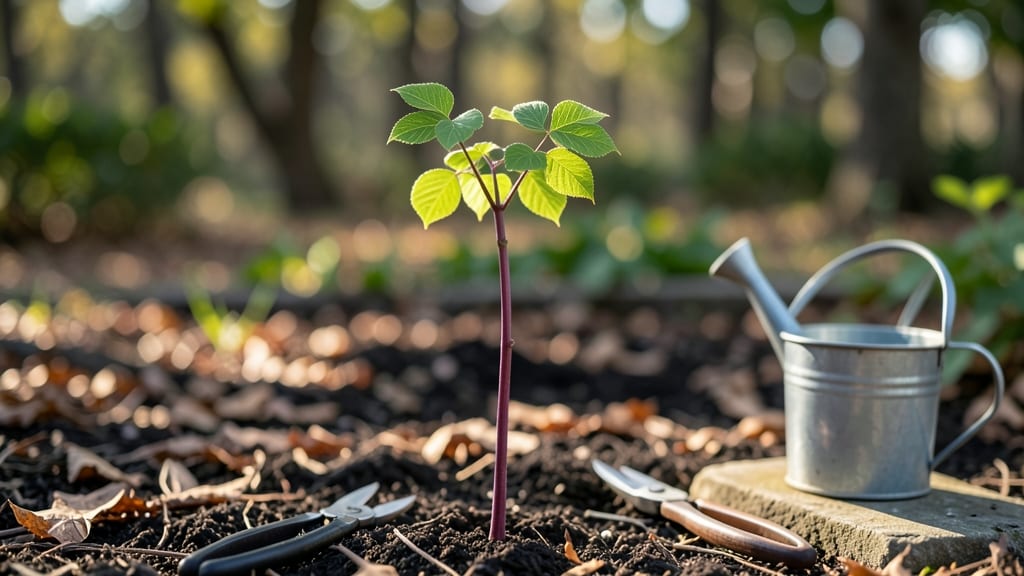
The identification of redbud seedlings by their leaf shape and stem color saves you from years of waiting for a tree that isn’t what you planted—heart-shaped leaves and bright green stems are dead giveaways. lobes, or hickory, which develops jagged edges.
I’ve pulled up enough "redbuds" that turned out to be locusts to know how easy it is to misjudge these early on.
Start by comparing the seedling’s first true leaves—redbuds unfold as smooth, rounded hearts with a slight notch at the tip. The stems stay vibrant green for the first year, while similar trees like black locust develop a grayish tint almost immediately.
If you’re still unsure, check the growth habit: redbuds shoot upward at a sharper angle than most legumes, which sprawl outward.
Mistakes happen when you rely on flower color alone—redbuds bloom pink before leaves emerge, but seedlings won’t show those flowers for years. Focus instead on the leaf veins: redbuds have a single central vein with fine, parallel side veins, while dogwood seedlings have a more web-like pattern.
Once you spot these traits, you’ll recognize them in your yard or nursery rows.
This skill matters whether you’re transplanting a wild seedling or buying bare-root stock. Accurate ID means your tree thrives from day one, not years down the line when you realize it’s the wrong species. Grab a magnifying glass and a notebook—you’ll spot them everywhere after this.
Understanding Seedling Confusion Causes
Identifying redbud seedlings can be tricky, especially when they’re young and share similarities with other native trees. Misidentification often stems from a mix of natural growth patterns, environmental influences, and human error.
Below, we break down the key reasons why seedlings might be mistaken for something else—and how to spot the real clues.
Young redbud seedlings (Cercis canadensis) often have leaves that don’t yet resemble the classic heart shape adults are known for. Here’s why:
- Gradual shape change: Seedlings start with simple, rounded leaves that may look more like those of hickory or ash trees. As they mature, the leaves develop the signature heart shape with a slightly notched tip.
- Size differences: Early leaves are tiny (often <1 inch long) and may appear more lobed or irregular due to limited nutrient availability in the seedling stage.
- Color variations: New growth can be darker green or even reddish-purple in shade or cool conditions, mimicking other spring-flushing trees like serviceberry or dogwood.
Actionable tip: Wait until leaves are at least 2–3 inches wide before relying on shape—this is when the heart outline becomes most distinct. 💡
Redbud seedlings have thin, green stems that lack the distinctive bark of mature trees, making them easy to overlook or confuse. Here’s what’s happening:
- Juvenile bark texture: Young stems are smooth and hairless, but they may develop fine longitudinal grooves as they age—similar to wild cherry or black locust seedlings.
- Color shifts: In full sun, stems can turn reddish or purple, while shaded seedlings may stay green, blending in with other saplings.
- Lack of thorns: Unlike hawthorn or honey locust, redbud seedlings never produce thorns, but this trait is often overlooked in favor of leaf shape.
Pro move: Scratch the stem with your fingernail—if it’s peeling or slightly fibrous, it’s likely a redbud (though this is more reliable in older seedlings). ✨
Stress from weather, soil, or competition can alter a redbud seedling’s appearance, making identification harder. Common triggers include:
| Stressor | Effect on Seedling | How to Tell It’s Still a Redbud |
|---|---|---|
| Drought | Leaves turn yellow or brown at edges; growth stunts. | Check for new red buds forming in spring—redbuds are resilient and will rebound. |
| Shade | Leaves stay small and pale; stems elongate (etiolation). | Look for compound leaf scars on twigs (a redbud trait even in shade). |
| Competition | Leaves may develop irregular shapes due to crowding. | Isolate the seedling—if it’s under 3 feet tall and has no thorns, it’s likely a redbud. |
Key insight: Redbuds are fast growers in ideal conditions (moist, well-drained soil). If a seedling is thriving near others but still has the right traits, it’s probably a redbud. 🌡️
Even experienced gardeners can misidentify seedlings due to:
- Focusing on wrong traits: Prioritizing leaf color over shape or ignoring the arrangement of leaves along the stem (redbuds have alternate, spiraled leaves).
- Seasonal blind spots: In fall, redbud leaves turn yellow before dropping, which can be mistaken for ash or maple seedlings.
- Lack of reference points: Without comparing the seedling to a mature redbud’s bark or flower clusters, early-stage traits are harder to verify.
Quick fix: Take a close-up photo of the seedling’s leaves, stem, and base. Compare it side-by-side with images of redbud vs. lookalikes (like eastern redbud vs. Mexican redbud). 📏
By recognizing these common pitfalls, you’ll sharpen your eye for redbud seedlings—even when they’re at their trickiest stages. The key is patience and attention to multiple traits, not just one.
Quick Fixes for Seedling Confusion
If you’re struggling to tell redbud seedlings apart from other young trees, don’t worry—there are simple, actionable steps to resolve the issue. Below, we’ve mapped common challenges to practical solutions, so you can confidently identify and nurture your redbud seedlings.
Cause: Young redbud leaves can resemble those of other trees (e.g., cherry, hawthorn, or even maple seedlings), especially when still emerging.
Fix:
- 🍃 Compare with mature leaves: Wait until the seedlings develop 3–5 true leaves (not just the initial seed leaves). Redbud leaves are heart-shaped with smooth edges and a slightly pointed tip. Use a magnifying glass if needed—look for the distinctive vein pattern that arcs toward the leaf tip.
- 📸 Snap a photo for reference: Compare your seedling’s leaves to a trusted guide (like the USDA Forest Service’s tree ID tool) or a local arboretum’s plant database. Lighting can distort colors, so rely on shape and texture more than hue.
- 🌱 Test the "squish test": Gently press a leaf between your fingers. Redbud leaves are thin but sturdy—they won’t bruise easily like softer maple or ash leaves.
Prevention Tip: 💡 Grow a "control group." Plant a known redbud seedling nearby and observe its growth patterns side by side with your unknown seedlings. This creates a visual benchmark for future comparisons.
Cause: Young stems can look similar across species, especially if they’re slender or still green. Redbud stems are often reddish when young, but environmental stress (like drought) can dull this trait.
Fix:
- 🔦 Check for bark texture: Scratch the stem gently with your fingernail. Redbud stems have smooth, slightly hairy bark when young, while stems like those of black cherry or sumac may be rougher or more fibrous.
- 🌟 Look for buds: Redbud buds are oval and pointed, often clustered along the stem. Compare them to buds on nearby trees—hawthorn buds, for example, are smaller and more rounded.
- 🎨 Note the color gradient: Healthy redbud stems start pinkish-red at the base and fade to green toward the tips. If the stem is uniformly green or brown, it’s less likely to be a redbud.
Prevention Tip: ✨ Label seedlings immediately. Use small flags or biodegradable tags with the date and your best guess. Revisit them weekly—changes in leaf shape or stem color over time will confirm (or rule out) your ID.
Cause: Poor lighting or competing plants can stunt growth, making identification harder because key traits (like leaf shape) may not develop fully.
Fix:
- ☀️ Thin competing plants: Remove nearby weeds or saplings to give your redbud seedlings at least 6–12 inches of space. Use a small trowel to avoid damaging roots.
- 💡 Supplement with grow lights: If seedlings are in deep shade, place a low-wattage LED grow light 12–18 inches above them for 4–6 hours daily. This encourages faster, healthier leaf development.
- 🚫 Avoid overwatering: Soggy soil can weaken stems and distort leaf growth. Water only when the top inch of soil is dry, and use a moisture meter if unsure.
Prevention Tip: 🌡️ Plant in optimal conditions from the start. Redbuds thrive in full sun to partial shade and well-draining soil. If you’re sowing seeds outdoors, choose a location with at least 4–6 hours of direct sunlight daily.
If you’re still unsure, combine these steps for accuracy:
- Leaf shape + vein pattern ✅
- Stem color + bud shape ✅
- Growth habit (redbuds grow upright with a slightly zigzag pattern) ✅
Pro Tip: 🎯 Consult a local expert. Post a photo in gardening forums (like r/landscaping or Gardeners.com) or visit your cooperative extension service for a second opinion. Many offer free plant ID services!
Final Note: Patience is key—redbud seedlings reveal their true traits over time. The more you observe, the easier identification becomes! 🌱
Frequently asked questions
How can I tell if a tiny seedling is a redbud before the leaves develop fully?
Look for bright green, hairless stems with oval buds clustered along them. Redbud seedlings also grow in a tight, upright pattern rather than sprawling like many legumes. The cotyledons (first leaves) are simple and rounded, not lobed or compound like hickory or walnut seedlings.
Why do some redbud seedlings have leaves that look more like maple or cherry?
Young redbud leaves can resemble other species because they start as simple, rounded shapes that only develop the classic heart form as they mature. Stress from shade or drought may also distort leaf shape. Focus on the single central vein and smooth edges—maple leaves have more pronounced lobes and veins.
What’s the best way to confirm a redbud seedling if I’m still unsure?
Combine three checks: leaf shape (heart-shaped with smooth edges), stem color (green or reddish-pink), and growth habit (upright, not sprawling). For extra certainty, scratch the stem—redbuds have smooth, slightly fibrous bark even as seedlings. Compare with a known redbud if possible.
Can I transplant a redbud seedling I found in the wild?
Yes, but only if it’s at least 1–2 feet tall with well-developed roots. Dig carefully to avoid damaging the root ball, and transplant during early spring or fall when temperatures are mild. Redbuds adapt well to cultivation, but avoid moving them during extreme heat or drought.
What’s the most common mistake when identifying redbud seedlings?
Relying too much on flower color (redbuds bloom pink as adults) or ignoring stem and bud traits. Seedlings won’t flower for years, so focus on leaf veins, stem texture, and growth pattern instead. Many confuse them with locust or cherry seedlings due to similar early-stage leaves.