
Pruning
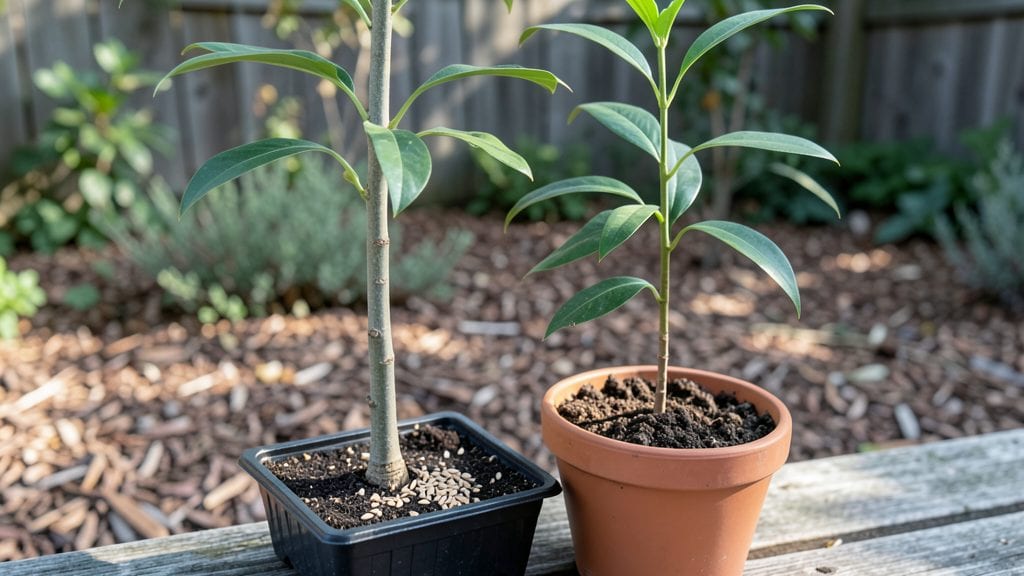
The seeded eucalyptus tree you nurture from scratch will outpace nursery saplings, offering a fragrant, fast-growing privacy screen—if you master its stubborn germination quirks and aggressive growth habits. 🌿 I’ve started dozens from seed, and the key to success lies in understanding their stubborn germination quirks and aggressive growth habits.
Most people give up after three weeks of waiting—don’t be one of them.
The process starts with sourcing fresh seed (never dried out) and soaking it overnight to soften the hard outer shell. You’ll need a warm spot, a humidity dome, and patience—these seeds can take 2-4 weeks to crack open.
Once they sprout, they grow like weeds, shooting up 6-12 inches in their first season.
By summer, you’ll have a lush, scented hedge that blocks noise and wind better than any fence. The real magic happens when you prune strategically—thinning out crowded stems in early spring keeps the tree dense and encourages that signature eucalyptus fragrance to fill your yard.
Works for both sunny backyards and large containers on patios, though outdoor plants will grow 10x faster. Here’s how to get those first green shoots without losing your mind in the waiting game.
📚 In This Guide
- What you need
- Instructions
- Tips and common mistakes
- Wrapping up and next steps
What you need
- ● Ready to cultivate your own seeded eucalyptus tree for lush, year-round privacy? Here’s everything you’ll need to get started—whether you’re a pruning pro or a gardening newbie!
- ● 💡 Pro Tip: If your eucalyptus is young (<3 years), skip heavy pruning—focus on shaping and removing only dead/diseased branches. Older trees can handle bolder cuts for privacy hedges!
Step-by-step pruning guide for seeded eucalyptus trees
Transform your eucalyptus into a lush, year-round privacy screen with these precision pruning techniques.
✂️ Step 1: Assess Growth Patterns and Timing
Eucalyptus trees respond best to pruning in late winter or early spring, just before new growth begins. Look for three distinct growth phases: dormant winter, rapid spring flush, and mature summer foliage. I always wait until after the last frost when temperatures stabilize above 45°F—this ensures the tree isn’t stressed by cold snaps.
Examine the tree’s structure for dead, crossing, or overcrowded branches. These are your first targets. Use a 10x hand lens to inspect leaf clusters for signs of aphid infestations or fungal spots—common in dense foliage. Prune infected branches immediately to prevent spread. I mark branches with a white chalk marker before cutting to avoid confusion during the process.
🌿 Step 2: Remove Dead and Problematic Branches
Start with dead or diseased branches, cutting them back to the main trunk or a healthy lateral branch. Use clean, sharp bypass pruners to make 45-degree cuts just outside the branch collar (the swollen area where the branch meets the trunk). Avoid leaving stubs—this invites decay and weakens the tree’s structure.
Next, remove crossing branches that rub against each other, creating wounds. If two branches grow in the same direction, keep the thicker, healthier one and prune the other entirely. For overcrowded branches, thin them out to improve airflow—this reduces humidity buildup and fungal risks. I step back every few cuts to visualize the tree’s shape and ensure balanced growth.
✂️ Step 3: Shape for Density and Privacy
Eucalyptus trees grow fast and tall, so focus on horizontal layering to create a dense privacy screen. Use hand pruners for branches under ½ inch thick and a pruning saw for thicker stems. Cut just above a leaf node or outward-facing bud to encourage new growth in the desired direction.
For a uniform hedge effect, trim the outer edges at a 45-degree angle to shed water away from the foliage. Avoid cutting into old wood—new growth emerges from the current year’s stems. I prune no more than 25% of the tree’s foliage in a single session to prevent shock. After shaping, step back to check for gaps or uneven areas—these will fill in over the growing season.
☀️ Step 4: Post-Pruning Care and Maintenance
Water the tree deeply within 24 hours of pruning to help it recover. Apply a 2-inch layer of mulch around the base (but not touching the trunk) to retain moisture and regulate soil temperature. Avoid heavy fertilizers immediately after pruning—focus on balanced growth rather than rapid regrowth.
Monitor the tree for new shoots emerging from cut areas within 4-6 weeks. These indicate successful pruning. If you notice yellowing leaves or wilting, the tree may be stressed—reduce watering slightly and provide light shade for a few days. I schedule a light maintenance trim every 6-8 weeks during the growing season to keep the tree dense and manageable.
⏰ Step 5: Seasonal Adjustments for Year-Round Privacy
In summer, focus on light trimming to maintain shape and remove any overly leggy growth. Use shears for finer adjustments along the edges. In fall, prune only dead or diseased branches—avoid heavy cuts as the tree prepares for dormancy.
Winter is the best time for structural pruning to shape the tree for the coming year. I always carry a small broom to clear up fallen leaves and debris, which can harbor pests. By early spring, your eucalyptus should show vigorous new growth, filling in any gaps and thickening the privacy screen.
Tips & tricks for perfect eucalyptus pruning
Mastering eucalyptus pruning transforms your yard from sparse to lush—here’s how to avoid common pitfalls and elevate your results.
Timing is Everything: The late winter/early spring window (after last frost when temps stabilize above 45°F) is non-negotiable for eucalyptus. I've learned this the hard way—pruning too early can expose tender new growth to frost damage, while waiting too long risks overcrowding. Use your local frost date as your guide, not just the calendar. For zones with unpredictable winters, monitor nighttime temps with a thermometer to confirm that 45°F threshold.
Cutting Technique Matters: That 45-degree angle isn't just for looks—it's a water-shedding strategy that prevents rot at the branch collar. I use a white chalk marker to trace my cuts before making them, which helps visualize the perfect angle and prevents accidental cuts into old wood. For branches thicker than your wrist, make a downward cut first to prevent bark tearing, then a horizontal cut to create the clean 45-degree angle. This two-step method is especially critical for eucalyptus's thick bark.
Pruning Limits Save Trees: Never remove more than 25% of foliage in one session—this is eucalyptus's stress threshold. I mark branches with colored tape before cutting to track my progress and ensure I stay within this limit. The tree's natural resilience means you can spread heavy pruning over multiple years if needed, but sudden drastic cuts shock the system and invite pest invasions. Think of it like a haircut: you wouldn't shave your head bald in one session, and neither should your eucalyptus.
Post-Pruning Recovery Strategy: The 24-hour deep watering window is your tree's lifeline after pruning. I use a soil moisture meter to verify the water penetrates at least 12 inches deep—surface watering won't help. Combine this with your 2-inch mulch layer (kept 3 inches away from the trunk) to create a moisture-retaining barrier. This combo prevents transplant shock and jumpstarts the new growth you'll see in 4-6 weeks. The mulch also suppresses weeds that compete for water and nutrients during this critical recovery period.
Pro Tips for Seeded Eucalyptus Tree
- Mastering eucalyptus pruning transforms your yard from sparse to lush—here’s how to avoid common pitfalls and elevate your results.
- Timing is Everything: The late winter/early spring window (after last frost when temps stabilize above 45°F) is non-negotiable for eucalyptus.
- Cutting Technique Matters: That 45-degree angle isn't just for looks—it's a water-shedding strategy that prevents rot at the branch collar.
Frequently asked questions
Got questions about growing and pruning seeded eucalyptus trees for privacy? Here are some common ones—and their answers—to help you navigate the process like a pro!
How long does it take for a seeded eucalyptus tree to grow tall enough for privacy?
A seeded eucalyptus tree typically grows 2–3 feet per year under ideal conditions. For a 10-foot privacy screen, expect 3–5 years of growth. Fast-growing varieties like Eucalyptus globulus may reach privacy height sooner, but patience is key—pruning early shapes denser, faster growth!
When is the best time to prune a seeded eucalyptus tree for privacy?
Prune in late winter or early spring (before new growth starts) to avoid stressing the tree. Avoid heavy pruning in summer or fall, as it can stunt growth or attract pests. Light trimming to encourage bushiness can happen year-round, but major shaping should wait for dormancy!
Can I use pruned eucalyptus branches for mulch or firewood?
Yes! Pruned branches make great mulch (adds nitrogen to soil) or firewood (dries quickly). However, avoid burning fresh clippings—they release eucalyptol, which can irritate lungs. Let branches dry for 6–12 months before use. Pro tip: Chip branches for mulch to prevent pests!
Why is my seeded eucalyptus tree shedding leaves or turning yellow?
Yellowing leaves or shedding often signal overwatering, nutrient deficiency, or fungal issues. Check soil drainage (eucalyptus hates soggy roots!) and fertilize lightly with low-phosphorus options. If spots appear, treat with neem oil. Note: Shedding is normal in fall/winter—don’t panic unless it’s excessive!
Are there faster-growing alternatives to seeded eucalyptus for privacy?
If speed is your goal, consider pre-grown eucalyptus cuttings (grow 2x faster than seeds) or native alternatives like leucadendron or bamboo. For low-maintenance options, privacy hedges (e.g., phormium) or fast-growing shrubs (e.g., pyracantha) are worth exploring!
Wrapping up and next steps
Growing and pruning seeded eucalyptus trees is a rewarding way to enhance your privacy and landscape year-round! With the right tools, timing, and techniques—like strategic pruning to encourage fuller growth—you’ll enjoy lush foliage and a thriving tree for decades.
Whether you’re a beginner or a seasoned gardener, every trim brings you closer to that perfect, natural privacy screen.
Ready to take the next step? Start small—prune just a few branches this season, observe how your tree responds, and adjust as needed. Before you know it, your eucalyptus will be the star of your outdoor space! 🌿✨