Fertilization
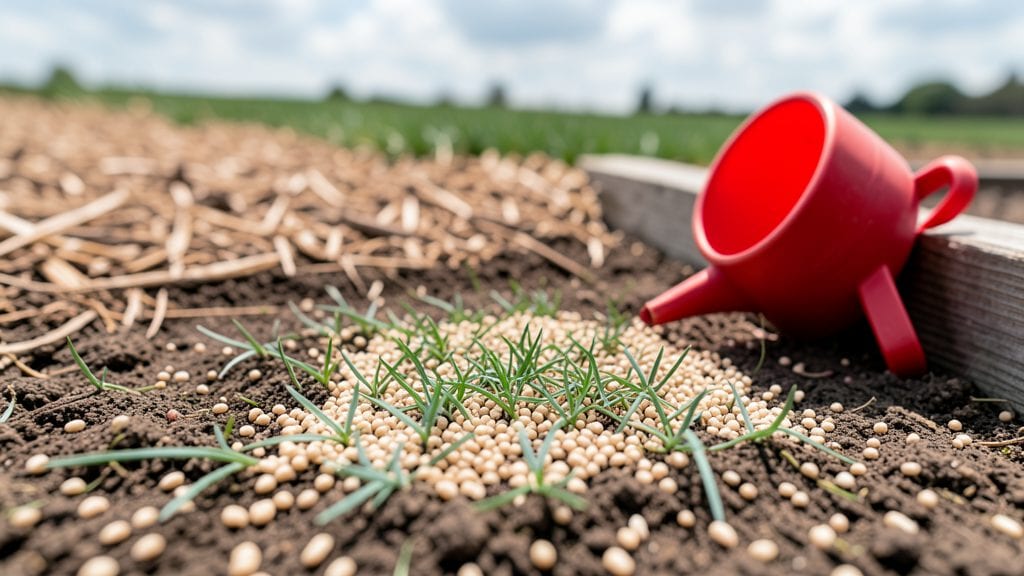
Fertilizing lawn after seeding too soon can actually kill your new grass 🌱—waiting 6 to 8 weeks lets those delicate roots grow strong before nutrients kick in.
Picture this: you’ve just seeded your lawn, watering it daily and watching those first green shoots push through the soil. Then, eager to give them a boost, you reach for the fertilizer—only to end up with brown patches instead of lush grass.
That’s because new seedlings are far too sensitive to nutrients this early in their growth cycle.
Here’s the key: timing your first feeding right isn’t just about avoiding damage—it’s about setting your lawn up for long-term success. Too soon, and you risk burning those tender sprouts; too late, and you might miss the critical window for strong root development.
The right balance makes all the difference between a lawn that thrives and one that struggles.
In this guide, I’ll walk you through the exact 6-8 week rule, how to adjust for your climate, and when to switch from starter fertilizer to regular feedings—so you can skip the guesswork and grow a lawn that stays vibrant year after year.

Why waiting 6 to 8 weeks after seeding prevents fertilizer burn
When you spread fresh grass seed across your lawn, those tiny seeds are already in a delicate race for survival. Their first priority isn't growing tall blades—it's developing a strong root system that can anchor them and access nutrients.
During these early weeks, seedlings focus nearly all their energy on establishing roots, not foliage. That's why rushing to fertilize can backfire spectacularly.
Fertilizers contain concentrated nitrogen, phosphorus, and potassium that should fuel growth—but for young seedlings, these nutrients act like salt on a wound. The high salt concentration in fertilizer draws moisture out of the tender seedling cells through a process called osmotic shock.
This causes the seedlings to wilt, turn brown, and often die before they can establish themselves.
⚠️
Seedlings' roots are only 1-2 inches deep after 4 weeks, making them extremely vulnerable to fertilizer burn. Even "gentle" starter fertilizers contain 20-30% nitrogen, which can double as a herbicide at this stage. The safe window begins when seedlings show 2-3 inches of blade growth and roots have penetrated 3+ inches deep.
Science explains why timing matters so precisely. Grass seeds germinate and grow roots in three distinct phases. In Phase 1 (0-2 weeks), the seed absorbs moisture and begins sprouting—no fertilizer needed here.
During Phase 2 (2-4 weeks), the seedling develops its first true leaves while roots grow at a rapid pace. This is when most gardeners mistakenly apply starter fertilizer, thinking the grass "looks hungry." But those roots are still too shallow to handle the salt load.
By 6-8 weeks, your lawn enters Phase 3: Establishment, where roots have branched out significantly and can handle nutrient uptake. At this stage, the grass has developed enough biomass to process fertilizer without risk.
Research from the University of Georgia Extension shows that applying nitrogen before this point can reduce seedling survival rates by up to 40% due to root damage and fungal stress.
The root development timeline varies slightly by grass type. Cool-season grasses like Kentucky bluegrass and fescue establish roots faster in cooler temperatures, often reaching the 6-week mark by early May if seeded in spring. Warm-season grasses such as Bermuda and Zoysia take slightly longer, sometimes needing up to 8-10 weeks before they're ready for fertilizer.
Always check for 2-3 inches of blade growth and firm soil pull when testing root depth.
Another critical factor is the soil microbial activity that builds up during these early weeks. Beneficial bacteria and fungi break down organic matter, creating a nutrient-rich zone that the seedlings can access.
Fertilizer disrupts this natural process by overwhelming the soil with synthetic nutrients, which can suppress microbial growth and create long-term soil imbalances. Think of it like feeding a newborn baby solid food—their digestive system isn't ready for it yet!
Even if you're using organic fertilizers, the waiting period applies. Compost teas and fish emulsion still contain concentrated nutrients that can burn seedlings. The key difference is that organic options release nutrients more slowly, but they still require established roots to process them safely.
The 6-8 week rule applies universally whether you're using synthetic blends or natural amendments.
Here's how to test if your lawn is ready: Gently pull up a small section of grass. If the roots are 3+ inches long and the soil clings to them, it's safe to fertilize. If the roots are sparse and the soil falls away easily, wait another week.
This simple test saves countless hours of frustration and money on replacement seed. Patience during these early weeks pays off with a thicker, more resilient lawn that can handle future feedings without stress.
Remember that consistent moisture is just as critical as timing during this period. Overwatering or underwatering can create the same stress responses as fertilizer. Aim for 1/2 to 1 inch of water per week, applied in the morning to allow the soil to absorb moisture before evening evaporation.
This balance helps the seedlings develop the resilience they need to handle their first fertilizer application.
Once you've waited the full 6-8 weeks and confirmed strong root growth, your first fertilizer should be a low-nitrogen, slow-release formula (like a 20-0-5 blend). Apply it lightly—about half the recommended rate—and water it in immediately to help the nutrients penetrate the soil without burning the surface.
This careful approach sets your lawn up for years of healthy growth, proving that good things truly come to those who wait.
Step-by-step fertilization schedule for new lawns by season
Timing your lawn's first fertilizer application is just as important as choosing the right seed mix. Cool-season grasses like Kentucky bluegrass and fescue need a 6-8 week wait after seeding before their roots are strong enough to handle nutrients. Warm-season grasses like Bermuda or Zoysia can tolerate a slightly earlier feeding at 4-6 weeks, but never before germination is complete.
Your climate zone also plays a role—Southern regions can fertilize sooner due to warmer soil temperatures.
Most gardeners make the mistake of rushing fertilization, which can cause fertilizer burn—a crispy, brown appearance on young seedlings. Instead, focus on keeping the soil consistently moist and providing light shade during hot afternoons while the grass establishes.
This 12-week timeline breaks down exactly when to apply starter fertilizer, routine feedings, and how to adjust for your region.
🌱 12-Week Post-Seeding Fertilization Timeline
- Weeks 0-4: No fertilizer—focus on watering (keep soil damp) and light mulching (straw only). Seedlings are vulnerable to nutrient shock.
- Weeks 4-6: Apply a low-nitrogen starter fertilizer (10-0-10 ratio) at half-strength to avoid burning. Cool climates should wait until 6 weeks for safety.
- Weeks 6-8: First full feeding with a balanced fertilizer (20-5-10 or organic compost). Warm climates can do this at 4-5 weeks if grass is dense.
- Weeks 8-12: Light top-dressing with compost or slow-release granules. Avoid synthetic fertilizers—they can overstimulate new growth.
- Month 3+: Switch to routine seasonal feeding (spring/fall for cool-season grass, summer for warm-season). Northern zones fertilize in early spring; Southern zones fertilize in late spring.
Spring-seeded lawns in USDA Zones 3-6 should prioritize a fall feeding (late August-September) to strengthen roots before winter. Southern lawns (Zones 7-10) benefit from a summer feeding in June to combat heat stress.
Test your soil first—if pH is below 6.0, amend with lime before fertilizing to prevent nutrient lockout.
Organic options like compost tea or fish emulsion are gentler for new grass, while synthetic fertilizers offer faster results. Slow-release granules (like Osmocote) are ideal because they feed the lawn over 3-6 months, reducing the risk of over-application. Always follow the label rates—more isn’t better for young grass.
Watch for yellowing between veins (nitrogen deficiency) or brown patches (over-fertilization) after feeding. If you see these signs, flush the soil with water to dilute excess salts. Adjust future feedings based on your grass’s response—some varieties like fine fescue need less fertilizer than tall fescue.
Remember, the goal during the first year is root depth, not leafy growth. A deep root system makes your lawn drought-resistant and pest-resistant. Stick to this schedule, and by Month 12, you’ll have a lawn that’s ready for heavy foot traffic and year-round beauty. 🌿