
Propagation
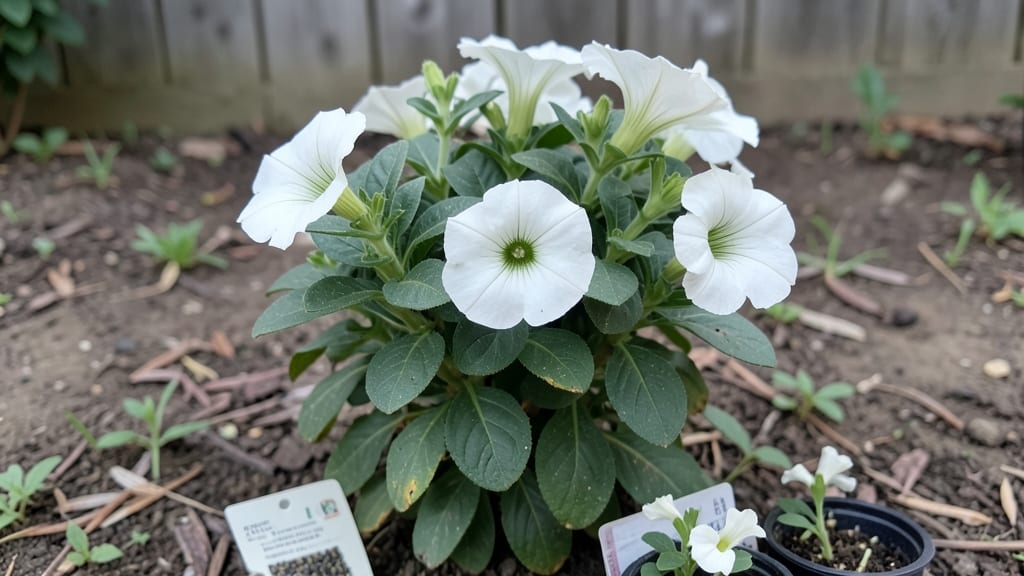
Growing white petunia seeds from scratch delivers snow-white blooms that transform any garden into a dreamy, high-contrast showpiece—and you’ll see those first buds in just six weeks. 🌿 I’ve grown them from seed for years, and the secret isn’t complicated: it’s all about timing, warmth, and a little patience.
The payoff? Baskets dripping with cascading flowers, borders that look like lace, and a fragrance so delicate it feels like a whisper.
Start indoors 8-10 weeks before your last frost—that’s usually late February or early March in most zones—using seed-starting trays and a heat mat to coax those tiny seeds into sprouting.
White petunias love warmth, so keep soil consistently moist (not soggy) and place them in a sunny window or under grow lights. Once seedlings pop, thin them to 2 inches apart to avoid crowding, and you’ll be transplanting sturdy young plants ready to take over your garden by late spring.
📚 In This Guide
- What you need
- Instructions
- Tips and common mistakes
- Wrapping up and next steps
What you need
- ● White petunia seeds – Choose a packet labeled for your climate zone (e.g., Petunia × hybrida varieties like 'White Dream' or 'Snowdrift'). Aim for 50–100 seeds per planting session.
- ● Seed-starting trays or small pots – Use biodegradable or plastic trays (2–3 inch cells) or 4–6 inch pots for individual seedlings. Pro tip: 💡 Avoid deep containers to prevent overwatering.
- ● Seed-starting mix – A lightweight, sterile mix (e.g., 50% peat moss + 50% perlite or coconut coir). Avoid garden soil—it’s too dense!
- ● Grow lights or sunny windowsill – Seedlings need 12–16 hours of light daily. A LED grow light (12–18 inches above seedlings) works best.
- ● Spray bottle – For gentle watering (avoid drowning seeds!). A fine-mist setting keeps soil moist without displacing seeds.
- ● Plastic wrap or humidity dome – Creates a mini greenhouse to retain moisture until germination (typically 7–21 days).
- ○ Fertilizer (optional but helpful) – Use a balanced, water-soluble fertilizer (e.g., 10-10-10 or 5-5-5) at half-strength once seedlings sprout.
- ● Tweezers or toothpick – For carefully placing tiny seeds (petunia seeds are micro-fine!).
- ○ Heat mat (optional) – Speeds up germination by 5–10°F above room temp (ideal for slow starters).
- ● Fertilizer spray bottle – For foliar feeding if seedlings look leggy.
- ● Transplanting tools – Small trowel or spoon for moving seedlings to larger pots or garden beds.
- ● Garden gloves – Protects hands from seed-starting mix (which can be gritty!).
- ● Patience – Germination takes 7–21 days; avoid disturbing seeds during this time!
- ● Consistent care – Maintain moisture, warmth, and light daily. Skipping even one day can delay growth.
- ● Space planning – Petunias thrive in full sun (6+ hours/day) and need 12–18 inches apart when mature.
How to grow white petunias from seed for stunning season-long color
Here’s the foolproof method I use to get petunias blooming in just six weeks—no fancy tools or green thumbs required.
🌱 Step 1: Prepare Containers and Seed Starting Mix
Fill 4-inch deep seed-starting trays with sterile seed-starting mix (not garden soil—it’s too dense and may harbor disease). I like to press the mix down lightly so it’s firm but not compacted, then moisten it until it feels like a damp sponge. This ensures even moisture without waterlogging.
Petunia seeds are tiny, so I use a fine-mesh sieve to sprinkle them evenly across the surface—about ¼ teaspoon per tray. Gently press them into the mix with your fingertip; they don’t need deep planting. Cover lightly with a thin layer of vermiculite (just enough to obscure the seeds) to hold moisture while allowing light to reach them.
💧 Step 2: Create a Humid, Warm Environment for Germination
Cover the tray with a clear plastic dome or humidity lid to trap warmth and moisture. Petunia seeds germinate best at 70-75°F, so place the tray on a seedling heat mat if your home runs cooler. Without extra warmth, germination can take 10-14 days instead of the usual 7-10 days.
Mist the surface lightly with water every 2-3 days—just enough to keep the mix damp but not soggy. Overwatering here is the fastest way to trigger damping-off, a fungal disease that collapses seedlings overnight. Remove the dome as soon as 50% of seeds sprout to prevent mold.
☀️ Step 3: Provide Bright, Indirect Light for Strong Seedlings
Once sprouts appear, move the tray to a south-facing window or under grow lights for 14-16 hours daily. Petunias need bright light to prevent leggy growth—those stretched, pale stems are a sign of light deprivation. If seedlings lean toward the window, rotate the tray quarter-turn daily so they grow straight.
After 2-3 weeks, when seedlings have 2-3 true leaves, transplant them into individual 3-inch pots filled with the same seed-starting mix. Use a small spoon or pencil to gently lift each seedling, keeping the root ball intact. This prevents shock and encourages faster root establishment.
🪴 Step 4: Harden Off and Transplant for Outdoor Success
Two weeks before your last frost date, start hardening off seedlings by placing them outside in a sheltered, shaded spot for 1-2 hours the first day. Gradually increase exposure over 10-14 days, moving them to morning sun first before full afternoon exposure. This toughens their skin and prevents transplant shock.
Choose a sunny, well-draining bed with 6+ hours of direct light for mature petunias. Space plants 10-12 inches apart—closer spacing encourages bushier growth. Water deeply at the base after transplanting, then maintain 1 inch of moisture weekly (more in extreme heat). Mulch with 1 inch of shredded bark to retain moisture and suppress weeds.
✂️ Step 5: Prune and Feed for Continuous Blooms
Deadhead spent blooms weekly by pinching off flowers just above the next set of leaves. This redirects energy to new buds instead of seed production. I also trim leggy stems back by ⅓ in early summer to encourage compact, bushier growth—petunias reward pruning with even more flowers.
Feed every 2-3 weeks with a balanced liquid fertilizer (like 10-10-10) diluted to half-strength. Over-fertilizing leads to lush foliage but fewer blooms. Watch for aphids or whiteflies on the undersides of leaves; blast them off with water or treat with neem oil if they persist. With consistent care, your white petunias will bloom nonstop from early summer until frost.
Tips & tricks for perfect white petunia growth
Here's what I've learned from growing these stunning blooms for years—these tricks ensure your white petunias thrive from seed to showstopping display.
Germination Temperature Control: The 70-75°F range in Step 2 is non-negotiable for speedy germination. I've found that placing the tray on a seedling heat mat (available for under $20) cuts germination time from 10-14 days to a consistent 7-10 days. If your home runs cooler, consider a small greenhouse or even a sunny windowsill with a clear plastic wrap tent to trap heat.
Light Strategy for Strong Seedlings: Those critical 14-16 hours of light in Step 3 are where most beginners go wrong. If using grow lights, position them just 2-3 inches above seedlings—they'll stretch toward the light if they're too far away. I rotate my trays daily to prevent leaning, and you'll notice the difference in stocky, sturdy seedlings ready for transplanting.
Transplanting Technique: The 2-3 week mark for transplanting in Step 3 is perfect timing—seedlings should have 2-3 true leaves. I use a small spoon to carefully lift each seedling, keeping the root ball intact. This prevents shock and gives your petunias a head start. Optional: Add a pinch of epsom salt to the transplant mix for a magnesium boost that encourages vibrant growth.
Outdoor Transition Tips: When hardening off in Step 4, I start with just 1-2 hours in morning shade, then gradually increase exposure over 10-14 days. The key is to avoid afternoon sun initially—it's too intense for tender seedlings. I've seen many gardeners rush this step and end up with shocked plants that struggle to recover.
Pro Tips for White Petunia Seeds
- Here's what I've learned from growing these stunning blooms for years—these tricks ensure your white petunias thrive from seed to showstopping display.
- Germination Temperature Control: The 70-75°F range in Step 2 is non-negotiable for speedy germination.
- Light Strategy for Strong Seedlings: Those critical 14-16 hours of light in Step 3 are where most beginners go wrong.
Frequently asked questions
Got questions about growing white petunia seeds? You’re in the right place! Here are some of the most common queries—plus quick, practical answers to help your garden thrive.
How long does it take for white petunia seeds to germinate?
White petunia seeds typically germinate in 7–21 days after sowing, depending on temperature and moisture. Keep the soil consistently warm (around 70°F) and humid with a plastic dome or row cover. Patience is key—some seeds may take longer, especially in cooler conditions.
Can I plant white petunia seeds directly in the garden, or should I start indoors?
For best results, start seeds indoors 6–8 weeks before your last frost. Petunias are sensitive to cold and slow to germinate in cool soil. If you must direct-sow, wait until after the last frost and use a seed-starting mix with a protective cover to retain warmth and moisture.
Why aren’t my white petunia seeds sprouting? Troubleshooting tips?
If seeds aren’t germinating, check these common issues:
- Temperature: Too cold (<60°F) slows germination. Use a heat mat if needed.
- Moisture: Keep soil damp (not soggy) but avoid letting it dry out.
- Light: Seeds need 12–16 hours of light daily (grow lights work well).
- Depth: Plant seeds just below the surface (no deeper than ¼ inch).
Are white petunia seeds annuals or perennials?
White petunias are annuals, meaning they complete their life cycle in one growing season. However, in USDA Zones 9–11, they may self-seed or return if given ideal conditions. Treat them as annuals in most climates and replant fresh seeds each spring for continuous blooms.
What’s the best way to extend the blooming season for white petunias?
To keep your white petunias flowering all season:
- Deadhead spent blooms regularly to encourage new flowers.
- Fertilize every 2–3 weeks with a balanced, water-soluble fertilizer.
- Water at the base of plants (not overhead) to prevent fungal diseases.
- Pinch back leggy stems to promote bushier growth.
Wrapping up and next steps
Growing white petunia seeds is a rewarding journey that transforms your garden into a dreamy, fragrant paradise in just six weeks! With the right soil, patience, and a little TLC, you’ll soon enjoy vibrant blooms that brighten any space.
Whether you’re a seasoned gardener or a beginner, these delicate flowers are a fantastic way to practice propagation and add elegance to your outdoor decor.
Ready to dive in? Start by gathering your supplies and following the steps—your future blooms will thank you! 🌸 For even more tips, explore our full gardening guide or share your progress with fellow plant lovers online. Happy planting!