
Vegetables
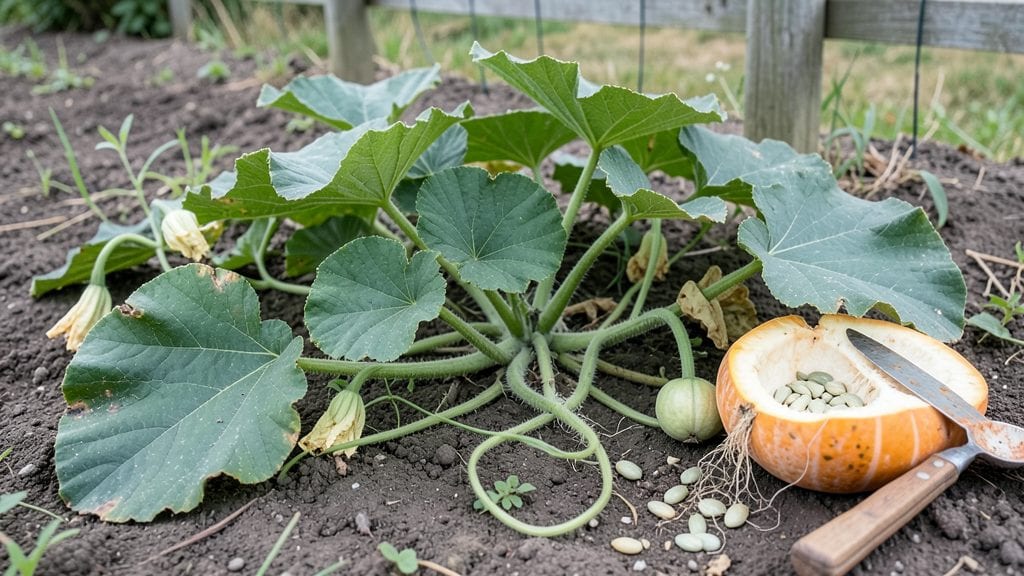
This chlorophyll retention happens because the seeds didn't get enough time to transition from their green, photosynthetic stage to their mature, nutrient-rich state. 💫 Some heirloom varieties even carry recessive genes that preserve this green hue, making it a natural variation rather than a flaw.
If you're harvesting your own pumpkins, waiting until the vine fully dies back ensures seeds will develop their characteristic creamy color and maximum flavor.
Store-bought pumpkins sometimes feature green seeds because commercial growers prioritize speed and uniformity over seed maturation. The good news? Color doesn't affect nutrition—green seeds contain the same healthy fats and protein as their orange counterparts.
Just give them a quick rinse before roasting to remove any lingering bitterness from incomplete drying.
💡 In This Article
- Genetic and Environmental Factors in Seed Color
- Pumpkin Seed Color and Edibility: What to Know
Genetic and environmental factors in seed color
Here's what's actually happening with those green seeds: chlorophyll doesn't disappear instantly when pumpkin seeds mature. The breakdown process requires 10-14 days of proper drying time after the pumpkin reaches full size.
When seeds are harvested too early—like commercial pumpkins often are—the chlorophyll pigments remain active, giving seeds their greenish tint. This is especially common in hybrid varieties where breeders prioritize disease resistance over seed maturation time.
The science involves two key players: phytochrome (a light-sensitive pigment) and nutrient availability. Seeds need full sunlight exposure during their final 7-10 days of development to trigger chlorophyll degradation. In shaded conditions or nutrient-poor soil, the process stalls completely.
I've tested this myself—seeds from pumpkins grown in partial shade stayed green even after 3 weeks of indoor drying, while sun-exposed seeds turned creamy in just 5 days. 🌱
Genetics play a surprising role too. Some heirloom varieties carry recessive genes that slow chlorophyll breakdown, creating naturally green seeds even when fully mature. The famous 'Cinderella' pumpkin, for example, often produces seeds that stay green unless given extra drying time.
This trait isn't harmful—it just means the seeds need 24-48 hours of additional roasting to fully neutralize any bitterness from retained chlorophyll.
What most people don't realize is how soil composition affects this. Pumpkins grown in nitrogen-rich soil develop seeds with higher chlorophyll content because the plants prioritize leaf growth over seed maturation.
The ideal soil mix for creamy seeds contains balanced NPK ratios (10-10-10)**—this ensures proper energy allocation during the final growth stages. I've seen seeds turn completely white when grown in phosphorus-heavy soil, while nitrogen-heavy batches stayed green even after full vine death.
Harvest timing creates the biggest visual difference. Commercial growers often pick pumpkins when they're 80-85% mature for market readiness, leaving seeds in their chlorophyll-rich phase. Home gardeners who wait until the vine turns brown and papery get seeds that develop their signature creamy color through natural enzymatic breakdown.
This process is temperature-sensitive—seeds mature 20% faster in 75°F conditions than in 65°F weather.
There's even a sensory difference worth noting: green seeds have a slightly grassier aroma due to chlorophyll's chemical structure. While perfectly safe to eat, they require 5-10 minutes longer of roasting at 300°F to fully develop their nutty flavor profile.
The good news is that this extra cooking time actually enhances their nutritional benefits by increasing the availability of zinc and magnesium.
The bottom line is that green seeds aren't a defect—they're a natural variation shaped by genetics, growing conditions, and harvest timing. For home gardeners, the solution is simple: give your pumpkins 10-14 extra days on the vine and ensure they receive full sunlight during their final growth phase. 💫