Featured
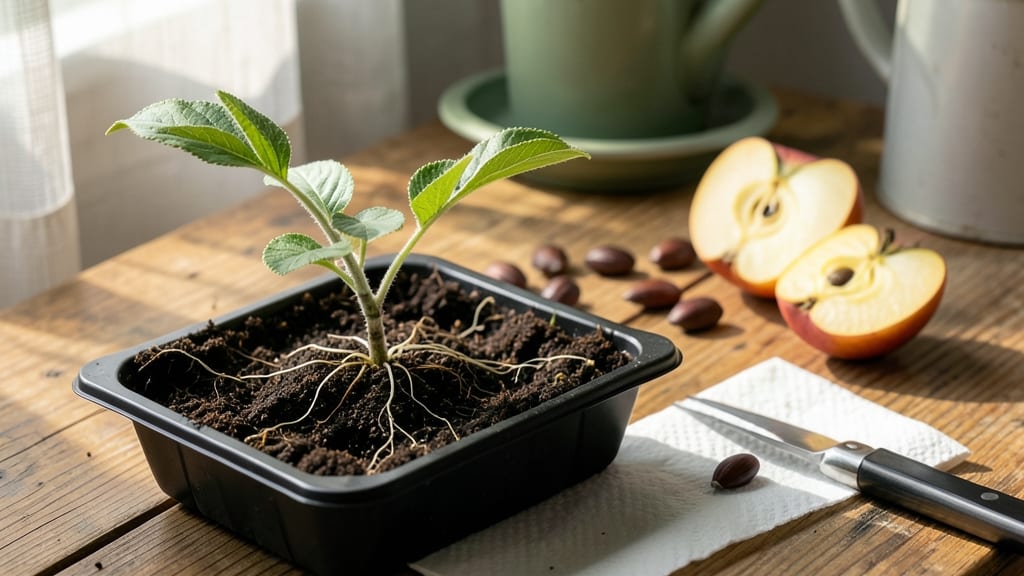
Images of apple seeds show tiny, oval brown seeds with a distinctive pointed tip, usually nestled within apple cores. Germinating them requires extracting seeds, rinsing, drying, then cold-stratifying for 6-8 weeks in moist conditions before planting in well-draining soil for successful growth.
Apple seeds are nature's miniature powerhouses, each containing an embryo ready to sprout into a tree given the right conditions. 🌱 The pointed tip isn't just for show—it helps the seed penetrate soil during natural germination.
While store-bought apple trees are grafted for consistency, growing from seed lets you experiment with unique varieties that might not be commercially available. The stratification process mimics winter's cold period, breaking the seed's natural dormancy so it knows when to wake up and grow.
This method requires patience—young saplings may take 5-7 years before producing fruit—but the reward is watching a tree grow from something as small as a seed. For best results, maintain consistent moisture during the stratification phase and use a mix of peat moss and perlite for planting.
The key is creating an environment that mimics the seed's natural habitat while controlling variables like temperature and humidity.
💡 In This Article
- Apple Seed Anatomy and Germination Science
- Step-by-Step Guide to Growing Apple Trees from Seeds
Apple seed anatomy and germination science
Each apple seed is a complex biological package containing three key components: the embryo (the future plant), the endosperm (nutrient reserve), and the seed coat (protective outer layer).
The embryo sits at the seed's base, curled like a tiny question mark, while the endosperm provides the energy needed for early growth.
The seed coat's hardness prevents premature germination and protects against pathogens—think of it as nature's built-in survival kit. 🌱 The pointed tip you see in images isn't just decorative; it's called the micropyle, which regulates water intake during germination.
The seed coat's impermeability creates a natural dormancy period that only breaks under specific conditions. This is where stratification comes in—a process that mimics winter's cold, moist conditions. During stratification, the seed coat softens slightly as it absorbs water while temperatures hover around 35-45°F (1-7°C).
This cold treatment signals the embryo that winter has passed, triggering enzymes that convert stored starches in the endosperm into sugars for growth. Without this step, seeds might rot or remain dormant indefinitely—similar to how some plants need fire or scarification to germinate.
Humidity plays a critical role too, with ideal levels between 60-80%. Too little moisture prevents the seed from absorbing enough water to break dormancy, while excess can cause fungal growth.
The perfect balance creates a micro-environment where the seed coat softens just enough to allow water penetration without compromising the embryo's integrity. This is why many gardeners use a mix of moist peat moss and perlite—it maintains consistent moisture while allowing airflow to prevent mold. 💧
Temperature fluctuations during stratification also matter. While consistent cold is ideal, brief warm periods (like a 50-60°F (10-15°C) thaw) can accelerate the process by speeding up metabolic activity. This is why some gardeners alternate between fridge storage and room temperature during stratification.
The key is avoiding extremes—temperatures above 70°F (21°C) can trigger premature germination before the seed coat has softened enough, leading to weak or failed sprouts.
What most people don't realize is that apple seeds contain trace amounts of cyanogenic glycosides, compounds that release cyanide when crushed. While the levels are too low to harm humans, this chemical acts as a natural pest deterrent.
The seed's design is a masterclass in survival—balancing nutrient storage, protection, and dormancy mechanisms to ensure the next generation of trees gets a fighting chance. 🌿
For successful germination, the stratification period should last 6-8 weeks, but some varieties may need up to 12 weeks of cold treatment. This variability explains why some seeds sprout quickly while others take months.
The process isn't just about time—it's about creating the right conditions to unlock the seed's potential, much like how a chef needs precise temperatures to develop flavors in a dish. Once stratification is complete, the seed is ready to transition to warmer soil where it can complete germination.