
Trees
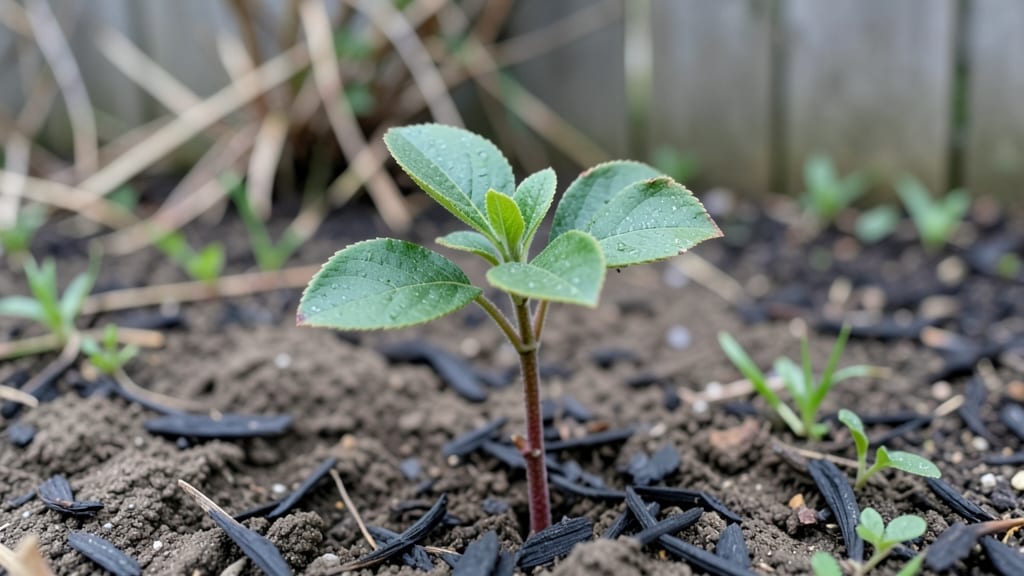
Apple tree seedling leaves are typically small, oval-shaped, and serrated with a glossy finish, resembling miniature versions of mature apple foliage. Healthy seedlings display vibrant green leaves with fine hairs along the veins, though varieties may differ slightly in shape and texture.
Those first leaves are your best clue about the tree's future! 🌱 Young seedlings often show early traits of their mature form—like the deep serrations of a Granny Smith or the broader shape of a Honeycrisp.
I always check leaf undersides for red or purple hues, which can signal stress or disease before it's visible above. Proper care now means stronger roots and fuller canopies later, so watch for yellowing edges (a classic sign of overwatering) or sticky residue (aphids love tender new growth).
For best results, place seedlings in full sun (at least 6 hours daily) and water deeply but infrequently—soggy soil smothers roots.
A light mulch layer helps retain moisture while keeping pests at bay. 🌿 Remember: the healthier those first leaves, the faster your tree will establish itself and start producing fruit.
💡 In This Article
- Identifying Apple Seedling Leaf Shapes by Variety
- Caring for Young Apple Tree Seedling Leaves
Identifying apple seedling leaf shapes by variety
The key to distinguishing young apple seedlings lies in their leaf morphology, which often mirrors the traits of mature trees. For example, Fuji seedlings typically show broader, more rounded leaves with shallow serrations along the edges, while Delicious varieties develop narrower leaves with deeper, more pronounced teeth.
The leaf base shape also varies—Fuji leaves often have a more heart-shaped base, whereas Granny Smith seedlings display elongated ovals with serrations that extend nearly to the midrib. 🔥
Petiole length (the leaf stem) provides another clue: Honeycrisp seedlings usually have shorter petioles (1-2 centimeters) compared to Gala varieties, which can reach 2.5-3 centimeters.
The undersides of leaves offer additional insights—some varieties like Pink Lady develop a faint reddish tint on new growth, while others remain uniformly green. Leaf texture also differs: McIntosh seedlings often have slightly rougher surfaces due to more pronounced vein patterns.
What most people don't realize is that early leaf shape can predict mature tree characteristics. Trees with deeply serrated seedlings often produce fruit with more pronounced ribs, while those with smoother-edged leaves tend toward rounder apples.
For instance, Jonathan seedlings show coarse serrations that foreshadow their tart, flavorful fruit. This morphological consistency allows growers to make early variety identifications before flowering occurs. ✨
Seasonal growth patterns further refine identification. Spring flushes of new leaves often show the most distinct variety traits before summer heat causes uniform growth across types. In early summer, Arkansas Black seedlings develop leaves with wavy margins, while Cortland varieties maintain straight edges.
The timing of leaf drop in fall also varies—some varieties like Rome retain leaves longer due to their thicker cuticles, providing another distinguishing feature.
For practical identification, compare seedlings against known reference samples. Place leaves side-by-side under natural light to observe subtle differences in vein patterns, serration depth, and overall shape.
A magnifying glass helps reveal microscopic differences in trichome (hair) density along veins—some varieties like Golden Delicious have denser hair coverage than Empire seedlings. 💫
Understanding these distinctions helps gardeners make informed decisions about grafting or propagation. When selecting seedlings for grafting stock, prioritize those with the most consistent leaf traits to ensure predictable mature characteristics. This attention to detail during the seedling stage can save years of trial-and-error in orchard development.