Trees
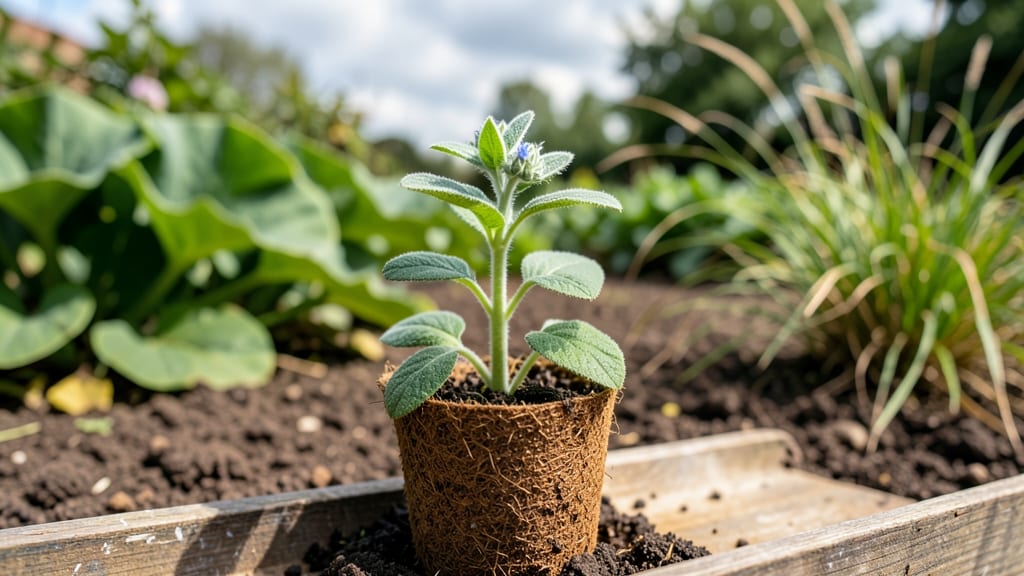
Mastering borage seedling identification early keeps those fuzzy, hairy leaves—like a tiny bluebell’s hand—from getting mistaken for weeds. 🌱 The first clue? they’ve been nibbled. Most people mistake them for lamb’s ear or chickweed, but borage’s leaves grow in a rosette pattern right at soil level, while weeds sprawl outward.
Here’s the game-changer: those bright blue star-shaped flowers peek through as early as 4-6 weeks, even when seedlings are just 2-3 inches tall. No other common garden weed or seedling produces blue blooms this early—this is your confirmation.
The stems are also hairy, a dead giveaway if you’re squinting at the seed tray.
Once you spot them, give them bright sunlight and well-draining soil to keep them thriving. They’re surprisingly hardy but hate soggy roots—water at the base, not overhead, to prevent fungal issues.
Within 3-4 weeks, you’ll see those iconic blue trumpets opening wide, signaling you’ve got a borage plant that’ll attract bees all summer.
Pro tip: If you’re growing borage alongside other herbs, mark the seedlings with small popsicle sticks labeled “BORAGE” before they flower—trust me, you’ll thank yourself when you’re harvesting later. The earlier you ID them, the sooner you can start enjoying their edible flowers and cucumber-flavored leaves.
Why it happens
H2: What Triggers Misidentification?
Borage seedlings can be mistaken for other plants—even by experienced gardeners—due to a mix of natural growth patterns, environmental factors, and subtle but critical differences in early development. Understanding these causes helps you spot the real deal before confusion sets in. Here’s why misidentification happens and how to avoid it.
---
Borage (Borago officinalis) seedlings share striking similarities with other plants in the Boraginaceae family (like comfrey or forget-me-nots) or even weeds like Hackelia species. During the cotyledon stage (the first two leaves that emerge), borage’s leaves are broad, rounded, and slightly fuzzy—traits that mimic:
- Comfrey seedlings: Also fuzzy with lobed leaves, but comfrey’s cotyledons are deeply veined and often blue-green.
- Hackelia species: Produce hairy, oval leaves, but their true leaves (after cotyledons) develop toothed edges and a distinctive "zigzag" stem pattern.
- Weeds like Myosotis (forget-me-not): Tiny, round leaves with a smooth texture and no fuzz.
Why it happens: Seedlings prioritize rapid nutrient uptake over distinct leaf specialization. Without flowers or mature foliage, their early traits are deliberately vague to survive in competitive environments. Actionable fix: Wait for the second set of true leaves (not cotyledons)—borage’s will be lance-shaped with serrated edges and a star-like hair pattern under magnification.
---
Borage seedlings under stress (e.g., overwatering, nutrient deficiency, or temperature swings) may develop leaf distortions that resemble pests or diseases. Common red flags:
Symptom
Actual Cause
What It Looks Like (Misidentified As)
Yellowing cotyledons
Overwatering or poor drainage
Fungal infection (e.g., downy mildew)
Stunted growth with purple stems
Phosphorus deficiency
Viral infection (e.g., tomato mosaic)
Crinkled, dark green leaves
Heat stress (>90°F)
Insect damage (e.g., aphids)
Why it happens: Borage is a sun-loving annual with shallow roots. Stress triggers anthocyanin production (purple pigments) as a survival mechanism, while poor drainage causes root hypoxia, mimicking rot. Actionable fix: Check soil moisture with your finger—it should feel damp but not soggy. Use a pH test kit (ideal range: 6.0–7.5) and amend with compost if needed.
---
Borage’s bright blue star-shaped flowers are iconic—but seedlings won’t bloom for 6–8 weeks under ideal conditions. Before flowering, gardeners often misjudge borage based on:
- Leaf color: Young borage leaves can appear gray-green due to trichomes (hair-like structures), which some confuse with mold.
- Stem rigidity: Borage stems are hollow and brittle when young, resembling dill or fennel seedlings.
- Slow germination: Borage seeds take 14–21 days to sprout (longer in cold soil), leading to impatience and premature weeding.
Why it happens: Borage’s delayed flowering is an evolutionary trait—it conserves energy for rapid vegetative growth before bolting. Actionable fix: Plant seeds in well-drained pots indoors 4–6 weeks before the last frost. Use a heat mat (70–75°F) to speed germination.
---
Poor lighting or viewing seedlings from a distance can exaggerate or obscure key traits. For example:
- Artificial light: Grow lights with low red spectrum (e.g., LED bulbs without full-spectrum diodes) can make borage leaves appear darker or more lobed than they are.
- Angle of observation: Holding a seedling at eye level vs. 2+ feet away changes how you perceive leaf serration or fuzziness.
- Container size: Seedlings in small pots grow slower, leading to compact, rounded leaves that resemble spinach or chickweed.
Why it happens: The human eye fills in gaps when details are ambiguous—a survival bias from our ancestors identifying edible plants. Actionable fix: Use a hand lens (10x magnification) to inspect leaf edges and trichomes. Take photos in natural light for comparison.
Quick Fixes for Young Borage Confusion
Got tangled in borage seedling mix-ups? Don’t stress—these practical solutions will help you spot, sort, and safeguard your seedlings like a pro. Below, we’ve mapped common identification challenges to step-by-step fixes, plus prevention tips to keep your garden thriving.
---
Problem: Your borage seedlings resemble other plants (like comfrey or forget-me-nots) because their early leaves are small and round.
Fix It: 🔥 Compare Leaf Texture – Borage leaves are hairy and fuzzy (even as seedlings), while lookalikes are smooth. Rub a leaf between your fingers—if it feels velvety, it’s borage! 🍳 Check Stem Hair – Borage stems are covered in fine hairs, too. Use a magnifying glass if needed. 👨🍳 Wait for Flowers – True borage seedlings will sprout tiny star-shaped blue flowers in 4–6 weeks. If flowers appear earlier (or are white/yellow), it’s likely an imposter.
Prevention Tip: 💡 Plant in isolated beds or use grow lights under mesh to delay flowering in weeds, giving borage time to develop its signature traits.
---
Problem: Your borage seedlings are slow-growing, leggy, or turning yellow—signs of poor nutrition, overcrowding, or disease.
Fix It: 🥘 Boost Soil Health – Borage loves well-draining, slightly alkaline soil (pH 6.0–7.5). Amend with compost or a balanced fertilizer (10-10-10) if growth stalls. 🔪 Thin Seedlings – Overcrowding stresses plants. Snip or transplant seedlings to 6–12 inches apart for airflow and sunlight. ⏰ Check Watering – Overwatering causes yellowing. Water at the base only when the top inch of soil is dry.
Prevention Tip: ✨ Use seedling trays with drainage holes and cover with row fabric to deter pests while they’re vulnerable.
---
Problem: Tiny holes, chewed leaves, or white mold mean aphids, slugs, or powdery mildew are attacking your seedlings.
Fix It: 💪 Natural Pest Control – - Aphids? Spray with soapy water (1 tsp mild soap + 1 quart water) or introduce ladybugs. - Slugs? Set up beer traps (bury a shallow dish of beer) or use copper tape around pots. 🌡️ Fungal Fix – Powdery mildew thrives in humidity. Space plants wider, water in the early morning, and spray with baking soda mix (1 tsp baking soda + 1 quart water + a drop of soap).
Prevention Tip: 🎯 Rotate crops—don’t plant borage in the same spot yearly to break pest/fungal cycles.
--- Problem: You’re unsure if a seedling will grow into true borage because its flowers haven’t opened yet.
Fix It: 📊 Track Flower Buds – Borage buds start pale blue, then deepen to vibrant blue or purple. If buds appear white or yellow, it’s not borage. 🔥 Root Check (Last Resort) – Gently dig up a seedling and examine the root structure. Borage roots are thick and fibrous, while weeds often have thin, thread-like roots.
Prevention Tip: 🌱 Start indoors in biodegradable pots—this lets you transplant only confirmed borage seedlings outdoors.
--- Final Pro Tip: 🌟 Take photos weekly of your seedlings’ progress. Comparing images over time makes identification 10x easier when in doubt!
--- Need more help? Drop your seedling’s photo in the comments—we’ll ID it for you! 📸
Frequently asked questions
How do I tell if a fuzzy seedling is borage?
Look for hairy stems and leaves—borage seedlings have a velvety texture you can feel by rubbing a leaf. The true leaves (after the first two cotyledons) will be lance-shaped with serrated edges, while imposters like comfrey have smoother, lobed leaves.
Why do my borage seedlings look like weeds?
Early borage seedlings can resemble chickweed or forget-me-nots because their first leaves are small and round. The key difference? Borage’s second set of true leaves will have a distinct star-like hair pattern under magnification, while weeds have smooth or toothed edges.
How long until I can confirm it’s borage?
Wait 4-6 weeks for the signature blue star-shaped flowers to appear—this is the fastest way to confirm. If flowers develop earlier (or are white/yellow), it’s likely an imposter like hackelia. For non-flowering seedlings, check for hollow, hairy stems.
What if my seedlings are turning yellow?
Yellowing leaves usually mean overwatering or poor drainage. Let the top inch of soil dry between waterings, and ensure pots have drainage holes. If stems also look purple, it could indicate phosphorus deficiency—amend soil with compost or a balanced fertilizer.
Can I transplant seedlings before flowering?
Yes, but handle carefully—borage roots are shallow and fibrous. Transplant on a cloudy day to reduce stress, and keep soil moist but not soggy for 2 weeks after moving. Avoid disturbing roots more than necessary.