
Vegetables
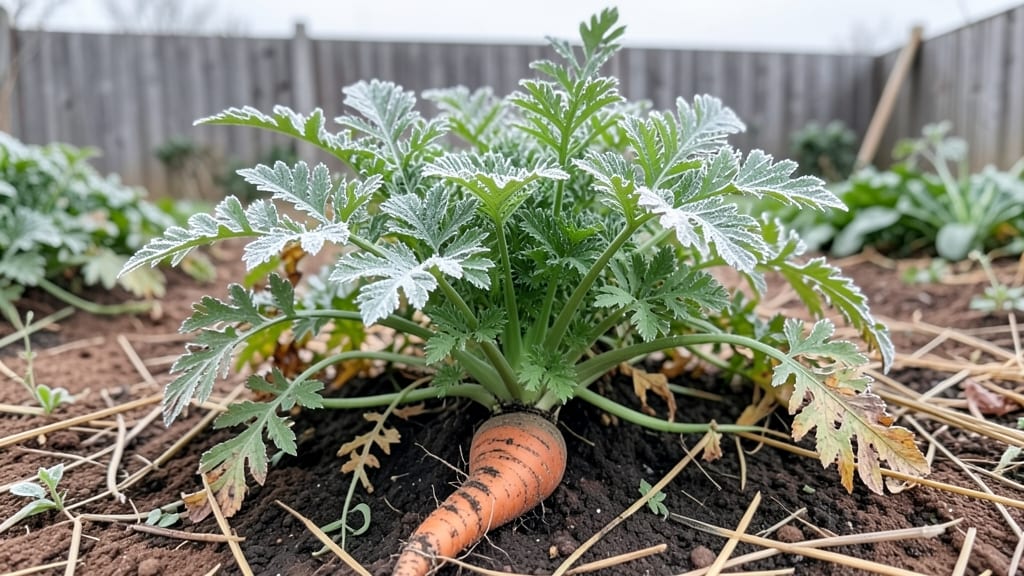
Carrot seeds cannot survive frost because they need soil temperatures above 50°F (10°C) to germinate properly. Freezing temperatures damage delicate seed structures, but gardeners in cold climates can use protective methods like cold frames or row covers to create warmer microclimates for early planting.
Frost doesn’t just chill carrot seeds—it actually disrupts their cellular metabolism, preventing the enzymes needed for sprouting from activating. 🌱 In colder regions (USDA zones 3-6), this means waiting until late spring when soil warms naturally, often delaying harvests. The good news?
Simple tools like low-cost row covers or even black plastic mulch can raise soil temps by 5-10°F, giving seeds a fighting chance weeks earlier. I’ve seen gardeners in zone 4 successfully start carrots in March using these methods!
Timing matters just as much as protection. Planting too early—even with covers—can still stress seeds if nights dip below 40°F (4°C). That’s why many experts recommend waiting until the average last frost date has passed, checking local almanacs for precise guidelines.
For those impatient for harvests, short-season varieties like 'Paris Market' or 'Early Nantes' are better bets—they mature faster and tolerate cooler soils better than heirloom types.
💡 In This Article
- How Frost Damages Carrot Seed Germination
- Protecting Carrot Seeds in Early Spring Planting
How frost damages carrot seed germination
Frost disrupts carrot seed germination at a cellular level by causing ice crystals to form within the seed's delicate tissues. These crystals puncture cell membranes, rupturing the structures that store nutrients and enzymes essential for sprouting.
The seed's metabolism halts as water freezes, preventing the activation of amylase enzymes that break down starches into sugars needed for root growth. At temperatures below 32°F (0°C), even brief exposure can kill up to 90% of seeds before they ever sprout.
The damage isn't just immediate—it's cumulative. Even light frosts (35°F/2°C) slow metabolic processes, delaying germination by 1-2 weeks or more. Carrot seeds, which normally germinate in 14-21 days at optimal 70°F (21°C), may never emerge from soil that stays below 50°F (10°C) for extended periods.
The root's taproot system, which develops from the radicle, becomes stunted or deformed when exposed to cold stress, leading to misshapen carrots even if seeds somehow survive.
Hardiness zones dramatically impact planting windows. In USDA zones 3-5 (average minimum temperatures of -30°F to -10°F/-34°C to -23°C), gardeners must wait until soil temperatures consistently reach 50°F (10°C)—often late May or June.
Zones 6-7 (average 0°F to 10°F/-18°C to -12°C) allow planting 2-4 weeks earlier, while zones 8-10 (average 10°F to 30°F/-12°C to -1°C) can start seeds as early as March. The key difference? Warmer zones experience fewer frost events, giving seeds more stable conditions.
What most gardeners overlook is how frost affects soil moisture dynamics. Frozen soil creates an anaerobic environment where seeds suffocate from lack of oxygen, even if temperatures hover just above freezing.
The soil's water content also becomes locked in ice crystals, making it unavailable for seed hydration—a critical first step in germination. This is why many gardeners in cold climates pre-warm soil using black plastic mulch, which can raise temperatures by 5-10°F (3-6°C) within days.
For visual context, imagine a carrot seed's journey: it absorbs water, swells, and begins dividing cells to form the radicle. Frost interrupts this at any stage—whether the seed is dry, hydrated, or just beginning to sprout.
The seed coat, which protects the embryo, becomes brittle in cold, cracking under pressure and exposing the embryo to lethal conditions. This is why even "hardened" seeds from cold-hardy varieties (like 'Chantenay') still struggle below 40°F (4°C).
Here's the science behind the timing: Carrot seeds contain coumarins, compounds that inhibit germination until soil conditions are ideal. Cold temperatures accelerate coumarin production, creating a double barrier to sprouting.
This evolutionary adaptation makes sense—carrots evolved in Mediterranean climates where winter dormancy is essential for survival. But in temperate zones, it becomes a gardener's challenge to replicate those ideal conditions artificially.