
Vegetables
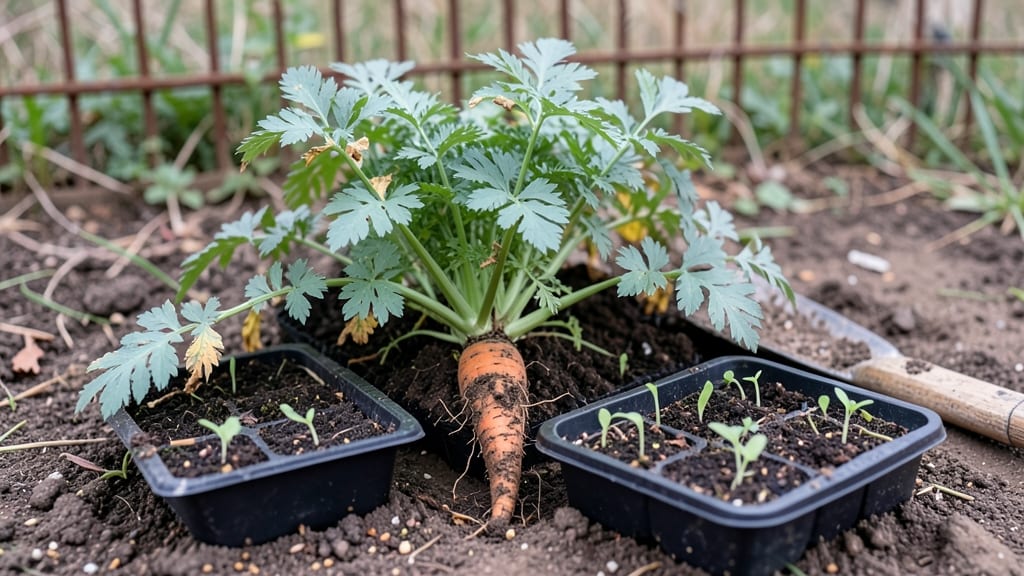
Planting carrot seeds at the right depth is the fastest way to turn patchy germination into a lush, uniform harvest of sweet, straight roots 🥕.
Struggling with patchy carrot germination? The secret isn’t just in the seeds—it’s in how deep you plant them. A misjudged planting depth can mean the difference between a thriving garden and wasted effort.
In Zone 6a, where spring planting kicks off in March, the ideal depth is just ¼ to ½ inch—shallow enough for quick sprouting but deep enough to prevent drying out. Too deep, and your seeds rot; too shallow, and they bake in the sun.
Below, I’ll walk you through the exact measurements, soil prep tricks, and common mistakes that derail even the best-intentioned gardeners—so you can finally grow carrots that come up strong and straight.

Optimal carrot seed depth for maximum germination rates
Carrot seeds are tiny powerhouses, but their success hinges on one critical factor: planting depth. Unlike larger seeds, carrots need to be planted shallowly—typically between ¼” and ½” deep—to ensure consistent germination.
The reason? Carrot seeds require light and moisture to break dormancy, and burying them too deep suffocates their growth potential.
Research shows that seeds planted deeper than ½” often fail to sprout because they can’t access the oxygen and warmth needed at that depth. Even a ⅛” difference can impact germination rates by up to 30%.
For best results, aim for a depth of ¼” to ½”, using a fine-toothed rake or your finger to create shallow furrows.
Soil temperature also plays a role—carrots germinate best in soil that’s at least 50°F (10°C). If your soil is cooler, shallow planting helps the seeds absorb heat from the sun more efficiently.
Pair this with consistent moisture (but not waterlogging) to create the perfect environment for those delicate sprouts to emerge.
Here’s the science-backed breakdown of ideal carrot seed depth and its impact on germination:
To achieve the ¼” to ½” depth, use a seedling rake or your fingertip to create shallow furrows. Press the seeds gently into the soil—don’t cover them with extra dirt. After planting, lightly water the area to settle the soil without displacing the seeds.
This method ensures the seeds stay in the optimal zone for germination while protecting them from drying out.
Another pro tip: If you’re planting in sandy soil, which drains quickly, err on the side of ¼” depth to retain moisture. In clay soil, which holds moisture longer, you can plant up to ½” deep without risking drought stress.
Always test your soil’s moisture by squeezing a handful—it should hold together slightly but not be soggy.
Once your carrots sprout, thin them to 2-3 inches apart to give roots room to grow straight and avoid competition. Thin seedlings carefully with scissors or your fingers to prevent disturbing the remaining plants.
This step is crucial for preventing forked carrots, which often result from overcrowding and poor soil conditions.
For container gardening, use a deep pot (at least 12 inches deep) and plant seeds ¼” below the soil surface. Containers dry out faster, so monitor moisture closely and water gently to avoid displacing seeds.
A light mulch layer (like straw) can help retain moisture and regulate soil temperature, further supporting germination.
Remember, carrots are light-dependent germinators, meaning they need light to trigger sprouting. Planting too deep blocks this light, leading to poor germination. If you’ve struggled with carrots in the past, start with a shallow planting test—you’ll likely see a dramatic improvement in sprouting rates within days.
Finally, pair your optimal seed depth with direct sowing (avoid starting indoors) and consistent care. Carrots are resilient once they sprout, but their early stages demand precision. With the right depth, you’ll be harvesting sweet, straight carrots in just 70 days!
Common mistakes that kill carrot seed germination (and how to fix them)
Even with high-quality carrot seeds, poor germination can leave your garden patchy and disappointing. The most common culprits? Planting too deep, soil compaction, and ignoring soil moisture needs.
These mistakes block seeds from accessing the light and air they need to sprout, turning your hard work into wasted effort.
Carrot seeds are tiny and delicate, requiring precise care. Unlike larger seeds, they need just enough soil cover to stay moist but not so much that they suffocate. Understanding these pitfalls—and how to correct them—can transform your germination rates from 50% to 90% or higher.
Carrot seeds need ¼” to ½” of soil coverage—any deeper, and they’ll struggle to break through. Use a ruler or your finger to measure depth; ½” is your max. If seeds are buried deeper, they may rot before sprouting or grow into forked, misshapen carrots.
Another silent killer is soil compaction, which prevents seeds from making contact with oxygen and moisture. Compacted soil can also trap seeds too close to the surface, causing them to dry out before germinating.
To fix this, loosen the soil with a fork or tiller before planting, and mix in compost or sand for better drainage.
Skipping soil preparation is a surefire way to fail. Carrot seeds thrive in loose, well-draining soil with a pH between 6.0 and 7.0. If your soil is heavy clay or sandy, amend it with organic matter like compost or peat moss.
This ensures seeds have the ideal environment to germinate without stress.
Overwatering or underwatering also plays a role. Carrot seeds need consistent moisture but will drown in soggy soil. Water gently after planting, keeping the soil damp—not wet—until sprouts appear. A light misting with a spray bottle works best for delicate seeds.
Finally, planting seeds too close together creates competition for nutrients and light. Space seeds ¼” apart in rows that are 12” to 18” apart. Thin seedlings to 2” to 3” apart once they’re 2 inches tall. This prevents overcrowding and gives each carrot room to grow straight and strong.
By avoiding these common mistakes, you’ll give your carrot seeds the best chance to sprout quickly and grow into healthy, straight roots. Start with the right depth, soil prep, and watering, and you’ll be harvesting sweet carrots in no time! 🥕