
Flowers
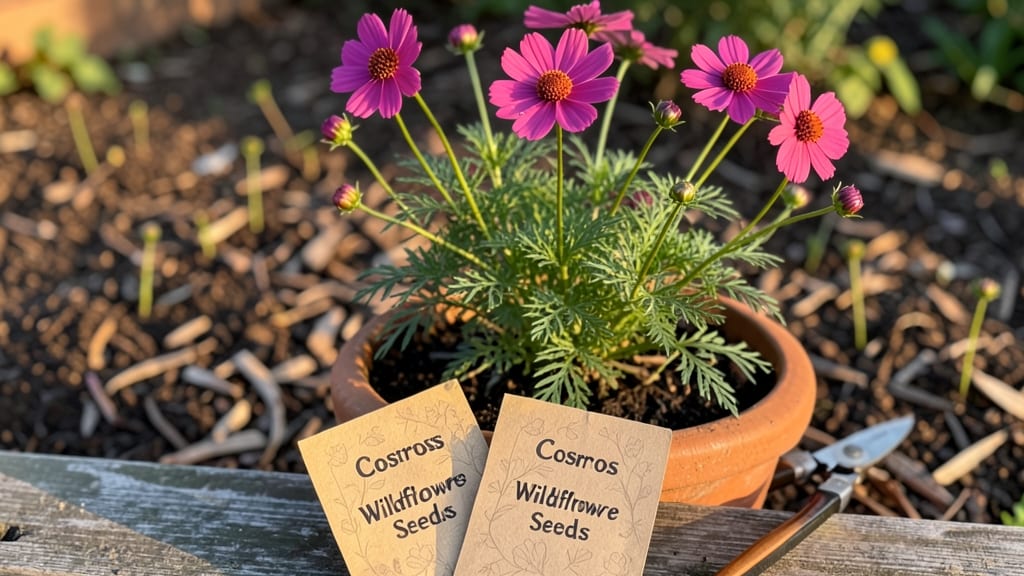
Cosmos wildflower seeds grow into those effortlessly cheerful blooms that make summer feel like a postcard. 🌻 I planted mine last spring and was stunned when they shot up in just 60 days—no fuss, no fussing, just mile-high stems topped with daisy-like flowers that butterflies can't resist.
The secret lies in their carefree nature: they thrive where other flowers give up, and you'll end up with a garden that looks like it belongs in a meadow.
You only need three things to get started: a sunny spot, well-draining soil, and patience for about two months. Cosmos seeds don't need any special treatment—just scatter them on top of the soil after the last frost, press them in lightly, and water gently.
They pop up fast, even in poor soil, and their roots run deep, so they handle drought once established. The varieties like 'Bright Lights' or 'Sensation Mix' add extra color to the show, but any cosmos will give you that same carefree charm.
By mid-summer, you'll have a cloud of blooms that keep coming wave after wave all season long. The flowers stay vibrant even when cut, and the plants keep producing more blooms as long as you deadhead spent flowers.
It's the kind of garden that rewards you for doing almost nothing—just stand back and enjoy the show. The best part? You'll have a pollinator magnet that hums with bees and butterflies all day long.
Works in borders, containers, or wildflower meadows—cosmos adapt to almost any spot as long as it gets sun. Once you try them, you'll never go back to fussy annuals again. Let's get those seeds in the ground and watch the magic happen!
📚 In This Guide
- What you need
- Instructions
- Tips and common mistakes
- Wrapping up and next steps
What you need
- ● Cosmos Wildflower Seeds: 1–2 packets (each packet typically contains ~500–1,000 seeds). Choose a variety like Cosmos bipinnatus or Cosmos sulphureus for bold colors!
- ● Well-draining soil: 1–2 bags of potting mix or garden soil (amend with compost for richer blooms).
- ● Sunlight access: A spot with 6+ hours of direct sunlight daily (cosmos thrive in full sun!).
- ● Water: A watering can or hose with a gentle spray nozzle.
- ● Planting containers or garden bed: Containers: 5–12" deep pots with drainage holes (1–2 plants per 6" pot).
- ● Garden beds: Loose, weed-free soil (cosmos love space—sow seeds 12–18" apart!).
- ○ Gloves (optional): A pair to protect hands from soil and thorns (some cosmos varieties have them!).
- ● Hand trowel or rake: For breaking up soil and creating furrows.
- ○ Twine or stakes (optional): To support taller varieties (e.g., Cosmos bipinnatus) if grown in windy areas.
- ○ Mulch (optional): Straw or shredded leaves to retain moisture and suppress weeds.
- ○ Fertilizer (optional): A balanced, low-nitrogen fertilizer (5-10-5) for extra vigor (apply sparingly—cosmos prefer lean soil!).
- ● 🌡️ Timing: Sow seeds 2–3 weeks after your last frost date (cosmos hate cold!).
- ● ✨ Direct sowing: No need to start indoors—just scatter seeds on soil and cover lightly with ¼" of dirt.
- ● 💧 Watering: Keep soil consistently moist (not soggy) until germination (~7–14 days). After that, water deeply but infrequently to encourage strong roots.
Step-by-Step instructions for growing cosmos wildflower seeds
Here's how to get vibrant cosmos blooms in just 60 days—no fuss, no fuss.
🌱 Step 1: Choose Your Planting Time and Location
Cosmos thrives in full sun—at least 6-8 hours daily. They're tough enough to handle heat and drought once established, but start seeds when your last frost date is 4-6 weeks away. This gives them time to mature before summer's peak heat arrives.
I plant mine in late spring after the soil warms to 60°F. You'll know it's ready when the ground feels warm to the touch in the morning. If you're in a cooler zone, consider starting seeds indoors 2-3 weeks before the last frost, then transplant outdoors after all danger of frost has passed.
🌱 Step 2: Prepare the Soil and Sow Seeds
Cosmos grows in almost any soil, but they prefer well-draining, moderately fertile ground. Loosen the top 6 inches of soil with a fork or tiller to help roots establish easily. Scatter seeds thinly—about ¼ inch deep—since they germinate quickly and densely.
I like to space seeds 12-18 inches apart in rows 18 inches apart for easy maintenance. Lightly cover with soil and pat down gently. Don't worry about pressing too hard—cosmos seeds are tough and don't need deep planting. Water gently to settle the soil without disturbing the seeds.
💧 Step 3: Water and Maintain Until Germination
Keep the soil consistently moist but not soggy until germination, which usually happens in 7-14 days. You'll see tiny green sprouts push through the soil—this is your signal to back off on watering. Cosmos seedlings are drought-tolerant once they establish, so let the soil dry slightly between waterings.
Thin seedlings to 12-18 inches apart when they reach 2-3 inches tall. Use scissors to snip unwanted plants at soil level—this prevents disturbing the roots of the ones you're keeping. I always leave the strongest, straightest seedlings to avoid leggy growth later.
☀️ Step 4: Encourage Blooms with Minimal Care
Once seedlings are 4-6 inches tall, they're ready for their first big drink of water. Water deeply at the base, avoiding the leaves to prevent fungal issues. Cosmos are self-cleaning—dead flowers drop on their own, so no deadheading is needed unless you want to encourage more blooms.
Fertilize lightly once or twice during the growing season with a balanced, water-soluble fertilizer. Too much nitrogen leads to lush foliage but fewer flowers. You'll see buds form in 4-6 weeks after planting, and the first blooms will appear in 60-70 days.
✂️ Step 5: Harvest and Enjoy Your Blooms
Cut flowers at their peak for bouquets—this encourages more blooms to form. Harvest in the early morning when stems are fully hydrated. Snip just above a leaf node to promote branching and bushier growth.
Leave some flowers on the plant to attract pollinators like bees and butterflies. Cosmos are a pollinator magnet, so you'll see them buzzing around your garden once the blooms open. With minimal care, your cosmos will keep flowering until frost, giving you color from summer through fall.
Tips & tricks for perfect cosmos wildflower blooms
Here's what I've learned after growing cosmos for years—the little details that make all the difference between pretty plants and show-stopping blooms.
Soil Temperature Matters: That 60°F soil temperature isn't just a suggestion—it's critical for germination. I've seen seeds fail to sprout when planted in cooler soil, even if everything else was perfect. Use a soil thermometer to check before planting, especially in cooler climates. If your soil is below 60°F, wait a few days or use black plastic mulch to warm it up faster.
Thinning Technique: When thinning those 2-3 inch seedlings to 12-18 inches apart, I use a pair of clean scissors to snip at soil level rather than pulling. This prevents disturbing the roots of your kept plants and gives you cleaner stems for cutting later. I always thin on a cloudy day to reduce stress on the remaining seedlings.
Watering Wisdom: The 7-14 day germination window can be tricky—too much water drowns seeds, too little prevents sprouting. I use a spray bottle to keep soil consistently moist during this period, focusing on the seed area rather than soaking the entire plot. Once sprouts appear, I switch to deep watering at the base to encourage strong root development.
Fertilizer Timing: That light fertilization in Step 4 should happen 4-6 weeks after planting when you first see buds forming. I use a 10-10-10 balanced fertilizer at half strength—too much nitrogen too early will give you leafy plants with no blooms. The key is feeding when the plants are already established but still hungry for growth.
Pro Tips for Cosmos Wildflower Seeds
- Here's what I've learned after growing cosmos for years—the little details that make all the difference between pretty plants and show-stopping blooms.
- Soil Temperature Matters: That 60°F soil temperature isn't just a suggestion—it's critical for germination.
- Thinning Technique: When thinning those 2-3 inch seedlings to 12-18 inches apart, I use a pair of clean scissors to snip at soil level rather than pulling.
Frequently asked questions
Got questions about growing cosmos wildflower seeds? You’re in the right place! Here are answers to the most common queries—so you can dive in with confidence and watch those vibrant blooms take over in no time.
How long does it take for cosmos seeds to germinate?
Cosmos seeds are fast—expect sprouts in 5 to 10 days after planting, especially in warm soil (60–70°F). Thin seedlings to 12–18 inches apart once they’re 2–3 inches tall. Pro tip: Keep soil moist but not soggy to speed up germination!
Can I plant cosmos seeds in fall for spring blooms?
Cosmos thrive in cool seasons—sow seeds 6–8 weeks before your first frost for early spring color. They’ll self-seed like crazy, so you might get bonus blooms the following year with zero effort. Just avoid planting too early in cold climates—they rot in chilly, wet soil.
What’s the best way to keep cosmos from flopping over?
Tall cosmos varieties (like ‘Bright Lights’) may need support. Try these tricks:
- Stake them: Insert bamboo stakes or a tomato cage at planting.
- Deadhead regularly: Snip spent blooms to encourage bushier growth.
- Choose dwarf varieties: ‘Sensation Mix’ stays compact (18–24” tall).
Bonus: Cosmos are self-cleaning—they rarely need pruning!
Are cosmos deer- or rabbit-resistant?
Not quite! While cosmos are less appealing than hostas or tulips, deer and rabbits will nibble them if hungry. Try these deterrents:
- Plant near deer-resistant companions like marigolds or lavender.
- Use repellent sprays (pepper-based or commercial blends).
- Build a low fence (2–3 ft tall) around your garden.
If they’re munched, just replant—cosmos are annuals and grow like weeds!
Can I grow cosmos in containers?
Yes! Cosmos love containers—just pick a pot at least 12 inches deep with drainage holes. Use a light, well-draining potting mix and plant 2–3 seeds per container. They’ll spill over edges beautifully, creating a romantic, trailing effect.
Pro tip: Add a time-release fertilizer at planting for extra vigor!
Wrapping up and next steps
Transforming your space into a vibrant cosmos wildflower garden is easier—and more rewarding—than you think! 🌸 With just a few seeds, patience, and a little sunlight, you’ll soon enjoy bold, cheerful blooms that attract pollinators and brighten any corner.
Whether you’re a seasoned gardener or a beginner, these fast-growing flowers prove that beauty doesn’t require complexity.
Ready to dive in? Grab your cosmos seeds today and start planting—your future garden (and local bees!) will thank you. Happy growing! 🌱