Lawn
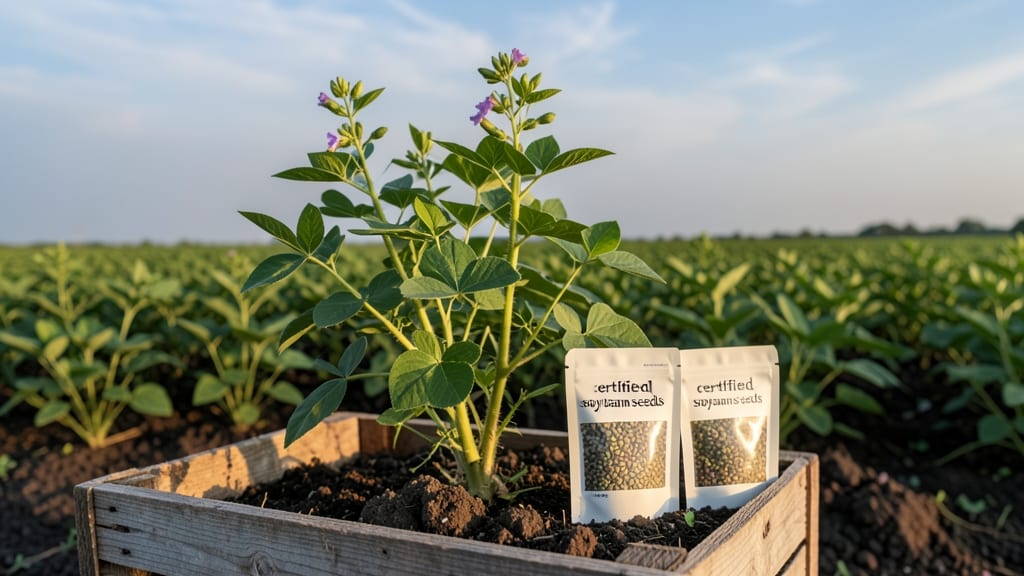
The Federal Seed Act sets the rules for seed quality, truthful labeling, and certification in U.S. commerce to protect farmers from misleading products. It mandates accurate germination rates, weed seed limits, and clear variety identification on all packaged seeds sold across state lines.
The Federal Seed Act was created to prevent fraud and ensure farmers receive what they pay for. 🌱 This means every bag of seeds must disclose exactly what's inside—no hidden weed seeds or misleading germination claims.
The law covers everything from lawn seed mixes to specialty crops, requiring sellers to stand behind their product's advertised performance. Small farmers often get confused about exemptions, but the USDA provides clear guidelines to help navigate compliance.
What makes this act unique is its focus on interstate commerce—meaning if you're selling seeds across state lines, you must follow these rules. The USDA's Seed Regulatory Program oversees enforcement, and violations can lead to fines or even criminal charges for repeat offenders.
For gardeners, this means you can trust that the seeds you buy will grow as promised, reducing wasted money on poor-quality products.
💡 In This Article
- Core Requirements of the Federal Seed Act
- How to Comply with Seed Labeling Laws
Core requirements of the federal seed act
The Federal Seed Act's foundation rests on three core pillars that guarantee seed integrity: purity standards, mandatory labeling, and certification protocols. These aren't just bureaucratic hurdles—they're designed to protect farmers from economic losses caused by inferior seeds.
For instance, the act defines germination purity as the percentage of seeds that will sprout under ideal conditions, with commercial seeds required to meet at least 80% germination for most crops. This threshold ensures that what's advertised on the bag actually performs in the field.
When it comes to weed seed contamination, the act sets strict limits—typically no more than 3% noxious weed seeds and 0.5% total weed seeds by weight. These limits exist because even small amounts of weeds like cheatgrass or pigweed can ruin a crop.
The act also regulates inert matter (non-seed material) to 3% by weight, preventing sellers from padding bags with chaff or dirt to increase perceived quantity.
These standards are enforced through laboratory testing where seeds are placed in controlled germination chambers at 70-80°F with precise moisture levels to simulate field conditions.
The labeling mandates are where most violations occur, and they're intentionally detailed. Every seed package must display the variety name, origin, lot number, and certification tag (like "Certified" or "Registered"). The germination percentage must be clearly stated, along with any chemical treatments applied.
For example, a bag of 'Kentucky Bluegrass' must specify if it's been treated with fungicides or insecticides—information critical for organic farmers. The USDA's Seed Certification Program verifies these claims through third-party inspections where samples are taken from every 500th bag during production.
Enforcement falls under the USDA's Seed Regulatory Program, which conducts surprise inspections and maintains a database of violations. Penalties start at $500 per violation but can escalate to $10,000 for repeat offenders, with criminal charges possible for fraudulent labeling.
What's surprising is how the act protects even small-scale sellers: the $1,000 exemption for annual sales under $1,000 means home gardeners selling at farmers' markets often qualify. However, crossing state lines automatically triggers full compliance—this is why online seed sellers must jump through extra hoops compared to local nurseries.
Here's what most people don't realize: the act's certification tags (like "Foundation" or "Registered") aren't just marketing—they reflect different levels of genetic purity. "Foundation" seeds, for example, must come from a single plant source with 99.9% genetic uniformity, while "Certified" seeds allow 0.1% variation.
This genetic precision explains why certified seeds cost more but deliver more consistent results. The USDA maintains a National Seed Stocks Program to preserve these pure lines, ensuring farmers can always access high-quality genetic material.
The act's enforcement isn't just about penalties—it's about economic protection. Consider corn: if a farmer plants seeds with only 75% germination instead of the advertised 90%+, they're essentially losing 15% of their crop before planting.
For a 100-acre field, that's 15 acres of lost yield—enough to feed hundreds. The labeling requirements exist to prevent these kinds of financial disasters by making sure farmers know exactly what they're planting. 🌾