Propagation
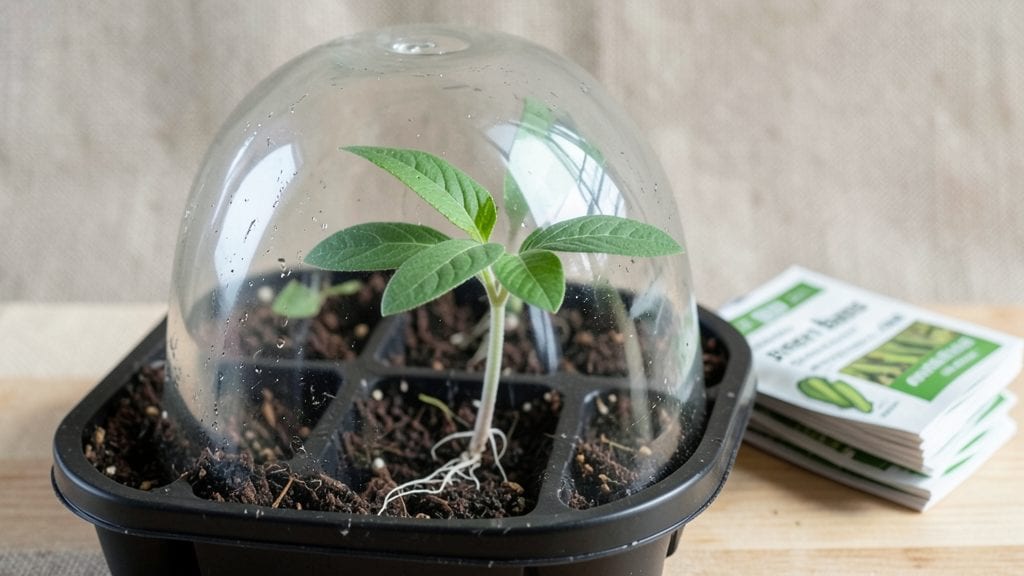
Germination is essentially the biological awakening of a seed—where stored nutrients kickstart cell division and root growth. 🌱 The process begins when water triggers enzymes to break down starches in the seed's food reserves, providing energy for the emerging radicle (the first root).
Temperature plays a pivotal role too: cool-season crops like lettuce thrive at 50–60°F, while warm-season veggies such as tomatoes need 70–85°F to sprout efficiently. Without proper oxygen flow, seeds suffocate, and excess moisture can drown them before they even break through the soil.
Most gardeners overlook the subtle cues seeds give during germination—like the tiny crack signaling the radicle's emergence or the curved hypocotyl (stem) pushing upward toward light. Understanding these stages helps troubleshoot failures, whether it's seeds rotting from overwatering or drying out due to inconsistent moisture.
For example, scarification (scratching seed coats) or stratification (simulating winter chilling) can break dormancy in stubborn seeds like apples or peaches.
💡 In This Article
- The Science Behind Seed Germination Stages
- Optimal Conditions for Successful Seed Sprouting
The science behind seed germination stages
Here's what's actually happening when a seed germinates: it's a carefully orchestrated biological process where stored nutrients are converted into energy for growth.
The journey begins with imbibition, where the seed absorbs 50-100% of its dry weight in water within hours, swelling as enzymes activate to break down starches in the endosperm (seed food reserve).
This process triggers cell division in the embryonic root tip, called the radicle, which emerges first—often within 2-7 days depending on the species. 🌱
The radicle's emergence is just the beginning—what follows is the development of the hypocotyl, the stem that pushes upward through the soil, carrying the seed leaves (cotyledons) toward light.
This upward growth is powered by the conversion of starches into sugars through enzymatic reactions, with amylase enzymes playing a key role in breaking down complex carbohydrates. For example, bean seeds contain 20-30% starch by weight, which gets converted into simple sugars that fuel the early growth spurt.
The hypocotyl often exhibits a characteristic hook shape, which straightens as it reaches the surface—a mechanism to protect the delicate shoot from soil abrasion.
Temperature acts as a critical regulator of this process. Cool-season crops like broccoli and peas require 50-60°F to germinate because their enzymes function optimally at these temperatures, while warm-season crops such as cucumbers and peppers need 75-85°F to activate their growth enzymes.
What most people don't realize is that temperature also influences the speed of germination—seeds of the same variety may sprout in 3 days at 80°F but take 10 days at 50°F. This is why gardeners in cooler climates often use seedling mats or greenhouses to maintain consistent warmth.
Environmental triggers like light and dormancy-breaking mechanisms play equally important roles. Some seeds, such as lettuce, require light to germinate because their embryos need phytochrome activation—a pigment that detects light and triggers growth. Others, like apple seeds, have physical dormancy due to hard seed coats that prevent water absorption.
Techniques like scarification (scratching the seed coat) or stratification (simulating winter chilling) can break this dormancy by mimicking natural conditions that seeds encounter in the wild. For instance, stratification at 35-45°F for 30-90 days can increase germination rates in seeds like maple or hickory from near 0% to 80%.
Every stage of germination is finely tuned to the seed's evolutionary history. The radicle's downward growth is guided by gravitropism, while the hypocotyl's upward push is driven by phototropism, ensuring the seedling positions itself optimally for photosynthesis.
Even the timing of cotyledon emergence is strategic—some seeds, like those of beans, push their cotyledons above ground to begin photosynthesis immediately, while others, like peas, keep them below ground until the first true leaves form.
This adaptability is what allows plants to thrive in diverse environments, from deserts to rainforests.
The energy reserves in seeds are finite, which is why the germination process is so efficient. A single pea seed, for example, contains enough stored energy to fuel the growth of a seedling for its first 2-3 weeks before it must begin photosynthesis.
This is why maintaining a balance between moisture and oxygen is crucial—too much water can lead to anaerobic conditions, causing the seed to rot, while too little can halt enzymatic activity entirely.
Understanding these stages helps gardeners troubleshoot failures, whether it's seeds rotting from overwatering or drying out due to inconsistent moisture.