
Picking
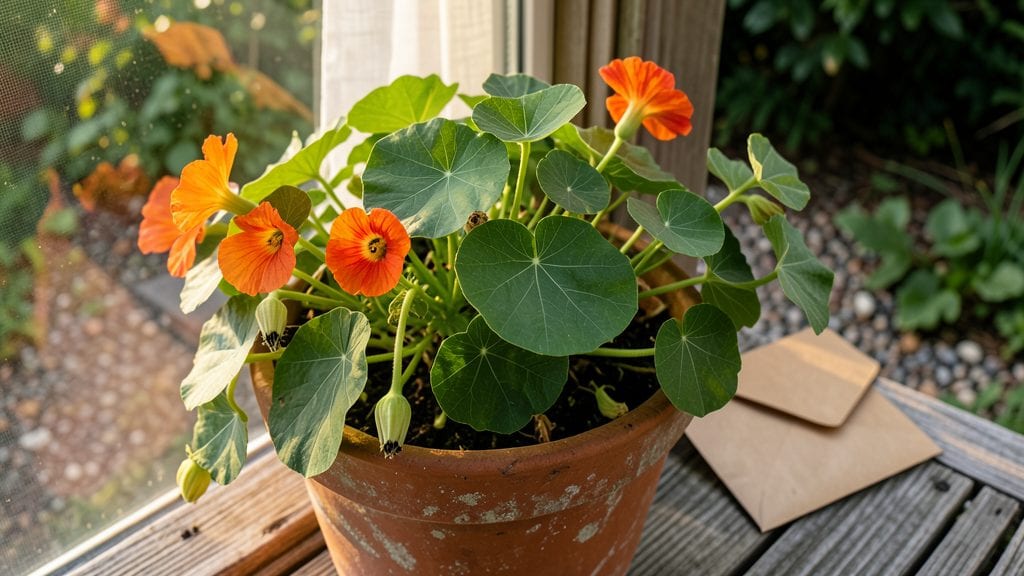
Harvesting nasturtium seeds happens when those papery pods turn from green to a deep, papery brown—usually 6-8 weeks after flowering starts. 🌻 I remember the first time I missed this window and ended up with seeds that refused to sprout.
The pods should rattle when shaken, signaling they’re ready to crack open and release their tiny, bright orange seeds.
Grab a pair of clean scissors or your fingers and snip the pods right off the vine before they split open naturally. Lay them out on a tray lined with newspaper to dry completely—this takes about 1-2 weeks in a warm, dry spot.
The seeds inside need that drying time to harden their shells and stay viable for next year’s planting.
Once fully dry, gently crush the pods between your fingers to release the seeds. Nasturtium seeds are surprisingly plump and easy to handle—they’ll stay good for 3-5 years if stored in a cool, dry place in a sealed container.
Imagine starting your garden next spring with seeds you grew yourself, saving money and ensuring plants that thrive exactly like your favorites.
Pro tip: Avoid harvesting seeds from hybrid nasturtiums if you want them to grow true—they won’t produce the same vibrant flowers. Stick with heirloom varieties like ‘Alaska’ or ‘Empress of India’ for reliable results.
With just a little patience, you’ll have a stash of seeds ready to plant long before next spring’s first frost.
📚 In This Guide
- What you need
- Instructions
- Tips and common mistakes
- Wrapping up and next steps
What you need
- ● Mature nasturtium pods: Fully ripened, papery pods (usually brown or tan) that have dried on the plant. Aim for at least 10-15 pods for a good seed yield.
- ● Pruning shears or sharp scissors: For cleanly snipping pods from the vine without damaging the plant.
- ● Paper bags or breathable fabric sacks: 2-3 medium-sized bags (12x15 inches) to collect pods and allow airflow for drying.
- ● Tweezers or small tongs: Helpful for gently extracting seeds from delicate pods.
- ● Glass jars or airtight containers: 1-2 wide-mouth jars (8-16 oz) with lids for seed storage.
- ● Labeling tags and a permanent marker: To mark jars with the variety name and harvest date.
- ● Drying tray or screen: A flat, elevated surface (like a wire rack) to spread pods out while they dry.
- ● Desiccant packets (silica gel) to place inside storage jars for extra dryness.
- ● Fine-mesh sieve or colander to separate seeds from chaff.
- ● Hand lens or magnifying glass for inspecting seed quality.
- ● Humidity monitor (if storing seeds long-term) to ensure <10% moisture.
Step-by-Step guide to harvesting nasturtium seeds
Here's how to collect and store seeds from your nasturtium plants for next year's garden.
🌱 Step 1: Identify and Monitor Seed Pods
Nasturtium seed pods form after flowers fade, starting as small green bulbs behind the blooms. Watch for pods that turn from green to yellow-orange—this signals ripeness. I like to check plants every 2-3 days once flowers begin wilting, as pods mature quickly.
Gently squeeze a pod between your fingers. If it feels firm and dry with a papery texture, it's ready. If it's still soft or green inside, wait another day. Overripe pods split open, scattering seeds everywhere, so timing matters. Harvest pods when they're fully dry and slightly wrinkled on the surface.
⏰ Step 2: Harvest at Peak Ripeness
Use clean, sharp pruning shears to snip the entire seed pod from the stem, leaving a small portion attached. This prevents damage to the plant and makes handling easier. Place harvested pods in a paper bag (not plastic—it traps moisture) and label with the variety and harvest date.
Here's the thing—don't harvest pods from the first flowers. Let the first few blooms fade naturally to ensure strong seed production. Focus on pods from the second or third flush of flowers, as these tend to be more vigorous for next season.
🪴 Step 3: Dry and Extract Seeds
Spread the pods in a single layer on a clean, dry surface in a warm, dry location (around 70-75°F) for 7-10 days. I use a mesh screen or an old window screen to allow airflow on all sides. Avoid direct sunlight, which can overheat and damage the seeds.
Once fully dry, the pods will split open on their own. Place the dried pods in a clean cloth or paper bag and gently crush them by hand or with a rolling pin. The seeds will fall out easily—just winnow away the chaff by shaking the bag over a bowl or tray. You'll see the flat, oval seeds separate from the lighter debris.
💧 Step 4: Store Seeds Properly
Transfer the clean seeds to a small envelope or airtight container (like a glass jar with a tight lid). Label it with the variety name and harvest year. Store in a cool, dark place (like a pantry or refrigerator) where temperatures stay below 50°F to maintain viability.
Nasturtium seeds remain viable for 3-5 years under ideal conditions, though they lose vigor after the first year. I like to test a few seeds annually to ensure they still germinate well. If you notice slower germination, it's time to refresh your seed supply.
Tips & tricks for perfect nasturtium seed harvesting
Timing and technique make all the difference when harvesting nasturtium seeds—here's what I've learned from years of seed saving.
Timing is Everything: In Step 1, when checking pods every 2-3 days, I've found that morning is the best time to assess ripeness. The pods are fully exposed to sunlight and most likely to show their true color. If you're unsure whether a pod is ready, wait until the next day—overripe pods split open and scatter seeds everywhere, making collection nearly impossible.
Harvesting Technique: When using pruning shears in Step 2, always leave a small portion of stem attached to the pod. This prevents the pod from tearing open during handling and makes it easier to identify which pods you've already harvested. I also recommend harvesting on a dry day to prevent moisture from seeping into the paper bag.
Drying Conditions: The 70-75°F drying temperature in Step 3 is ideal, but humidity is just as important. If your environment is particularly damp, consider using a small fan on low setting to improve airflow. I've had success drying pods on a mesh screen placed over a cardboard box to catch any seeds that might prematurely release.
Storage Wisdom: For long-term storage below 50°F in Step 4, I like to add a small packet of silica gel to the container. This helps absorb any moisture that might compromise seed viability. Labeling with both the variety name and harvest year is crucial—it's easy to forget which seeds you saved from which plant!
Pro Tips for Harvesting Nasturtium Seeds
- Timing and technique make all the difference when harvesting nasturtium seeds—here's what I've learned from years of seed saving.
- Timing is Everything: In Step 1, when checking pods every 2-3 days, I've found that morning is the best time to assess ripeness.
- Harvesting Technique: When using pruning shears in Step 2, always leave a small portion of stem attached to the pod.
Frequently asked questions
Got questions about harvesting nasturtium seeds?
You’re not alone! Here are answers to the most common queries to help you master the process like a pro.
When are nasturtium seeds ready to harvest?
Nasturtium seeds are ready when the seed pods turn papery brown and begin to split open on their own. This usually happens 4–6 weeks after flowering, depending on your climate. If pods stay green or firm, give them more time—they’re not ready yet!
How do I know if the seeds are fully mature?
Fully mature nasturtium seeds should rattle inside the pod when shaken and feel dry to the touch. If you squeeze a pod and it releases seeds easily, they’re harvest-ready! Pro tip: Test a few pods—if they’re still green inside, wait another week.
Can I harvest seeds if it’s still hot outside?
Yes, but timing matters! Harvest seeds on a warm, dry day to prevent mold. If temperatures are extreme (above 90°F or below 50°F), wait for cooler conditions. Store seeds in a cool, dark place (like a paper envelope) until you process them.
What if my nasturtium pods never open?
If pods stay closed, they might be overripe or diseased. Gently squeeze or cut open mature pods to extract seeds. To encourage natural opening, prune spent flowers early in the season or choose self-opening varieties like ‘Alaska’ or ‘Dwarf Jewel Mix.’
How should I store harvested nasturtium seeds?
Store seeds in a cool (50–60°F), dry place with low humidity (like a seed envelope or airtight container). They’ll stay viable for 2–3 years. Label them! Write the variety and harvest date to avoid mix-ups.
Wrapping up and next steps
Harvesting nasturtium seeds is a rewarding way to grow these vibrant flowers year after year!
By following the pod ripening timeline and mastering seed extraction, you’ll ensure a bountiful supply of seeds for future gardens. Now that you’re equipped with the know-how, it’s time to roll up your sleeves and start harvesting! 🌱
Your next step? Mark your calendar for the next pod-ripening season and keep an eye on those flowers. Happy growing—your garden will thank you!