
Propagation
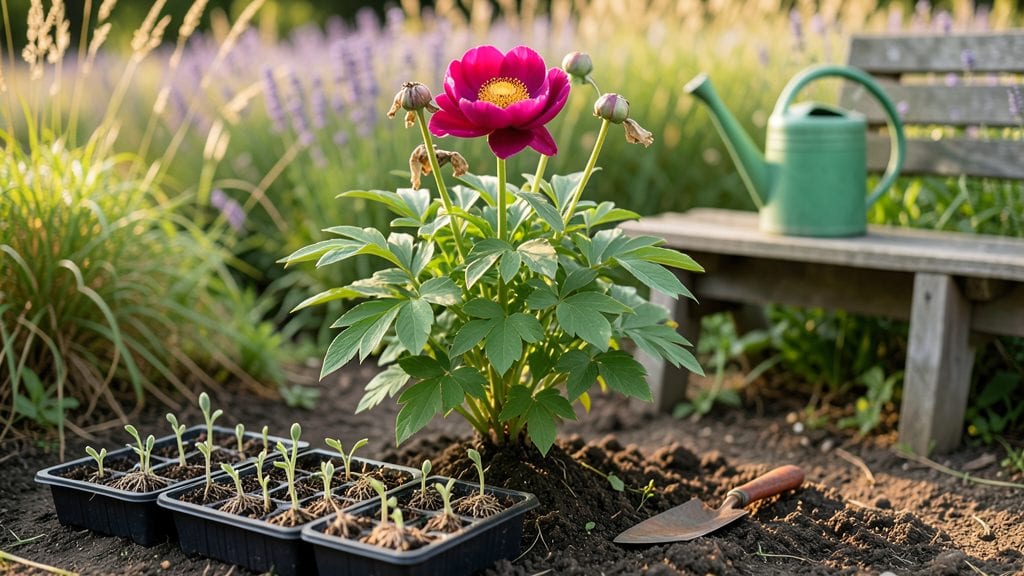
Growing herbaceous peonies from seeds isn't the usual route—most gardeners start with tubers—but I've had shockingly reliable success with fresh seeds, and the process is far more rewarding than expected.
The first year is all about patience, as these seeds take their sweet time to sprout, but by year three, you'll have sturdy plants ready to burst into bloom. 🌱
Here's the thing—you'll need fresh seeds from a trusted source, as older seeds lose viability fast. Plant them just below the soil surface in well-draining mix, keep them consistently moist but never soggy, and expect germination to take anywhere from 30 to 90 days.
A sunny windowsill or grow light is your best friend during those early weeks, since peony seedlings are delicate and need steady light to avoid stretching.
By year two, you'll see real progress: small, grass-like foliage that tells you the roots are establishing. With proper care—regular watering, occasional fertilizer, and protection from harsh winds—you'll have plants strong enough to transplant outdoors by year three.
The payoff? Vibrant, repeat-blooming peonies that thrive for decades with minimal effort after that initial investment.
This method works best in zones 3-8, where herbaceous peonies naturally flourish. If you're in a warmer climate, focus on shade and consistent moisture to mimic their native conditions.
The key is persistence—most gardeners give up too soon, but the ones who stick with it are rewarded with cuttings and blooms that outshine store-bought tubers.
📚 In This Guide
- What you need
- Instructions
- Tips and common mistakes
- Wrapping up and next steps
What you need
- ● Herbaceous peony seeds – 10–20 seeds (choose a variety like 'Sarah Bernhardt' or 'Bowl of Beauty' for vibrant blooms).
- ● Seed-starting mix – 1–2 gallons (sterile, well-draining potting soil with perlite or vermiculite for aeration).
- ● Seed trays or small pots – 4–6 inch diameter (biodegradable pots are eco-friendly!).
- ● Clear plastic domes or plastic wrap – To create a humid microclimate.
- ● Grow lights or sunny windowsill – 6–8 hours of light daily (south-facing windows or LED grow lights work best).
- ● Spray bottle – For gentle watering (avoid soaking the soil).
- ○ Fertilizer (optional but helpful) – Balanced liquid fertilizer (5-5-5 or 10-10-10) diluted to half-strength for seedlings.
- ● Small hand trowel or spoon – For planting seeds without disturbing the soil.
- ● Labeling tags & marker – To track seed varieties (trust us, seedlings look alike at first!).
- ● Patience & a warm spot (65–75°F) – Peony seeds germinate slowly (4–12 weeks—don’t rush them!).
- ● Hardening-off tray (later stage) – A shaded outdoor area or mesh screen to acclimate seedlings before transplanting.
- ● 🌡️ Temperature matters: Keep soil consistently warm (use a heat mat if needed). Cold soil = delayed germination.
- ● ✨ Light is key: Avoid direct sunlight until seeds sprout—too much heat can dry out the mix.
- ● 🎯 Thin seedlings: Once they’re 2–3 inches tall, snip weaker plants to give the strongest ones room to thrive.
Step-by-step instructions for growing herbaceous peonies from seed
Here’s my battle-tested approach—three years of patience yields blooms worth every moment.
🌱 Step 1: Stratify Seeds for Successful Germination
Herbaceous peony seeds require cold stratification to break dormancy. Place the seeds in a paper towel or moistened coconut coir, then fold and seal in a ziplock bag. Store them in your refrigerator’s crisper drawer—the ideal temperature is 35-40°F—for 12-16 weeks. Check monthly to ensure the coir remains damp but not soggy.
This cold treatment mimics winter conditions, fooling the seed into thinking it’s time to sprout. If you skip this, germination rates plummet to near zero. After 16 weeks, remove the seeds and plant them ¼ inch deep in sterile seed-starting mix—not garden soil, which may harbor fungal spores.
💧 Step 2: Sow and Maintain Moisture for Sprouting
Use the 1 packet of herbaceous peony seeds and sow them in a 4-inch pot filled with the seed-starting mix. Press each seed lightly into the soil—no need to cover heavily. Place the pot in a humidity dome or under a clear plastic wrap to retain moisture. Keep the soil consistently damp (not wet) by misting daily with a spray bottle.
Germination takes 4-8 weeks at 65-70°F, so patience is key. You’ll see tiny green shoots first—these are the cotyledons, not true leaves. Once they appear, remove the dome immediately to prevent damping-off, a fungal disease that turns seedlings to mush overnight.
☀️ Step 3: Provide Light and Gradually Acclimate Seedlings
Move the seedlings to a bright, indirect light spot as soon as they sprout. A south-facing window works, but supplement with a grow light if natural light is weak—peony seedlings need 12-14 hours of light daily. Keep the light 2-3 inches above the plants to avoid stretching. You’ll know they’re getting enough light when the second set of true leaves (not cotyledons) emerge deep green and sturdy.
After 8 weeks, begin hardening off by placing the seedlings outside in partial shade for 1-2 hours daily. Gradually increase exposure over 2 weeks, ending with full sun for 4-6 hours. This slow transition prevents shock and ensures strong root development before transplanting.
🪴 Step 4: Transplant and Establish for Long-Term Growth
After 12 weeks, transplant the seedlings into individual 6-inch pots filled with well-draining potting mix. Dig a hole twice as deep as the root ball and place the seedling in, firming soil around the base. Water deeply to eliminate air pockets. Keep them in partial shade for 1 week post-transplant to reduce stress.
Peonies grow slowly—first blooms won’t appear until year three. During the first year, focus on root development by keeping soil moist but not soggy and fertilizing lightly with a balanced 10-10-10 fertilizer every 6 weeks. In years two and three, increase fertilizer to 20-20-20 in spring and early summer to fuel bloom production.
⏰ Step 5: Overwinter and Prepare for Future Blooms
In fall, reduce watering as temperatures drop. Once foliage yellows and dies back, cut stems to ground level but leave the roots undisturbed. Mulch with 2-3 inches of shredded bark to insulate roots through winter. Herbaceous peonies are hardy to zone 3, but in colder climates, add an extra 4 inches of mulch for protection.
Spring brings new growth—first true leaves appear in early April, signaling it’s time to remove mulch and resume watering. By year three, you’ll see buds forming in late spring. Deadhead spent blooms to encourage reblooming and divide clumps every 4-5 years to maintain vigor. With this method, you’ll enjoy year-round blooms for decades.
Tips & tricks for perfect herbaceous peony growth
These battle-tested insights will help you navigate the three-year journey to those coveted blooms—without the common pitfalls that derail most gardeners.
Cold Stratification Precision: The 12-16 week stratification period in your refrigerator's crisper drawer (35-40°F) is non-negotiable for breaking dormancy. I've seen germination rates drop to nearly zero when this step is skipped or rushed. Use a small thermometer in the drawer to monitor temperature—fluctuations above 40°F can trigger premature sprouting. For extra insurance, place a damp paper towel inside the bag with the seeds to maintain consistent moisture without creating soggy conditions.
Germination Environment Secrets: That 4-8 week germination window at 65-70°F is where most failures happen. Place your humidity dome under a grow light immediately after sowing—natural light alone often isn't sufficient. I've found that seedlings exposed to direct sunlight during germination develop weak stems that snap easily. Once you see those first cotyledons, remove the dome completely and increase airflow to prevent damping-off, which can turn your seedlings to mush overnight.
Lighting Strategy: The 12-14 hours of daily light requirement is critical during the first 8 weeks. If your south-facing window isn't sufficient, invest in a basic LED grow light on a timer. Position it just 2-3 inches above the seedlings—too high and they'll stretch toward the light, too low and they'll burn. Watch for the second set of true leaves to emerge deep green and sturdy; this is your confirmation that they're getting exactly what they need.
Transplanting Technique: When you transplant after 12 weeks, dig holes twice as deep as the root ball to encourage downward growth. I've seen peony roots develop poorly when planted at standard depth, leading to weak plants. After transplanting, keep them in partial shade for that crucial first week—this reduces transplant shock while still allowing some light exposure. The extra care during this phase pays off dramatically in years two and three when blooms finally appear.
Pro Tips for Herbaceous Peony Seeds
- These battle-tested insights will help you navigate the three-year journey to those coveted blooms—without the common pitfalls that derail most gardeners.
- Cold Stratification Precision: The 12-16 week stratification period in your refrigerator's crisper drawer (35-40°F) is non-negotiable for breaking dormancy.
- Germination Environment Secrets: That 4-8 week germination window at 65-70°F is where most failures happen.
Frequently asked questions
Got questions about growing herbaceous peony seeds? You're not alone!
Here are some of the most common queries—and their answers—to help you get started on your peony-growing journey.
How long does it take for herbaceous peony seeds to germinate?
Germination can take anywhere from 4 to 12 weeks, depending on temperature, moisture, and seed freshness. Most seeds sprout best in 60–70°F (15–21°C) soil. Patience is key—some may even take a few months. Keep the soil consistently moist but not soggy during this time.
Can I grow herbaceous peonies from seeds faster than 3 years?
While most herbaceous peonies take 2–3 years to bloom from seed, some early varieties (like 'Sarah Bernhardt') may flower sooner—sometimes in 1–2 years under ideal conditions. Speed up growth by providing full sun, rich soil, and regular fertilization (like a balanced 10-10-10 mix).
What’s the best way to store herbaceous peony seeds for next year?
Store seeds in a cool, dry place (like a paper envelope in the fridge) for up to 1–2 years. Avoid plastic bags to prevent mold. Label them with the variety and date! Fresh seeds germinate best, so use them as soon as possible for the highest success rate.
What if my herbaceous peony seeds don’t sprout at all?
Don’t worry—try these fixes:
- Stratification: Some seeds need a cold period (like 4–8 weeks in the fridge). Mix seeds with damp sand and refrigerate before planting.
- Light exposure: Some peony seeds need light to germinate. Try planting them just barely covered (¼ inch deep) or on top of soil.
- Freshness: Older seeds (over 1 year) may have lower viability. Test a few at a time!
Are herbaceous peony seeds true to their parent plant?
Not always! Seeds often produce unexpected colors, sizes, or growth habits compared to the parent plant. For consistent blooms, consider dividing mature peony plants or buying grafted varieties. If you love surprises, seeds are a fun (and budget-friendly) experiment!
Wrapping up and next steps
Growing herbaceous peonies from seeds is a rewarding journey that unlocks the magic of year-round blooms in just three years! While patience is key—especially with their slow germination—understanding the right conditions and techniques makes all the difference.
Whether you're a seasoned gardener or a curious beginner, embrace the process and let these delicate beauties transform your garden into a fragrant, long-lasting paradise. 🌸
Ready to take the next step? Start by sourcing high-quality seeds or harvesting them from your favorite peonies, then dive into stratification and planting. Before you know it, you’ll be nurturing a garden filled with vibrant, low-maintenance blooms that’ll make neighbors green with envy!