
Propagation
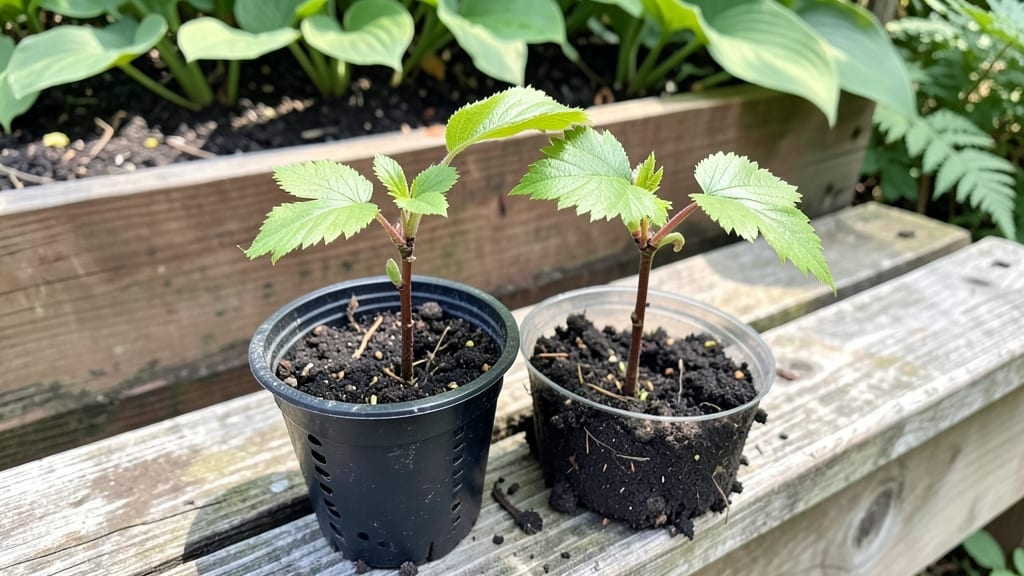
The identification of a cherry seedling at first glance can spare you years of frustration—those tiny leaves hold the key to telling your future tree apart from look-alikes.
I’ve spent years sorting through seedlings that looked like cherries but turned out to be plums or even wild hawthorns, and I’ll show you the telltale signs that separate the real deal from the imposters.
The key is in the leaf shape, bark texture, and how those branches grow—details most gardeners overlook until it’s too late.
Sweet cherries, sour cherries, and ornamental varieties each have distinct traits that make them easy to spot once you know what to look for.
A true cherry seedling will have smooth, slightly glossy leaves with finely serrated edges, while plum seedlings tend to have broader, duller leaves and a different branching pattern.
The bark on young stems is another dead giveaway—cherries develop a subtle reddish tint that plums lack, and the buds are arranged in a way that’s unmistakable once you’ve seen it a few times.
You’ll also learn how to verify your ID using free plant apps or a quick search of local botanical databases, so you can rule out lookalikes with confidence. The best part?
By the time you finish, you’ll spot a viable cherry seedling in seconds—no guesswork, no wasted space in your nursery. This isn’t just about telling them apart; it’s about choosing the right one for your climate and goals.
Whether you’re growing sweet cherries for pies, sour cherries for preserves, or ornamental varieties for shade, knowing these visual cues means you’ll end up with the tree you actually want. Let’s get those seedlings sorted so you can focus on what really matters: watching them grow into strong, fruitful trees.
Why it happens
Accurately identifying a cherry seedling can be tricky, especially when environmental factors, genetic quirks, or human errors muddle the process. Understanding the root causes—literally and figuratively—helps you spot mistakes early and take corrective action.
Below, we break down the most common reasons why cherry seedlings might be misidentified, along with the science behind each issue.
Cherry seedlings, like many trees, undergo dramatic changes as they mature. In their early stages, they may lack the distinct features—like leaf shape, bark texture, or flower clusters—that define a mature tree. For example:
- Leaf shape shifts: Young Prunus avium (sweet cherry) seedlings might have serrated edges that resemble Prunus cerasus (sour cherry) leaves until they fully develop. 🔍 Tip: Compare seedlings to a reference chart of mature cherry species to track progress.
- Bark mimics: Smooth, gray bark in early growth can resemble other stone fruit trees (e.g., plums or peaches) until the tree develops lenticels or rougher textures in later years.
- Delayed flowering: Some cherry varieties take 3–5 years to flower, leaving you guessing based solely on foliage. ⏳ Pro Tip: Note the growth rate—fast-growing seedlings are more likely to be hybrids or grafted varieties.
💡 Actionable Fix: Grow seedlings for 1–2 seasons under controlled conditions (e.g., containers) to observe trait consistency. Use a pruning shear to take cuttings for DNA testing if uncertainty persists.
Cherry trees are notorious for cross-pollinating, especially in orchards or wild settings. If a seed comes from a fertilized flower involving multiple cherry species (or even related genera like plums), the resulting seedling may inherit a mix of traits that don’t match any known variety.
| Parent Combination | Resulting Seedling Traits | Identification Challenge |
|---|---|---|
| Prunus avium (sweet cherry) × Prunus cerasus (sour cherry) | Medium leaf size, tart-sweet fruit, early blooms | Resembles neither parent; may be labeled as "wild cherry" |
| Prunus avium × Prunus salicina (Japanese plum) | Heart-shaped leaves, glossy finish, dwarf growth | Mistaken for a Prunus serrulata (cherry blossom) seedling |
🔥 Key Clue: Hybrid seedlings often exhibit uneven growth or asymmetrical leaves. If the tree blooms, the flowers may lack the uniform color of purebred cherries (e.g., white/pink streaks instead of solid pink).
Harsh growing conditions can stunt, discolor, or warp seedlings, making them look like a different species. Common stressors include:
- Nutrient deficiencies:
- Nitrogen (N) deficiency: Pale yellow leaves with green veins (resembles Prunus mahaleb, a cherry relative used for rootstock).
- Iron (Fe) chlorosis: Yellowing between leaf veins (can mimic disease damage, not species traits).
- Waterlogging: Dark, mushy roots and purple-tinged stems (often misdiagnosed as a "dwarf" variety).
- Extreme temperatures: Seedlings in hot climates may develop thicker cuticles or smaller leaves, mimicking high-altitude cherry species.
🌡️ Test It: Transplant the seedling to a controlled environment (e.g., greenhouse with balanced pH 6.0–6.5 soil) for 3 months. If traits stabilize, the issue was environmental—not genetic.
Many commercial cherry trees are grafted onto hardier rootstock (e.g., Mahaleb cherry or Weeping cherry rootstock). If you’re working with nursery-grown seedlings, the scion (top part) might not match the rootstock (bottom part), leading to confusion:
- Scion mismatch: The leaves or flowers may belong to one species (e.g., Stella® cherry), while the roots are from a different variety (e.g., Montmorency sour cherry).
- Suckering: New shoots sprouting from the rootstock can outcompete the desired scion, creating a chimera (a mix of two genotypes in one plant).
- Rootstock traits dominate: If the rootstock is Prunus mahaleb, the seedling may exhibit smaller, darker leaves and bitter almond scent when crushed.
✨ How to Check: Dig up the seedling and inspect the graft union (the bump where scion meets rootstock).
If the roots are thicker or gnarled, it’s likely grafted. 🔪 Tool Tip: Use a clean knife to make a shallow cut at the graft line—if two distinct barks are visible, you’ve found a graft.
Fixing Common Cherry Seedling Mistakes
Accurately identifying cherry seedlings is just the first step—proper care ensures they thrive. Whether you’re dealing with misidentification, poor growth, or environmental stress, these practical solutions will help you turn problems into healthy, vibrant saplings.
Below, we’ve mapped common issues to their fixes, complete with prevention tips to keep your seedlings on track.
Cause: Confusing cherry varieties (sweet, tart, or ornamental) with other trees like plum or chokecherry. Fix:
- Double-check leaf shape and veins: Sweet cherries have smooth-edged, heart-shaped leaves with prominent veins, while tart cherries often have slightly serrated edges. Plums and chokecherries have distinct leaf textures and scents.
- Examine the bark: Young cherry bark is smooth and reddish-brown; plums develop a more textured, grayish bark as they mature.
- Test the pit: If unsure, crack open the seed inside the fruit. A true cherry pit will have a smooth, oval shape with a pointed tip, while plum pits are more rounded.
💡 Prevention Tip: Keep a visual reference guide handy while collecting seeds or purchasing seedlings. Snap photos of key features (leaves, bark, flowers) for future comparison.
Cause: Overcrowding, poor soil, or inadequate sunlight. Fix:
- Thin seedlings: Space them 6–12 inches apart to reduce competition for nutrients. Use clean pruners to snip unwanted saplings at the base.
- Amend the soil: Cherry seedlings prefer well-draining, slightly acidic soil (pH 6.0–6.5). Mix in compost or a balanced fertilizer (10-10-10) to boost growth.
- Optimize sunlight: Place seedlings in a spot with at least 6 hours of direct sunlight daily. If indoors, use a grow light 12 inches above the seedlings for 14–16 hours/day.
🌡️ Pro Tip: Monitor soil moisture—overwatering can suffocate roots, while underwatering stunts growth. Stick your finger 1 inch into the soil; water if it feels dry.
Cause: Aphids, spider mites, fungal infections (like powdery mildew), or bacterial canker. Fix:
- Isolate affected seedlings to prevent spread. Remove heavily infested leaves or stems with sterilized pruners.
- Treat pests naturally:
- Aphids/spider mites: Spray with a mix of 1 tsp dish soap + 1 quart water. Repeat every 3–4 days.
- Fungal issues: Apply a copper fungicide or baking soda spray (1 tbsp baking soda + 1 quart water + a few drops of oil).
- Prevent bacterial canker by avoiding overhead watering. Water at the base and prune infected branches immediately.
✨ Prevention Tip: Rotate crops if growing multiple cherry varieties in the same area. Sterilize tools with rubbing alcohol between uses to kill pathogens.
Cause: Nutrient deficiency (iron/chlorosis), overwatering, or environmental stress (like cold drafts). Fix:
- Test soil pH: Yellowing between veins (iron deficiency) often occurs in alkaline soil. Add chelated iron or sulfur to lower pH gradually.
- Adjust watering: Brown, crispy leaves signal underwatering; yellow, mushy leaves mean overwatering. Aim for 1 inch of water per week, including rainfall.
- Protect from extremes: Move seedlings away from drafts or direct heat sources (like heaters or sunny windows). Use shade cloth if temperatures exceed 90°F.
🎯 Quick Fix: For mild chlorosis, spray leaves with an EDTA iron supplement (available at garden centers) every 2 weeks until color improves.
Cause: Root disturbance during moving or repotting. Fix: - Water thoroughly 1–2 days before transplanting to reduce shock. - Use the "slip-and-slide" method: Gently loosen the root ball, then slide the seedling (still in its container) into the new hole.
Backfill with soil and tamp lightly. - Mulch heavily (2–3 inches of organic mulch) to retain moisture and protect roots. Avoid piling mulch against the trunk.
🔥 Time-Saver: Transplant on a cloudy day to minimize stress from direct sunlight.
With these targeted fixes, your cherry seedlings will grow into strong, healthy trees. Act quickly when issues arise—early intervention makes all the difference! For persistent problems, consult a local extension office or arborist for variety-specific advice.
Frequently asked questions
How can I tell if my seedling is a true cherry versus a plum or peach?
Look at the leaves first—cherry seedlings have smooth, oval leaves with finely serrated edges and a slightly glossy finish. Plums typically have broader, duller leaves with more pronounced veins, while peach seedlings often show fuzzy undersides. The bark on young cherry stems also tends to have a reddish tint, while plums develop grayer, rougher bark as they mature.
What’s the best way to verify a cherry seedling’s identity if I’m unsure?
Use a plant identification app like PictureThis or LeafSnap to upload photos of leaves, bark, and buds. For absolute certainty, send a leaf sample to a local agricultural extension office—they often offer free or low-cost DNA testing for fruit trees. If the seedling is flowering, note the flower clusters: cherries have distinct, upright racemes while plums have solitary or paired blooms.
Can I grow a cherry seedling from store-bought fruit?
Yes, but expect unpredictable results! Seeds from grocery store cherries are often hybrids or may not grow true to type. For better success, collect seeds from local, disease-resistant varieties and soak them in water for 24–48 hours before planting. Most cherry seeds require stratification (cold treatment) for 3–4 months to break dormancy—place them in a moist paper towel in the fridge before spring planting.
Why does my cherry seedling look stunted compared to others?
Stunted growth often signals nutrient deficiency (like iron chlorosis) or poor drainage. Check the soil pH—cherries thrive in acidic soil (pH 6.0–6.5). Yellowing between leaf veins? Add chelated iron. Purple-tinged stems? It may need phosphorus. Also ensure it gets 6+ hours of sunlight daily—shade slows growth dramatically.
How long until I can identify a cherry seedling with certainty?
Most key traits (leaf shape, bark texture, branching) stabilize by 1–2 years, but flowering (which confirms fruit type) can take 3–5 years. For faster results, compare your seedling to a reference chart of mature cherry species. If it’s grafted, check the graft union (the bump where scion meets rootstock)—this reveals the true variety if the roots are from a different stock.