Pruning
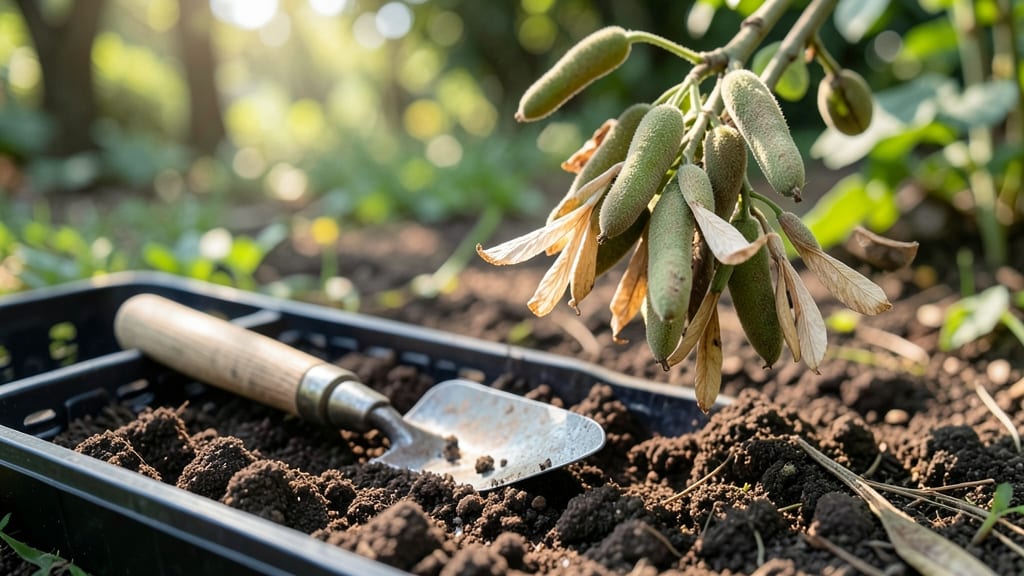
Identifying tree seeds unlocks a whole new world of growing your own forest. 🌿 I’ve spent years collecting seeds from my backyard and local parks, and the key to success starts with knowing what you’re holding—whether it’s the winged samaras of maples or the spiky cones of pines.
The wrong ID can mean wasted time or even invasive plants taking over your garden, so getting this right matters.
Most seeds have telltale traits: acorns are round with a cap, maple seeds have helicopter-like wings, and pinecones hold tiny, papery seeds inside. I keep a small notebook with sketches of common seeds I find, and I’ve never misidentified one since.
Even tricky lookalikes—like ash and elm seeds—have subtle differences in shape or texture that become obvious once you know what to look for.
Once you’ve got the ID down, the fun begins: collecting seeds, storing them properly, and germinating them into saplings. A single oak acorn can grow into a 100-foot giant, while a pinecone might yield a fragrant evergreen.
The satisfaction of watching something you planted grow into a tree is unmatched—especially when you’re the one who started it all from a seed.
This guide will walk you through the visual clues, common mistakes, and even where to verify your finds. No more guessing—just confidently turning seed hunts into future forests. Let’s get started!
Root Causes Of Seed Confusion
Identifying tree seeds can feel like solving a botanical puzzle—especially when similar species share overlapping traits. But why does this challenge arise so often? The answer lies in a mix of natural adaptations, human limitations, and environmental factors.
Understanding these root causes helps gardeners and nature enthusiasts approach the task with sharper focus. Here’s why seed identification often stumps even the most seasoned observers:
Many tree species evolve to look alike as a survival strategy. This convergent evolution occurs when unrelated plants develop similar seed structures to attract the same pollinators or dispersers (like birds or wind). For example:
- Maple (Acer) vs. Boxelder (Acer negundo): Both produce winged samaras, but Boxelder seeds are flatter and more elongated, mimicking maple seeds to trick animals into spreading them.
- Ash (Fraxinus) vs. Olive (Olea): Both have small, flattened seeds with papery wings, though ash seeds are typically lighter and more papery to aid wind dispersal.
💡 Pro Tip: Study the attachment point on the tree—maple seeds grow in pairs, while ash seeds often dangle singly from a central stem. Small details break the illusion!
Some tree seeds ripen and drop at nearly identical times, creating a visual smorgasbord of indistinguishable shapes. For instance:
- Late Summer/Early Fall: Elm (Ulmus), Hackberry (Celtis), and Sweetgum (Liquidambar) seeds all emerge, with elms producing flat, papery samaras and hackberries sporting spiky, berry-like seed clusters.
- Spring: Birch (Betula) and Alder (Alnus) seeds both release in catkins, but birch seeds are smaller and lighter, while alder seeds have a distinctive wingless capsule.
📊 Actionable Insight: Track seed drop patterns in your region. Use a local phenology calendar (like those from the USA National Phenology Network) to narrow down possibilities by month.
Our brains are wired to simplify complex patterns, leading to cognitive biases in identification:
- Size Distortion: A tiny seed might look like a magnified version of a larger one. For example, a 1/4-inch acorn from a white oak (Quercus alba) can resemble a 1/2-inch acorn from a black oak (Quercus velutina) if viewed from a distance.
- Color Fading: Fresh seeds often have vibrant hues (e.g., bright red in Virginia creeper seeds), but they bleach or darken over weeks, making them harder to match to reference guides.
- Partial Views: Seeds found on the ground may be broken, missing wings, or buried—key features like hilum (the scar where the seed attached to the fruit) are obscured.
🎯 Fix It: Always examine seeds under natural light (not fluorescent) and compare three angles: top, side, and base. Use a 10x magnifying lens for fine details like texture or vein patterns.
Seeds don’t exist in a vacuum—they’re shaped by their surroundings. These conditions can alter their appearance:
| Factor | Effect on Seed ID | Example |
|---|---|---|
| Humidity | High moisture can cause seeds to swell or develop mold, obscuring natural features. | Wet hazelnut seeds may look puffy and lose their characteristic smooth, glossy shell. |
| Wind Exposure | Seeds in open areas may wear down faster, losing wings or becoming abraded. | A winged sycamore seed (Platanus) might resemble a tattered maple seed after weeks of wind. |
| Soil Type | Seeds in sandy soil may discolor or fragment differently than those in clay. | Pine cones in acidic soil turn reddish-brown, while those in alkaline soil stay grayish. |
✨ Field Hack: Collect seeds in paper envelopes (not plastic) to preserve their natural state. Label them with the location and date to track environmental influences.
By recognizing these underlying causes, you’ll stop guessing and start solving. The next step? Arm yourself with the right tools—like a seed key or dissecting microscope—to turn confusion into clarity. 🌿
Quick Fixes for Seed ID Confusion
Struggling to tell a walnut from a hickory or a maple from an oak? Don’t worry—with the right tools and techniques, you can master identifying tree seeds like a pro. Below, we break down common challenges and provide practical, step-by-step solutions to help you decode nature’s hidden messages.
Cause: Many seeds (e.g., acorns vs. beechnuts, maple "helicopters" vs. ash keys) share vague similarities in color or size, making them hard to distinguish at first glance.
Fix:
- 📏 Measure & Compare
- Use a ruler or caliper to note length, width, and thickness. For example:
- Acorns are oval with a flat cap (1–2 inches long).
- Beechnuts are triangular with a fuzzy husk (½ inch long). -
- Use a ruler or caliper to note length, width, and thickness. For example:
| Seed Type | Shape | Texture | Distinct Feature |
|---|---|---|---|
| Maple (Samara) | Winged, flat | Smooth | Spiral twist |
| Ash (Key) | Winged, straight | Smooth | Opposite wings |
| Walnut | Round, lumpy | Hard shell | Deep grooves |
- 👀 Examine the Hull or Wing
- Winged seeds (samaras): Look for veins or curvature. Maple wings spiral; ash wings are straight.
- Nuts with caps (acorns): Check if the cap is scaly (oak) or smooth (chestnut).
- 🧪 The Float Test (For Water-Loving Seeds)
- Drop seeds in water:
- Floats? Likely a maple samara or buckeye.
- Sinks? Probably a walnut, hickory, or beech.
- Drop seeds in water:
💡 Pro Tip: Keep a seed journal with sketches or photos of unknown seeds. Over time, patterns will emerge!
Cause: Some seeds (like those from elms, mulberries, or birches) lack distinctive shapes or colors, leaving you guessing.
Fix:
- 🌱 Germinate a Test Batch
- Plant 2–3 seeds in moist soil and observe:
- Fast growers? Likely mulberry or ash (broad leaves).
- Slow, spiky? Probably pine or spruce (needles).
- ⏳ Timeframe: Most tree seeds sprout within 2–4 weeks if viable.
- Plant 2–3 seeds in moist soil and observe:
- 🍃 Leaf Shape = Seed’s Secret
- If you can’t ID the seed, find the parent tree’s leaves (even fallen ones).
- Example:
- Lobed leaves? Could be oak, hickory, or walnut.
- Serrated edges? Likely maple, ash, or birch.
- 🔬 Use a Magnifying Glass
- Tiny details matter! Look for:
- Hairs (beech nuts).
- Spines (horse chestnut).
- Pores or ridges (walnut shells).
- Tiny details matter! Look for:
🎯 Prevention Tip: Collect seeds alongside leaves or bark samples for cross-referencing later.
Cause: Some seeds (e.g., dandelion puffs vs. cottonwood fluff) appear in clusters, while others (like pine cones) take years to mature.
Fix:
- 📅 Seasonal Seed Guide
- Spring: Maple samaras, ash keys.
- Summer: Mulberries, elms.
- Fall: Acorns, walnuts, beechnuts.
- Winter: Persistent cones (pine, spruce).
- 🌲 Track the Parent Tree
- If you find seeds on the ground, walk upstream (literally or figuratively) to locate the tree.
- Pro Move: Use a tree ID app (like LeafSnap or PictureThis) to snap a photo of nearby leaves.
- 🕰️ Patience with Slow Releasers
- Cones (pine, fir): May take 1–2 years to open. Check for resin or scale patterns.
- Pods (lupine, locust): Split open to reveal seeds inside.
✨ Bonus Hack: Press seeds between two glass slides for a clearer view under natural light.
- Assuming all "nuts" are edible (e.g., horse chestnuts are toxic).
- Ignoring seed size (a 1-inch acorn ≠ a ½-inch beech nut).
- Overlooking seed attachments (e.g., hazelnuts in husks vs. filberts in leafy bracts).
Final Thought: The more you handle seeds, the sharper your eye becomes. Start with 5–10 common types, then expand your collection. Happy seed sleuthing! 🕵️♂️🌳
Frequently asked questions
What are the easiest tree seeds to identify for beginners?
Start with these standout types: maple samaras (helicopter wings), acorns (round with caps), and pinecones (spiky, woody structures). These have unmistakable shapes that make them perfect for first-time seed hunters.
How can I tell the difference between oak acorns and beechnuts?
Oak acorns are oval with a scaly cap and typically 1-2 inches long, while beechnuts are triangular with a fuzzy husk and only about ½ inch. Check the cap texture—oaks are rough, beechnuts are velvety.
Are there any dangerous seeds I should avoid collecting?
Yes! Horse chestnut seeds (spiky, round) are toxic, and black walnut husks stain permanently. Also avoid seeds from poison ivy (white berries) or yew trees (red arils). When in doubt, research the parent plant first.
Can I use a phone app to identify tree seeds?
Apps like PictureThis or LeafSnap work well for seeds by comparing leaf shapes or seed structures. For best results, take multiple photos (top, side, base) and note any distinguishing features like wings or caps.
How long can I store collected seeds before planting?
Most tree seeds stay viable for 1-2 years if stored in a cool, dry place (like a sealed container with silica gel). Acorns and walnuts can last longer, but maple samaras lose viability quickly—plant them within 3 months of collection.