Trees
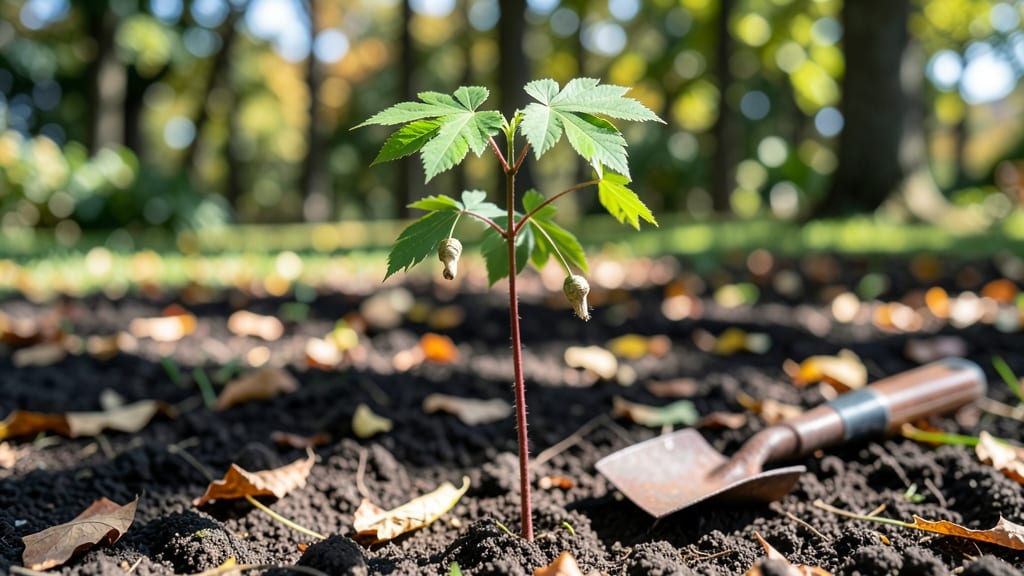
Mastering maple tree seedling identification starts with two key details: the shape of those first leaves and how the buds cluster along the stem. 🌿 I’ve spent years watching seedlings sprout in my yard, and I’ve learned that sugar maples have star-shaped leaves with pointed lobes, while red maples show more rounded edges with a brighter red tint.
The buds themselves tell the story too—sugar maples have smooth, egg-shaped buds, while red maples have pointed ones that look almost like tiny cones.
The real trick is comparing them side by side with other seedlings—elm leaves are more jagged, oak leaves have rounded lobes with fuzzy undersides, and birch leaves are narrow and toothed. Once you spot those differences, you’ll never confuse them again.
I started keeping a small notebook with sketches of the leaves I found, and it became my go-to reference for telling them apart in the wild.
What you’ll notice first is how maple seedlings grow upright and sturdy, even when they’re just a few inches tall. The leaves unfurl in spring with a bright green glow, and the stems have a smooth, slightly reddish bark that’s easy to miss at first glance.
By the time they’re a foot high, the leaf patterns become even more distinct, making them easier to identify without a magnifying glass.
This works for any backyard, forest edge, or even container-grown seedlings—just pay attention to the first flush of leaves in early spring. The sooner you learn these patterns, the sooner you can start nurturing your own maple grove or simply enjoy watching them thrive in the wild.
What Triggers Seedling Confusion
Identifying young maple seedlings can feel like solving a botanical puzzle—especially when similar-looking species throw you off. The confusion often stems from a mix of natural growth patterns, environmental influences, and even human misinterpretation.
Let’s break down the key reasons why seedlings can be so tricky to pinpoint at first glance.
Many maple species share striking physical traits in their early stages, making them nearly indistinguishable without close inspection. For example:
- Sugar Maple (Acer saccharum) and Black Maple (Acer nigrum) seedlings can look nearly identical in leaf shape and bud structure until they mature.
- Red Maple (Acer rubrum) and Silver Maple (Acer saccharinum) often have overlapping leaf lobe patterns, especially in their first few years.
- Boxelder Maple (Acer negundo) stands out with its compound leaves, but its simple-leafed seedlings can mimic other species until they develop.
These genetic overlaps force growers to rely on subtle details like leaf base symmetry, bud arrangement, or stem texture—features that are easy to overlook when seedlings are small.
Seedlings don’t grow in a vacuum. Their appearance can shift dramatically based on sunlight, soil quality, and water availability. Here’s how:
| Factor | Effect on Seedlings | Example |
|---|---|---|
| Low Light | Leaves may become smaller, less lobed, or darker green to maximize photosynthesis. | A Sugar Maple seedling in shade might resemble a Beech sapling at first glance. |
| Poor Soil Drainage | Stunted growth, yellowing leaves, or altered leaf shape due to nutrient deficiencies. | A Red Maple seedling in soggy soil could develop narrower lobes, mimicking a Swamp Maple. |
| High Wind Exposure | Leaves may grow thicker or more upright to reduce damage. | A Silver Maple seedling on a windy hillside might have stiffer leaves, confusing it with a Freemont Maple. |
Pro Tip: 🌡️ Compare seedlings grown side-by-side in identical conditions to spot natural variations vs. environmental masking.
Even experienced gardeners can misidentify seedlings due to common pitfalls:
- Focusing on Wrong Traits: Many prioritize leaf color or size over critical features like bud scales or petiole (leaf stem) shape.
- Seasonal Blind Spots: Buds and bark are most diagnostic in winter, but people often inspect seedlings in summer when leaves dominate the view.
- Hybrid Missteps: Crossbreeding (e.g., Norway Maple × Silver Maple) creates seedlings with unpredictable traits, blending characteristics of both parents.
Actionable Fix: 🔍 Use a dichotomous key or a seedling ID chart that prioritizes bud and leaf base details over general leaf shape.
Maple seedlings undergo dramatic changes as they age. What looks like a Boxelder at 6 inches might transform into a Sugar Maple by year three. Key transitions include:
- 🌱 Year 1: Simple leaves (even in compound species like Boxelder) can resemble other maples.
- 🌿 Year 2-3: Compound leaves (in Boxelder) or distinct lobing (in Sugar/Red Maple) become clearer.
- 🌳 Year 4+: Bark texture, branch patterns, and mature leaf shapes solidify identification.
Why It Matters: Rushing to identify a seedling before its second year risks mislabeling it entirely.
Quick Fixes for Seedling Confusion
Identifying maple tree seedlings can feel like solving a puzzle—especially when similar-looking species throw you off. But with the right approach, you can confidently distinguish them and nurture the perfect young tree.
Below are practical solutions tailored to common challenges, from misidentification to care mistakes, along with prevention tips to keep your seedlings thriving.
Problem: You’re staring at two seedlings with similar leaves, but you’re not sure which is a maple (or even if it’s a maple at all).
Fix It:
- 🍂 Compare Leaf Shapes: Hold a leaf up to natural light and trace its outline with your finger. True maple leaves (like Acer saccharum or Acer rubrum) have lobes with pointed tips that spread symmetrically. Non-maples (e.g., boxelder or ash) often have uneven or serrated edges without the classic "hand" shape.
- 🌱 Check the Buds: Maple buds are sticky or resinous when young and have a distinctive "V" or "U" shape when viewed from the side. Scratch a twig—if it smells like maple syrup (even faintly), it’s likely a maple!
- 📏 Measure the Leaf: Use a ruler to confirm the leaflet size. Sugar maple seedlings typically have 3–5 lobes, while red maple leaves may have 7+ lobes (though this varies by species).
Prevention Tip: 💡 Take photos from multiple angles (top, side, underside) and compare them to a maple seedling ID guide (like the USDA’s tree database). A quick snapshot can save hours of guesswork later!
Problem: Your seedlings are wilting, yellowing, or stunted—despite good watering.
Fix It:
- 💧 Check the Soil: Maple seedlings thrive in moist, well-draining soil with a slightly acidic pH (6.0–7.0). If the soil is compacted or waterlogged, roots suffocate. Solution: Amend heavy clay with compost or perlite, and ensure pots/drill holes for drainage.
- ☀️ Adjust Light Exposure: Too much sun scorches young leaves, while too little shade weakens growth. Solution: Place seedlings in partial shade (4–6 hours of sunlight daily) until established. Use shade cloth if needed.
- 🐜 Watch for Pests: Aphids, spider mites, and Japanese beetles love tender seedlings. Solution:
- 🔥 Spray with soapy water (1 tsp mild dish soap + 1 quart water) weekly.
- 🌿 Introduce companion plants like marigolds to deter pests naturally.
Prevention Tip: 🌡️ Monitor soil moisture with your finger—it should feel damp but not soggy. Mulch lightly (1–2 inches of wood chips) to retain moisture without smothering roots.
Problem: You’ve narrowed it down to "maple," but which type is it? Each has unique traits that matter for long-term care.
Fix It: Use this quick-reference table to compare key traits:
| Trait | Sugar Maple (Acer saccharum) | Red Maple (Acer rubrum) | Silver Maple (Acer saccharinum) |
|---|---|---|---|
| Leaf Shape | 3–5 lobes, deep sinuses | 7+ lobes, serrated edges | 5–7 lobes, silvery underside |
| Bud Shape | Oval, pointed, sticky | Egg-shaped, slightly sticky | Flat, overlapping scales |
| Bark | Smooth gray when young | Reddish when young | Shallow furrows, greenish streaks |
| Best For | Shade trees, syrup production | Fast growth, urban areas | Wet soils, quick canopy cover |
Pro Tip: ✨ Look at the twigs: Sugar maple twigs are stiff and upright, while red maple twigs droop slightly. Silver maple twigs often have a slightly zigzag pattern.
Problem: You’ve identified your seedlings but worry about mixing them up later.
Fix It:
- 🏷️ Label Immediately: Use waterproof plant tags with the species name, date planted, and a small sketch of the leaf. Include a QR code linking to a photo guide for future reference.
- 📅 Track Growth: Note the height and leaf development every 3 months. Maple seedlings grow 6–12 inches per year—if yours isn’t, it may need fertilizer (use a balanced 10-10-10 in spring).
- 🌱 Transplant Care: If moving seedlings, water deeply 24 hours before and prune any damaged roots. Plant at the same depth as the nursery pot.
Prevention Tip: 🎯 Group seedlings by species in your garden or nursery. This makes monitoring and care far easier and reduces cross-contamination risks (like pests spreading between types).
If your seedlings show sudden wilting, blackened stems, or fungal growth (like powdery mildew), it may be a disease issue (e.g., verticillium wilt).
In these cases: - 📞 Contact a local arborist or extension service for a soil test. - 🧪 Test for pests with a clear plastic bag trick: Shake a branch over a white sheet, then seal a small section in a bag for 24 hours. Check for insects inside.
Final Thought: Maple seedling identification doesn’t have to be overwhelming—focus on the leaves, buds, and bark, then double-check with reliable sources. Once you’ve got your ID locked in, consistent care (water, light, and pest control) will ensure your seedlings grow into strong, beautiful trees. Happy planting! 🌳💚
Frequently asked questions
How can I tell if a young seedling is actually a maple?
Look for opposite branching (leaves grow in pairs) and palmate leaf shape (lobes radiate from a single point). Maple seedlings also have sticky buds that smell faintly sweet when scratched. Compare these to non-maples like oaks (alternate leaves) or ashes (compound leaves).
Why do some maple seedlings look different from the mature trees?
Young maples often have simpler leaf shapes and fewer lobes than adults. For example, sugar maple seedlings might start with just 3 lobes instead of the mature 5-lobed pattern. Environmental factors like light exposure can also alter leaf development during early growth.
What's the best time of year to identify maple seedlings?
Late winter/early spring (when buds are forming but leaves haven't emerged) is ideal for spotting bud shape and arrangement. Summer identification works too, but focus on leaf base symmetry and stem texture rather than just leaf shape. Avoid fall when many trees have similar red/orange foliage.
Can I grow maple seedlings from store-bought maple syrup?
No - maple syrup is pasteurized and won't sprout. For propagation, collect winged samaras (helicopter seeds) in fall, plant them immediately in moist soil, and keep them consistently damp until germination (which can take 1-2 years).
How do I distinguish between sugar maple and red maple seedlings?
Check these key differences: sugar maples have 3-5 lobes with deep sinuses, while red maples typically show 7+ lobes with serrated edges**. Sugar maple buds are oval and pointed, while red maple buds are egg-shaped with a more rounded tip. The bark also differs - sugar maple stays smooth longer.