
Lawn
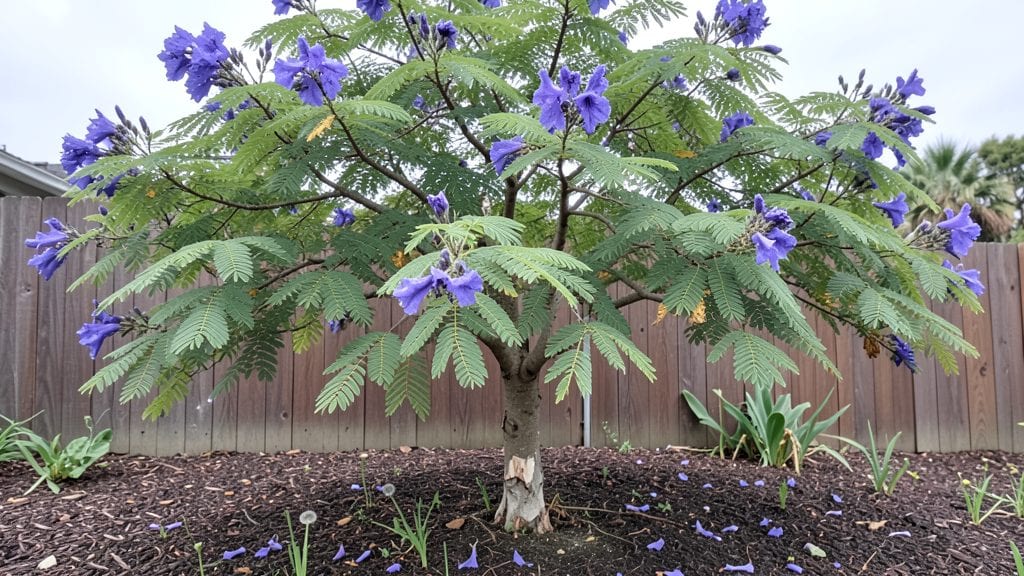
Growing jacaranda trees from seed pods means waiting for purple waterfall blooms that’ll transform your yard into a tropical paradise. 🌿 I cracked open my first pod after watching it split open on the sidewalk—inside were flat, papery seeds that looked nothing like what I expected.
These aren’t your typical round seeds; they’re delicate and irregular, and they need very specific conditions to sprout.
The key to success starts with patience and the right setup. You’ll need well-draining soil, a warm spot (70-80°F), and consistent moisture without soggy soil—jacarandas hate wet feet.
Most people rush germination, but these seeds take 4-12 weeks to crack open, and they’re notoriously picky about when they’ll finally decide to grow. The payoff? A tree that’ll give you shade and dramatic blooms in 5-10 years if you nurture it right.
Once those first green shoots appear, you’ll need to protect them from strong winds and keep them in bright, indirect light until they’re sturdy enough for full sun. The early stages are the most fragile part—too much water, too little light, or even a draft can stall growth.
But when you see that first set of compound leaves unfurl, you’ll know you’re on the right track toward a future canopy of lavender clouds.
This isn’t a quick project, but the journey makes it rewarding. Even if you face challenges, jacarandas are resilient once established. Whether you’re starting with pods from your neighborhood or a nursery, the process connects you to these trees’ wild origins—and the payoff is worth every wait.
Let’s get those seeds planted!
📚 In This Guide
- What you need
- Instructions
- Tips and common mistakes
- Wrapping up and next steps
What you need
- ● Jacaranda seed pods: 5–10 fresh, mature pods (harvested in late spring to early summer when they’re brown and slightly dry). Pro tip: 💡 Collect them from healthy, disease-free trees for the best results!
- ● Well-draining potting mix: 1–2 gallons of a blend designed for tropical or desert plants (e.g., cactus/succulent mix + perlite or sand for aeration).
- ○ Small pots or seed trays: 4–6 individual pots (3–4 inches deep) or a tray with drainage holes. Optional: Biodegradable peat pots for easy transplanting later!
- ● Drainage material: Pebbles, perlite, or broken terracotta shards (1–2 inches thick) for the bottom of pots.
- ● Spray bottle: For gentle watering (avoid over-saturating the seeds!).
- ● Plastic wrap or humidity dome: To create a mini greenhouse effect while seeds germinate.
- ● Grow lights or sunny windowsill: A warm, bright spot (70–80°F) with indirect light for early growth.
- ● Pruning shears or scissors: For carefully opening seed pods to extract seeds.
- ○ Seed germination aid: A small amount of rooting hormone (optional but can speed up germination).
- ● Fertilizer: Balanced liquid fertilizer (5-5-5 or 10-10-10) diluted to half-strength for young seedlings.
- ● Humidity tray: A shallow tray filled with water and pebbles to maintain moisture levels.
- ● Garden journal: To track seed pod collection dates, germination progress, and growth milestones!
- ● Outdoor space: A sheltered, sunny spot (Zone 9–11) for transplanting mature seedlings once they’re 1–2 feet tall.
Step-by-Step instructions for germinating jacaranda seed pods
Here's how I transform those striking purple seed pods into thriving young trees.
🌱 Step 1: Extract and Prepare the Seeds
Collect mature jacaranda seed pods when they've turned brown and split open naturally—this usually happens in late fall or winter. Inside, you'll find flat, winged seeds that look like miniature helicopters. Remove the seeds carefully, discarding any that appear shriveled or damaged.
Soak the viable seeds in warm water for 24 hours to soften the tough outer shell. This step dramatically improves germination rates by breaking seed dormancy. After soaking, drain them and let them air-dry for 1 hour on a paper towel. The seeds should feel slightly damp but not wet—this prevents rot during planting.
🪴 Step 2: Plant in Moist, Well-Draining Mix
Fill small pots (about 3-4 inches deep) with a mix of 50% peat moss and 50% perlite. Jacaranda seeds need excellent drainage—they'll rot if left in soggy soil. Press the mix down lightly to create a firm planting surface, then make a shallow depression about ¼ inch deep for each seed.
Place 1-2 seeds per pot at the same depth, spacing them about 1 inch apart. Cover them with a thin layer of additional mix, just enough to obscure their shape. Gently pat the soil surface to ensure good seed-to-soil contact, which is critical for moisture uptake.
💧 Step 3: Provide Warmth and Humidity
Set the pots in a warm location (75-85°F), ideally on a seedling heat mat. Jacaranda seeds germinate best in warmth, and this mimics their tropical native conditions. Place a clear plastic dome or wrap the pots in plastic wrap to maintain high humidity—80% or higher—until germination occurs.
Check the soil daily but only water when the top ½ inch feels dry. Mist the plastic cover lightly if condensation stops forming. Germination typically takes 3-6 weeks, so patience is key. You'll know it's working when you see tiny green sprouts pushing through the soil surface.
☀️ Step 4: Transition to Light and Air
Once seedlings emerge, remove the plastic cover immediately to prevent fungal growth. Move them to a bright location with indirect light—direct sun at this stage can scorch tender new leaves. A south-facing window with sheer curtains works well, or use a grow light 6-8 inches above the plants for 12-14 hours daily.
When the first pair of true leaves (not the initial seed leaves) appears, transplant the stronger seedling to its own 5-inch pot with fresh mix. This prevents competition and gives roots room to establish. Water gently after transplanting to settle the soil around the roots.
⏰ Step 5: Gradually Acclimate Outdoors
After 8-10 weeks of indoor growth, when seedlings have 4-6 leaves, it's time to harden them off. Start by placing them outside in a shaded, sheltered spot for 2 hours daily. Gradually increase their outdoor time over 2 weeks, moving them to sunnier locations each day.
Watch for signs of stress like wilting or yellowing leaves—this means they're adapting too quickly. Once they tolerate full sun for 6 hours daily without wilting, they're ready for permanent outdoor planting. Choose a location with well-draining soil and at least 6 hours of sun for your young jacaranda.
Tips & tricks for germinating jacaranda seed pods
A few little tricks can make all the difference when transforming those delicate seed pods into thriving young trees.
The Soaking Secret: That 24-hour warm water soak in Step 1 isn't just about softening the shell—it's about breaking dormancy. I like to use a bowl of warm (not hot) water and add a drop of dish soap to help reduce surface tension. This makes the seeds more receptive to water uptake. After soaking, I double-check the seeds feel damp but not soggy—that hour of air-drying prevents mold from forming later.
Drainage is Everything: The 50% peat moss and 50% perlite mix in Step 2 is non-negotiable. I've learned the hard way that jacaranda seeds rot if they sit in soggy soil. If you don't have perlite, you can substitute it with coarse sand or pumice stones. The key is that water should drain through the mix within 10 minutes of watering—if it pools, you're doing it wrong.
Heat Mat Hack: For the warm location (75-85°F) in Step 3, I recommend using a seedling heat mat rather than just placing pots near a heater. Heat mats provide consistent warmth from below, which is exactly what jacaranda seeds need to germinate. If you don't have one, place your pots on top of your refrigerator (the coils create warm air) or use a heating pad set to low. Just make sure the temperature stays within that 75-85°F range—too hot and you'll cook the seeds.
Light Transition Timing: When moving to that 12-14 hours of grow light in Step 4, I wait until the seedlings have their first true leaves before introducing artificial light. This prevents leggy growth. I position the grow light about 6 inches above the plants and adjust the height as they grow—closer for more light, farther for less intensity. The goal is to mimic natural sunlight without scorching those tender leaves.
Pro Tips for Jacaranda Seed Pods
- A few little tricks can make all the difference when transforming those delicate seed pods into thriving young trees.
- The Soaking Secret: That 24-hour warm water soak in Step 1 isn't just about softening the shell—it's about breaking dormancy.
- Drainage is Everything: The 50% peat moss and 50% perlite mix in Step 2 is non-negotiable.
Frequently asked questions
Got questions about jacaranda seed pods? You’re not alone—these tropical beauties spark curiosity! Here are answers to the most common queries to help you navigate growing, caring, and troubleshooting with confidence.
When do jacaranda seed pods appear after planting?
Seed pods typically form 1–2 years after planting, once your tree is mature enough (around 5–10 feet tall). Pods appear in late summer or fall, right before the iconic purple blooms. Patience is key—immature trees may take longer!
Are jacaranda seed pods toxic to pets or kids?
While the seeds and pods contain mild toxins (like cyanogenic glycosides), they’re usually not fatal unless consumed in large quantities. Still, keep curious pets/kids away—opt for pet-safe alternatives if safety is a concern.
How long do jacaranda seed pods take to dry and open?
Once pods turn brown and papery (usually 4–6 weeks after blooming), they’ll dry and split open on their own. Do not force them—this releases seeds naturally. Store dried pods in a cool, dry place for up to a year if you’re saving seeds for planting.
Can I grow jacaranda from seed pods instead of buying seeds?
Extract seeds from dried pods, soak them in warm water for 24 hours, then plant ½ inch deep in well-draining soil. Germination takes 3–6 weeks—keep soil moist but not soggy. Pro tip: Stratification (cooling seeds for 4–6 weeks) can boost success!
Why aren’t my seed pods forming, even though my tree has flowers?
Missing pods often mean pollination issues (jacarandas need bees!) or nutrient deficiencies. Try hand-pollinating with a soft brush or fertilizing with phosphorus-rich compost. Also, ensure your tree gets full sun (6+ hours/day)—shady spots can delay flowering.
Still stumped? Drop your question in the comments—we’re happy to help!
Wrapping up and next steps
Growing jacaranda seed pods into stunning shade trees is a rewarding journey that brings a touch of tropical beauty to your lawn. 🌿 From understanding their unique timeline to nurturing them with care, you’ve now got all the tools to succeed!
Whether you’re a seasoned gardener or a curious beginner, this process is as satisfying as it is simple.
Ready to watch your jacaranda thrive? Start by planting your seeds this season—and don’t forget to share your progress with fellow plant enthusiasts! 🌱 With patience and passion, you’ll soon be enjoying the breathtaking blooms and lush shade these trees provide.