
Propagation
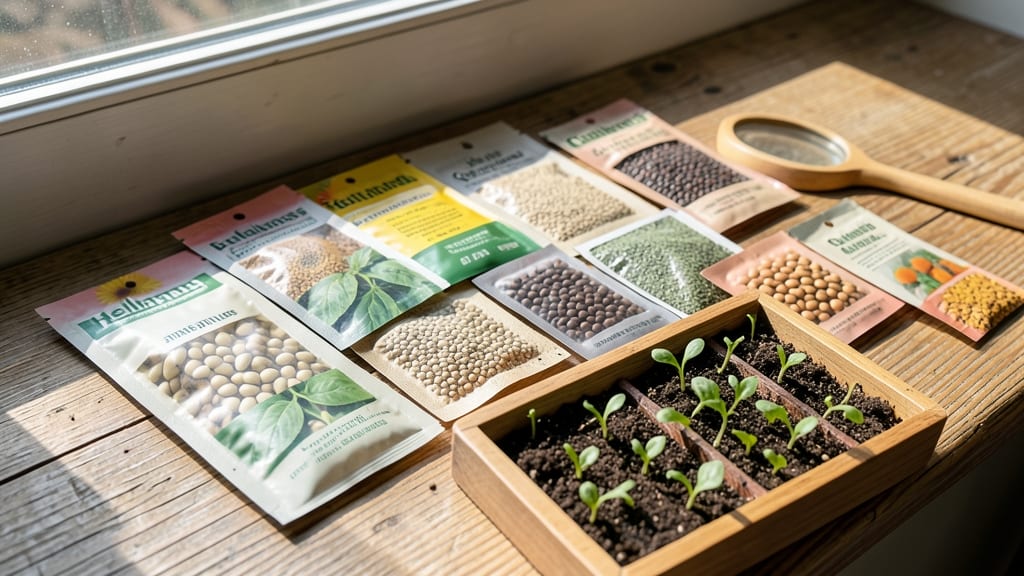
The meaning of seeds lies in their role as nature's reproductive powerhouses, housing embryonic plants and nutrient reserves that fuel germination and growth into fully developed organisms. These tiny packets ensure species continuity by carrying genetic blueprints across generations while adapting to environmental cues for survival.
Seeds are nature's way of preserving life's blueprint in a compact, portable form. 🌱 They're not just plant embryos—they're survival packages containing everything needed to kickstart growth when conditions are right.
The outer shell protects the delicate inner plant while chemical inhibitors delay sprouting until the perfect moment arrives, whether that's after a forest fire or a good rain. This built-in intelligence explains why seeds have sustained ecosystems for millions of years, from ancient ferns to today's food crops.
What makes seeds particularly fascinating is their dual role as both biological marvels and practical tools. In agriculture, seed selection determines crop success—choosing the right variety for your climate can mean the difference between a thriving garden and a failed harvest.
The way seeds store energy also makes them ideal for human consumption, whether we're snacking on sunflower seeds or planting them to grow our own food.
💡 In This Article
- How Seeds Enable Plant Reproduction and Survival
- Practical Uses of Seeds in Gardening and Agriculture
How seeds enable plant reproduction and survival
The journey from flower to seed begins with pollination, where pollen grains containing male genetic material transfer to a flower's stigma. This triggers fertilization, creating a zygote that develops into an embryo within 7-30 days, depending on the plant species.
The ovary surrounding the ovule then transforms into the seed coat, a protective barrier that regulates water and oxygen exchange while shielding the embryo from predators and harsh conditions. 🌱 This process ensures genetic diversity through cross-pollination, where wind or pollinators carry pollen from different plants, creating offspring with varied traits that improve survival chances in changing environments.
Seed formation involves three critical phases: embryogenesis (embryo development), maturation (nutrient storage), and dormancy preparation. During maturation, the seed accumulates 20-60% starch and proteins in its endosperm, which acts like a biological battery providing energy for germination.
For example, a single soybean seed contains enough stored energy to fuel a 100-fold increase in biomass during early growth. The hard seed coat develops specialized structures like micropyles (tiny pores) that control water intake, while chemical inhibitors like abscisic acid delay germination until conditions are optimal.
Environmental triggers like light, moisture, and temperature act as germination signals. Some seeds, like lettuce, require red light exposure to break dormancy, while others need freezing temperatures (a process called stratification) to soften their coats.
The classic example is the 120°F heat shock needed to crack hard seed coats in plants like maples.
This adaptive timing ensures seeds germinate when resources are available, preventing competition with established plants. 🌱 The precision of these triggers explains why some desert plants wait decades for the perfect rainstorm before sprouting.
Genetic inheritance works through meiosis, where each parent contributes half its chromosomes to create unique offspring. This random mixing creates genetic variation—why no two siblings in a sunflower patch are identical. The seed's genetic code also determines its growth pattern, from leaf shape to root depth.
For instance, corn seeds carry instructions for developing 12-20 leaves before flowering, while wheat seeds prioritize rapid root growth to access water quickly. These built-in programs ensure each species thrives in its native habitat.
Dormancy strategies vary dramatically across species. Some seeds, like those of the African baobab tree, can remain viable for 100+ years in dry conditions, while others need fire to trigger germination.
The chemical abscisic acid maintains dormancy by suppressing growth hormones until environmental cues (like soil moisture) reach threshold levels.
This dual control system explains why gardeners often soak seeds overnight—mimicking natural rain events to overcome dormancy barriers. 💫 The result is a finely tuned survival mechanism that balances immediate reproduction risks with long-term species persistence.
Consider how these mechanisms work in action: A dandelion seed disperses on the wind, lands in disturbed soil, and germinates within days if moisture is present.
Meanwhile, a 10,000-year-old date palm seed from the Dead Sea Scrolls germinated successfully in 2005, demonstrating how seed biology bridges ancient survival strategies with modern applications. This dual capability—immediate response or delayed germination—explains why seeds dominate nearly every ecosystem on Earth.