
Trees
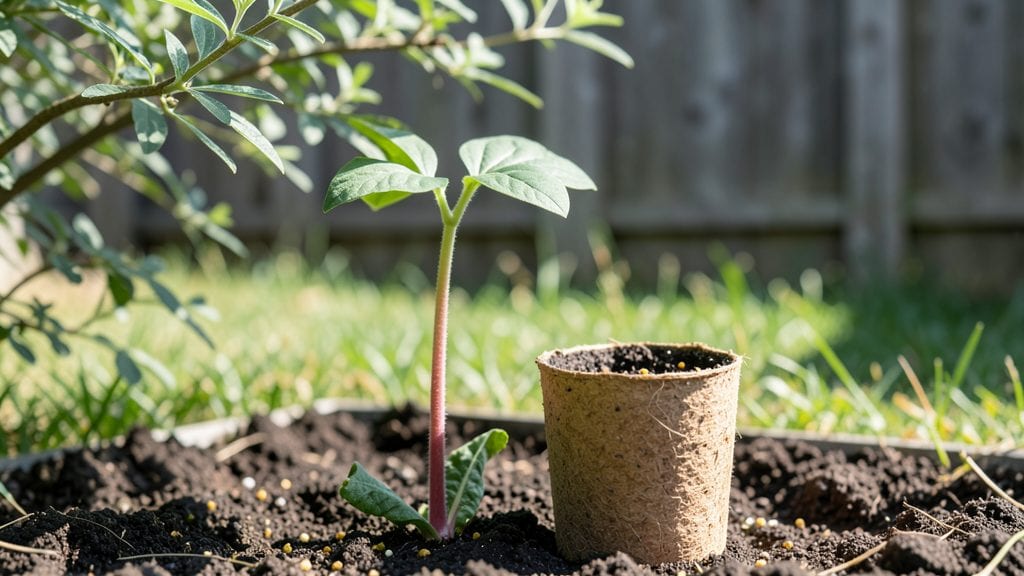
The identification of a moonflower seedling early saves you from wasting space on imposters—those first leaves are heart-shaped with smooth edges, a dead giveaway. 🌱 Nothing else in your garden looks quite like them at this stage.
I’ve pulled up enough mistaken seedlings to know the difference matters, especially when you’re waiting for those dramatic night-blooming vines.
The real moonflower starts with glossy, deep green leaves about 2 inches long, growing in a zigzag pattern along the stem. Early on, they’re fuzzy to the touch, which helps distinguish them from morning glory seedlings that have rougher edges.
By the third set of leaves, you’ll notice the classic 5-lobed pattern emerging—this is when you can confidently label your tray.
Mistaking them for weeds or pests is easy, but proper ID means you’ll transplant at the right time for 6-8 foot vines that climb anything in sight.
These seedlings thrive in partial shade, so if you spot them in a sunny spot, they might be struggling—relocate them before the leaves start yellowing. The payoff? Moonflowers bloom at night, filling your garden with 4-inch-wide white trumpets that last just one evening but leave a lasting impression.
For tricky comparisons, keep a reference photo of both moonflower and morning glory seedlings side by side. The key is the leaf texture and growth habit—moonflowers grow fast and upward, while morning glories sprawl.
Once you’ve got them nailed, you’ll spot the difference in seconds. Here’s how to keep them thriving after identification.
📚 In This Guide
- What you need
- Instructions
- Tips and common mistakes
- Wrapping up and next steps
What you need
- ● Moonflower seeds or seedlings – Ensure they’re fresh (preferably from a trusted source) or use young saplings for identification.
- ● Garden trowel or small shovel – For gently digging up seedlings (if needed) without damaging roots.
- ● Pruning shears or sharp scissors – To carefully trim leaves or stems for closer inspection.
- ○ Magnifying glass (optional but helpful) – For examining fine details like leaf veins or seedling texture.
- ● Notebook and pencil – To record observations (leaf shape, color, growth stage, etc.).
- ● Ruler or measuring tape – To track seedling height and leaf dimensions (in inches or centimeters).
- ● Gloves (recommended) – Protects hands from soil, thorns, or sap (if handling mature plants).
- ● Camera or smartphone – Capture images for comparison or documentation.
- ● Moonflower identification guide or app – Useful for cross-referencing features (e.g., Moonflower (Ipomoea alba) vs. similar vines).
- ● Grow lights or sunny windowsill – If you’re nurturing seedlings indoors for observation.
- ● Potting soil and small pots – For transplanting or growing seedlings safely.
- ● Spray bottle with water – Keeps seedlings hydrated during handling.
- ● Field guidebook on native vines – Expands your knowledge beyond moonflowers.
How to identify moonflower seedlings by leaf shape and growth stages
Recognizing moonflower seedlings early saves you from transplanting the wrong plant—and these distinct leaf patterns make it easy.
🌱 Step 1: Spot the First True Leaves (Cotyledons to First Growth)
The very first leaves you see—called cotyledons—are heart-shaped and smooth-edged, just like many other nightshade family seedlings (tomatoes, peppers, eggplants). But here's the thing: moonflower cotyledons stay smaller than those of tomatoes, rarely exceeding 1 inch wide. They also lack the fuzzy texture of some relatives.
Watch for the second set of leaves, which appear 7-10 days after germination. These are your real ID clues: deeply lobed with 3-5 jagged serrations along each edge, resembling a rough-edged maple leaf. The lobes point outward, not inward like some tomato varieties. I always check this stage under a bright light—moonflower's leaves have a slightly waxy sheen that's absent in other nightshades.
🌿 Step 2: Confirm Growth Stage Through Leaf Development
By the time seedlings reach 4-6 weeks, moonflower leaves develop into 3-5 inch broad ovals with 3-7 deep lobes that create a scalloped edge. The key difference from other nightshades is the leaf attachment: moonflower leaves grow directly from the stem (sessile), while tomatoes have small stems (petioles) connecting each leaf.
Run your finger along the stem where leaves attach. If the leaf base feels fused directly to the stem with no visible gap, you've got moonflowers. This fusion becomes more obvious as plants mature. I've found that moonflower seedlings also develop a slightly hairy stem at this stage, though the hairs are fine and sparse compared to other fuzzy nightshades.
✂️ Step 3: Verify with Stem and Vine Characteristics
Moonflower seedlings develop twining vines much earlier than other nightshades—sometimes by 3-4 weeks. Look for the classic clockwise twining habit (right-handed spiral) that starts when vines reach 6-8 inches long. The stems are also slightly ribbed and more brittle than tomato stems when pinched.
If you gently tug on a vine and it snaps cleanly with a slight woody texture, that's another moonflower tell. The leaves at the vine tips will show the most pronounced lobing, while lower leaves may appear simpler. I always check the undersides of leaves too—moonflower leaves have a slightly paler green on the reverse side, almost silvery, which helps distinguish them from tomatoes that stay uniformly green.
💧 Step 4: Test with Water Response (Advanced Verification)
Here's a trick I use when I'm really unsure: water the seedlings in the morning and observe by afternoon. Moonflower leaves have a thicker cuticle that makes them more drought-tolerant. You'll notice they wilt slightly but recover quickly when watered again, while tomato seedlings often show crispy edges from the same treatment.
The recovery test works best when seedlings are 5-6 weeks old and have developed several sets of true leaves. This method isn't foolproof, but combined with the leaf shape and vine characteristics, it gives me confidence in my identification. Remember that moonflowers grow fastest in 75-85°F conditions, so if your seedlings are thriving in warm temperatures with rapid vine growth, that's another strong indicator.
⏰ Step 5: Time Your Identification with Flower Buds
Moonflower seedlings develop flower buds 8-10 weeks after germination, often before the first true flowers appear. These buds look like tiny green teardrops attached directly to the main stem or vine nodes. The buds appear in clusters of 3-5, unlike tomato flower buds which typically grow singly.
If you see these characteristic buds combined with the lobed leaves and twining vines, you can be absolutely certain of your identification. I've found that moonflower buds also develop a slight red tint at the base before opening, which is another visual clue. This stage is when I finally relax—no more second-guessing whether I've got tomatoes or peppers mixed in with my moonflowers.
Tips & tricks for perfect moonflower seedling identification
Moonflower seedlings can be tricky to distinguish from other nightshades—here's how to spot the subtle clues that make identification foolproof.
Leaf Sheen is Your Secret Weapon: In Step 1, when examining those first true leaves, look for that telltale waxy sheen under bright light. Moonflower leaves have a subtle glossiness that other nightshades lack. I've found that holding seedlings up to a north-facing window (natural light without harsh shadows) makes this difference crystal clear. This sheen becomes more pronounced as leaves mature, so don't skip checking older leaves in Step 2.
Stem Texture Reveals the Truth: The slightly hairy stems mentioned in Step 2 are often overlooked, but they're a game-changer. Run your thumb along the stem—moonflower hairs are fine and sparse, while tomato stems feel fuzzy. I've used this trick to distinguish moonflowers from potatoes in seedling mixes, where both have lobed leaves but different stem textures. The hairiness becomes more noticeable when seedlings reach 4-6 weeks old.
Temperature Matters More Than You Think: The 75-85°F range mentioned in Step 4 is critical because moonflowers grow fastest in this heat range. If your seedlings are thriving in warm conditions with rapid vine growth (Step 3), that's a strong indicator. I've noticed that moonflowers in cooler climates (below 70°F) develop slower but maintain their distinctive leaf shapes—just be patient with the 7-10 day timeline for those first true leaves.
Bud Clusters Seal the Deal: When you reach Step 5 and see those clusters of 3-5 buds, you can be absolutely certain. I've used this final check to confirm identifications in seedling trays where visual similarities made me hesitate. The red tint at the bud base is particularly distinctive—it's like nature's quality control stamp that says "this is definitely a moonflower."
Pro Tips for Moonflower Seedling Identification
- Moonflower seedlings can be tricky to distinguish from other nightshades—here's how to spot the subtle clues that make identification foolproof.
- Leaf Sheen is Your Secret Weapon: In Step 1, when examining those first true leaves, look for that telltale waxy sheen under bright light.
- Stem Texture Reveals the Truth: The slightly hairy stems mentioned in Step 2 are often overlooked, but they're a game-changer.
Frequently asked questions
Got questions about spotting moonflower seedlings? You’re not alone!
Here are the most common queries—plus quick, practical answers to help you identify and nurture those delicate sprouts with confidence.
What does a moonflower seedling look like in its earliest stages?
A moonflower (Ipomoea alba) seedling starts as a tiny, oval-shaped cotyledon (seed leaves) with a smooth, light green hue. Within 2–3 weeks, the first true leaves emerge—heart-shaped, lobed, and slightly hairy along the edges. Look for a rapid upward growth (1–2 inches per week) and delicate, vine-like stems that cling to supports or sprawl.
How long does it take for moonflower seedlings to develop identifiable features?
Seedlings typically show recognizable moonflower traits (like lobed leaves and tendrils) within 3–4 weeks of germination. However, full leaf maturity—where the distinctive 3–5 lobes and silvery undersides appear—usually takes 6–8 weeks. Patience is key, as early stages can resemble other vining plants like morning glories.
Can I confuse moonflower seedlings with morning glory or sweet potato vine?
Yes! All three have heart-shaped leaves, but moonflower seedlings stand out with:
- Hairy stems and leaf edges (morning glories are smoother).
- Lobed leaves (sweet potato vine leaves are solid with wavy edges).
- Faster vertical growth (moonflowers climb aggressively vs. sprawling vines).
What should I do if my moonflower seedlings look weak or yellow?
Yellowing or stunted growth often signals overwatering, poor drainage, or pests. Try these fixes:
- Check soil moisture: Keep soil evenly moist but not soggy.
- Inspect for aphids or spider mites (common on young leaves).
- Boost light: Seedlings need 6+ hours of sunlight daily.
- Fertilize lightly with a balanced 10-10-10 formula if growth stalls.
Are there any moonflower varieties with different seedling traits?
Most Ipomoea alba varieties (like ‘Moonlight’ or ‘Starlight’) have similar seedling stages, but some heirloom or tropical hybrids may grow slightly faster or darker. If you’re unsure, cross-reference with:
Fun fact: Some moonflower cultivars (like ‘Purple Moon’) may show hinted purple tinges in leaves as they mature!
Wrapping up and next steps
Identifying moonflower seedlings is all about observing leaf shape, growth stages, and key traits like serrated edges and heart-shaped leaves. With patience and attention to detail, you’ll confidently distinguish them from look-alikes—whether you’re a gardener, botanist, or curious nature lover! 🌱
Now that you’re armed with this knowledge, take the next step: plant your moonflower seedlings in well-draining soil with full sun exposure. Watch them thrive as they grow into stunning, nocturnal blooms—your garden (and pollinators!) will thank you. Happy growing! 🌙✨