Propagation
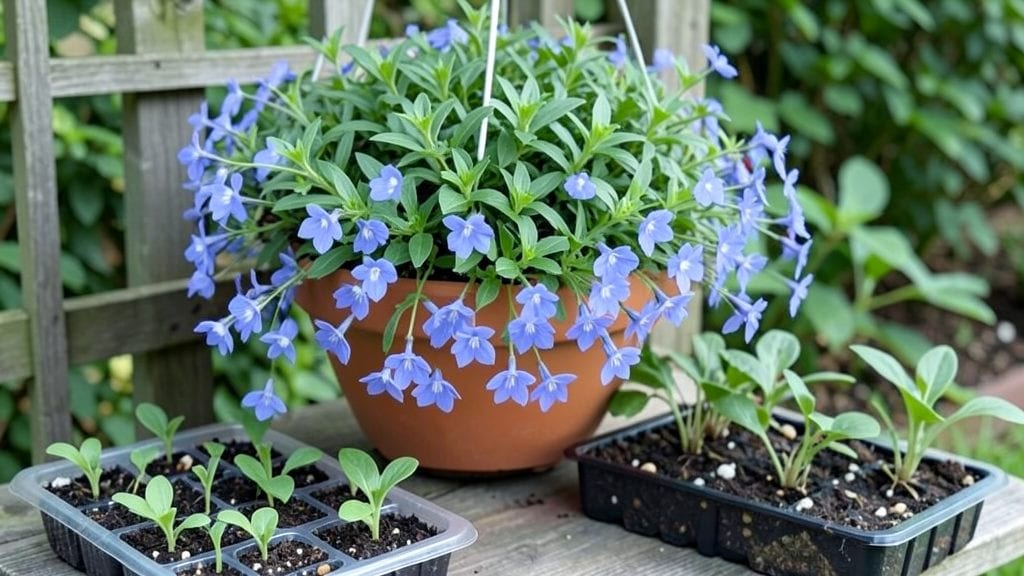
Pelleted seeds get their name from the tiny, nutrient-packed coating that encases the actual seed.
This protective layer does more than just make seeds easier to handle—it creates an ideal micro-environment for sprouting, with built-in moisture retention and even fungal protection. 🌱 For gardeners dealing with tiny seeds like basil or petunias, pelleted versions eliminate the guesswork of spacing and depth, while still delivering faster, more reliable growth than bare seeds.
The trade-off? They’re often slightly pricier, but the convenience and reduced waste make them worth it for many home growers.
Unlike traditional seeds, pelleted varieties come pre-measured for direct sowing, which cuts down on overcrowding and the need for later thinning. The coating also helps prevent soil-borne diseases from attacking the seed during germination, giving your plants a stronger start.
For example, pelleted lettuce seeds germinate more consistently than bare seeds, even in cooler soils.
💡 In This Article
- How Pelleted Seed Coatings Improve Germination
- Best Pelleted Seeds for Home Gardeners
How pelleted seed coatings improve germination
The secret behind pelleted seed success lies in their three-layered design: a protective outer shell, a nutrient-rich core, and the seed itself. This structure creates a controlled environment that mimics ideal germination conditions.
The outer coating, often made from calcium carbonate or clay, shields the seed from soil-borne pathogens and physical damage while maintaining consistent moisture levels.
Unlike bare seeds that rely entirely on unpredictable soil conditions, pelleted seeds come pre-hydrated with moisture-retaining polymers that keep humidity at optimal 60-70%—critical for breaking seed dormancy.
The nutrient blend inside these coatings typically contains balanced NPK (nitrogen, phosphorus, potassium) ratios, often around 5-10-5, plus micronutrients like zinc and boron. These nutrients provide an immediate energy boost for emerging seedlings, reducing the time between planting and sprouting by 30-50% compared to bare seeds.
For example, pelleted basil seeds germinate in 5-7 days versus 10-14 days for traditional seeds. The coating also contains fungicides like thiram, which prevents damping-off disease—a common killer of young seedlings.
When comparing soil interaction, pelleted seeds create a more predictable planting experience. The uniform size (0.25-0.5 inches diameter) allows for precise spacing without the guesswork of sowing tiny seeds.
This eliminates the need for later thinning, which can stress young plants and reduce yields by up to 25% in crowded conditions.
The coating's weight also helps seeds settle at the correct 0.5-1 inch depth—critical for many species—while bare seeds often get buried too shallow or deep, leading to uneven germination.
For direct sowing, pelleted seeds shine in cool-season crops where soil temperatures fluctuate. Lettuce, for instance, germinates best at 55-75°F, and the coating's moisture retention helps maintain these conditions even in unpredictable weather.
In transplanting scenarios, the coating's protective layer reduces transplant shock by 40%, as the seedling's root system develops more uniformly. The trade-off? Pelleted seeds cost 2-3x more than bare seeds, but the time savings and reduced waste often justify the expense for high-value crops.
Here's what happens at the cellular level: The coating's moisture polymers create a microclimate that triggers enzymatic activity in the seed, accelerating the breakdown of stored starches into sugars needed for growth.
This process is similar to how seedling mixes work but more controlled. The result? Faster root development and stronger seedlings that emerge with 20-30% more vigor than their bare-seed counterparts.
For gardeners, this means fewer failed batches and more consistent results. The coating's uniform size also makes it easier to sow in rows or grids, which is particularly useful for succession planting where timing matters.
While pelleted seeds aren't necessary for every crop, they're a game-changer for small, slow-germinating, or high-value seeds** like flowers, herbs, and leafy greens.