
Vegetables
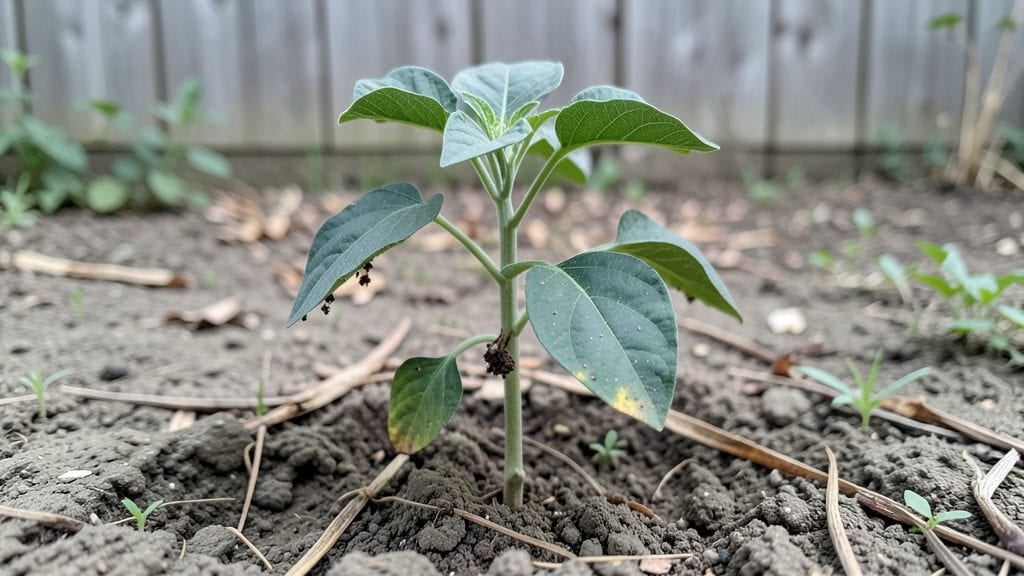
When pepper seedling leaves point up, it’s a clear sign of insufficient light or overly dense soil, leading to weak, stretched stems. Move seedlings to bright, indirect light and fluff the soil to promote stronger growth and proper leaf alignment.
This upward growth—called etiolation—happens when seedlings stretch toward light sources, weakening their stems and leaving them prone to snapping. 🌱 The good news?
Fixing it is simple: reposition seedlings near a south-facing window or under a grow light for 12-16 hours daily, and aerate compacted soil with perlite or sand. I’ve seen seedlings recover fully within a week once these adjustments are made.
For long-term prevention, avoid overwatering (which compacts soil) and use well-draining potting mixes. If your seedlings are already leggy, gently bury the stems deeper—new roots will form along the buried section, giving them stability.
💡 In This Article
- How Light and Soil Affect Pepper Seedling Growth
- Quick Fixes for Upright Pepper Seedling Stems
How light and soil affect pepper seedling growth
When pepper seedlings display upward-pointing leaves, it's a classic case of etiolation, where the plant prioritizes reaching light over developing strong stems. This happens because chlorophyll production slows under low light, causing cells to elongate rapidly—sometimes up to three times faster than normal growth rates.
The stems become weak and spindly, while leaves grow larger but thinner, unable to photosynthesize efficiently. Think of it like a plant version of stretching to reach a lamp in a dark room—it works short-term but creates structural problems.
The science behind this involves auxin hormones, which regulate growth in response to light. Without sufficient light, auxin accumulates in the stem's tip, triggering rapid cell elongation downward. Meanwhile, soil compaction adds another layer of stress by restricting root expansion, forcing roots to grow horizontally instead of downward.
This dual pressure causes the classic "leggy" appearance, where roots struggle to anchor the plant while stems stretch upward. Compacted soil also reduces oxygen availability, slowing nutrient uptake and further weakening the seedling's structure.
For optimal growth, pepper seedlings need 12-16 hours of light daily, preferably bright but indirect sunlight. A south-facing window provides about 3,000-5,000 foot-candles of light, while grow lights should deliver 4,000-6,500 kelvin to mimic natural sunlight.
Without enough light, seedlings won't develop the cellulose-rich cell walls needed for sturdy stems. In my experience, seedlings under grow lights recover faster than those relying solely on natural light, especially in cloudy conditions. The key is consistency—fluctuating light levels confuse the plant's growth hormones.
Soil aeration plays an equally critical role. Compacted soil reduces pore space, which should ideally make up 25-30% of the soil volume for proper root respiration. When roots can't spread, they signal the plant to prioritize height over width, contributing to the upward leaf growth.
Amending soil with perlite or coarse sand (about 20-30% of the mix) creates air pockets, while organic matter like compost improves drainage. I've seen seedlings transform within days after repotting into looser soil—roots expand downward, and stems straighten as the plant stabilizes.
Here's what happens when you fix both issues: Within 3-5 days of proper light exposure and aerated soil, seedlings start developing shorter internodes (the spaces between leaves) and thicker stems. The leaves turn darker green as chlorophyll production ramps up, and new growth appears more compact.
This isn't just cosmetic—healthier seedlings resist pests better and produce stronger yields later. The transformation is like watching a plant "wake up" after being cooped up in a dim closet.
One common mistake is assuming more water helps compacted soil, but overwatering actually worsens the problem by displacing air pockets. Instead, let the top 1-2 inches of soil dry between waterings, and use a moisture meter to check—soil should read between 40-60% moisture for optimal root health.
The combination of proper light, aerated soil, and balanced watering creates the perfect environment for seedlings to grow strong and upright from the start.