
Propagation
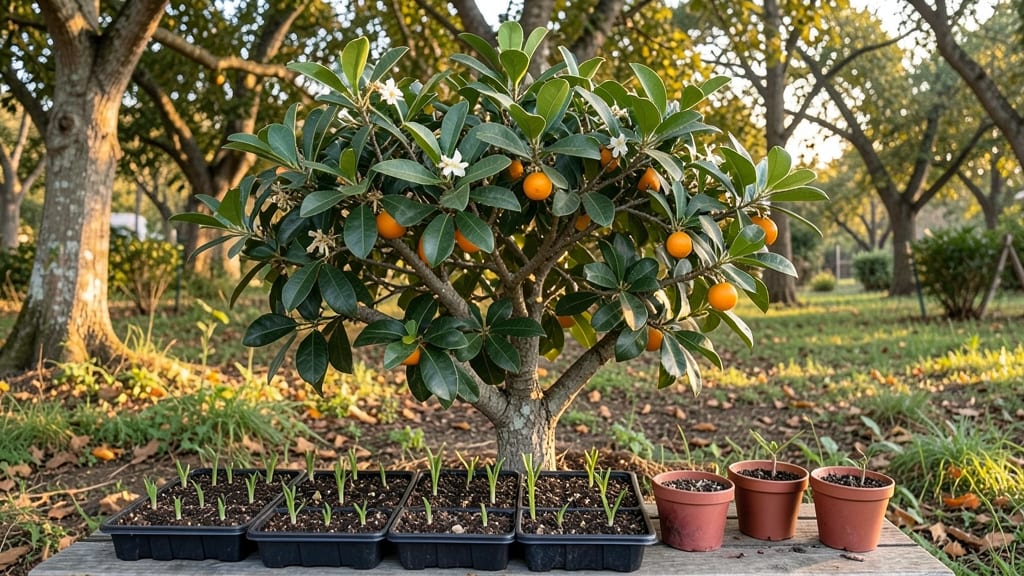
Growing Poncirus trifoliata from seeds gives you a hardy citrus tree that thrives where lemons and oranges refuse to survive. 🌱 I’ve started dozens of these seeds, and the key to breaking through their stubborn dormancy lies in the right soil temperature and moisture balance—something most guides overlook.
The payoff? A tree that produces fragrant, tart fruit and stunning evergreen foliage even in Zone 5 winters.
You’ll need fresh seeds (store-bought ones often fail), a heat mat or warm spot, and a mix of perlite and peat moss to prevent rot. Germination takes patience—some seeds sprout in 30 days, others wait 60—but once they break through, growth speeds up.
The real test comes when seedlings hit 6 inches tall: that’s when you’ll decide if they’re worth the wait.
By day 90, you’ll have sturdy young trees ready for transplanting, their glossy leaves already hinting at the glossy fruit to come. These aren’t just ornamentals—they’re edible, too, with fruit that’s tart enough for marmalade or too bitter for fresh eating.
The challenge? Keeping them alive through their first winter, but once established, they’re nearly indestructible.
Perfect for gardeners in cold climates who want citrus without the fuss. Here’s how to turn those tiny seeds into a landscape star—and maybe even a kitchen staple—without losing your mind in the process.
📚 In This Guide
- What you need
- Instructions
- Tips and common mistakes
- Wrapping up and next steps
What you need
- ● Poncirus trifoliata seeds: 3–5 fresh, plump seeds (harvested from ripe fruit). Tip: Store seeds in a paper towel in the fridge until use!
- ● Seed-starting mix: 1–2 cups of well-draining, sterile potting soil (or a 50/50 mix of peat moss and perlite).
- ● Small pots or trays: 3–5 biodegradable pots (3–4 inches deep) or a seed tray with drainage holes.
- ● Plastic wrap or humidity dome: To create a mini greenhouse effect.
- ● Spray bottle: For gentle watering (avoid soaking!).
- ● Grow lights or sunny windowsill: A south-facing window or LED grow light (12–16 hrs/day).
- ○ Heating mat (optional): Speeds up germination (70–75°F ideal).
- ● Fertilizer (after sprouting): A balanced, water-soluble fertilizer (diluted to half-strength).
- ● Pruning shears: For trimming future seedlings to encourage bushier growth.
- ● Label markers: To track planting dates and varieties.
Step-by-step instructions for germinating poncirus trifoliata seeds
Here's the straightforward method I've used to grow hardy, disease-resistant citrus trees from seed.
🌱 Step 1: Extract and Prepare the Seeds
Start by removing the seeds from a fresh, organic poncirus trifoliata fruit. Rinse them thoroughly under cool water to remove any pulp or residue—this prevents mold from forming later. I like to soak the seeds in a bowl of lukewarm water for 24 hours to soften the outer coating. This step speeds up germination by breaking down natural inhibitors in the seed.
After soaking, gently rub the seeds between your fingers to remove any remaining membrane. You'll know they're ready when the seed coat feels slightly rough but not sticky. Place them on a paper towel to dry for 1 hour before planting. This prevents them from rotting in damp soil.
💧 Step 2: Plant the Seeds in a Germination Mix
Fill a small container—like a 4-inch pot or seed tray—with a mix of 50% peat moss and 50% perlite. This lightweight blend drains well while retaining enough moisture to encourage sprouting. Press the mix down lightly so it's firm but not compacted. Plant each seed ½ inch deep, spacing them about 2 inches apart.
Water the soil gently until it's evenly moist but not soggy. You'll see the perfect moisture level when the surface looks dark and slightly damp—not glistening. Cover the container with a clear plastic lid or wrap it in plastic wrap to create a humidity dome. Place it in a warm spot, like on top of a refrigerator or near a sunny window.
☀️ Step 3: Provide Warmth and Monitor for Sprouts
Poncirus trifoliata seeds germinate best in temperatures between 70-80°F. If your home runs cooler, place the container on a seedling heat mat set to 75°F. Keep the soil consistently moist—water when the top inch feels dry to the touch. You should see tiny sprouts in 2-4 weeks, though some seeds may take up to 6 weeks.
Once the first true leaves appear—these will be small, dark green, and shaped like tiny citrus leaves—remove the plastic cover. This prevents damping-off, a fungal disease that attacks tender seedlings. Move the container to a bright, indirect light spot, like a south-facing window with filtered sunlight. Avoid direct sun at this stage, as it can scorch delicate new growth.
🪴 Step 4: Transplant Seedlings into Individual Pots
When seedlings reach 3-4 inches tall and have developed 3-4 sets of true leaves, it's time to transplant them into 6-inch pots. Use a well-draining potting mix, like a blend of 60% potting soil, 20% perlite, and 20% sand. Gently remove the seedling from its starter container, loosening the roots if they're circling.
Plant each seedling 1 inch deeper than it was growing before—this stabilizes the stem and encourages stronger root growth. Water thoroughly after transplanting, and place the pots in a spot with bright, indirect light for the first week. Gradually introduce them to more sunlight over the next 10 days to harden them off.
⏰ Step 5: Care for Young Trees Through the First Year
Keep the soil consistently moist but never waterlogged—poncirus trifoliata roots rot easily. Water when the top inch of soil feels dry, and always water at the base to avoid wetting the leaves. Fertilize lightly every 4-6 weeks during the growing season with a balanced, water-soluble fertilizer diluted to half strength.
By 90 days, your seedlings should be sturdy enough to handle outdoor conditions if you live in a mild climate. If frost is a concern, keep them indoors near a sunny window or under grow lights until spring. Prune any leggy growth to encourage bushier development, and watch for the first signs of citrus blossoms in their second or third year.
Tips & tricks for perfect poncirus trifoliata germination
Here's what I've learned after successfully growing these hardy citrus trees from seed—these little details make all the difference between thriving seedlings and disappointing failures.
The Soaking Secret: That 24-hour lukewarm water soak isn't just about softening the seed coat—it's breaking down natural germination inhibitors. I've found using distilled water instead of tap water prevents chlorine from stressing the seeds during this critical step. After soaking, I like to add a drop of hydrogen peroxide (3%) to the water to prevent any potential mold spores from developing on the seed surfaces.
Germination Mix Pro Tip: The 50/50 peat moss and perlite mix is perfect, but here's the thing: press it down just enough so it's firm but still allows water to drain freely. I use my fingers to create small dimples where I'll plant the seeds—this ensures consistent planting depth of that crucial ½ inch. Too deep and they won't sprout; too shallow and they'll dry out too quickly.
Warmth Strategy: Maintaining that 70-80°F range is key, but here's how I handle it: I place my seed tray on top of my refrigerator (which stays around 75°F) during the day, then move it to a warm spot near my kitchen light at night. If you don't have a seedling heat mat, try placing the tray on top of your computer tower—just make sure it's not too hot to the touch. The 75°F sweet spot is what triggers those little sprouts to appear.
Light Transition: When those first true leaves appear and it's time to remove the plastic cover, I don't do it all at once. I start by lifting the plastic for 15 minutes daily over 3 days before removing it completely. This gradual transition prevents shock to the delicate seedlings. After removing the cover, I place them under a sheer curtain to filter the sunlight—this mimics the dappled shade they'd get under a mature citrus tree.
Pro Tips for Poncirus Trifoliata Seeds
- Here's what I've learned after successfully growing these hardy citrus trees from seed—these little details make all the difference between thriving seedlings and disappointing failures.
- The Soaking Secret: That 24-hour lukewarm water soak isn't just about softening the seed coat—it's breaking down natural germination inhibitors.
- Germination Mix Pro Tip: The 50/50 peat moss and perlite mix is perfect, but here's the thing: press it down just enough so it's firm but still allows water to drain freely.
Frequently asked questions
Got questions about germinating Poncirus trifoliata seeds? We’ve got answers!
Whether you’re a first-time citrus grower or troubleshooting a tricky batch, these FAQs cover the essentials for success.
How long does it take for Poncirus trifoliata seeds to germinate?
Germination typically takes 2–4 weeks under ideal conditions (warmth, moisture, and indirect light). Some seeds may sprout in as little as 7–10 days, while others take up to 6 weeks. Patience is key—keep the soil consistently moist but well-draining to avoid mold.
Do I need to scarify or soak Poncirus trifoliata seeds before planting?
Soaking seeds in lukewarm water for 24 hours helps soften the hard outer shell and speeds up germination. Scarification (lightly sanding the seed coat) can also work but isn’t always necessary. Skip this step if your seeds are fresh and firm!
Can I plant Poncirus trifoliata seeds outdoors in cold climates?
No—these seeds won’t survive frost. Start them indoors in spring (after last frost) or use a greenhouse. Young seedlings are tender; wait until they’re 6+ inches tall and hardened off before transplanting outside in USDA Zones 7–10.
What if my seeds rot or mold instead of sprouting?
Overwatering or poor drainage is usually the culprit. Use a well-draining mix (like perlite + peat) and plant seeds ½-inch deep. If mold appears, reduce moisture and improve airflow. Discard soggy seeds and replant fresh ones.
Are there faster alternatives to growing Poncirus trifoliata from seed?
Yes! For quicker results, buy a grafted nursery tree (ready in 1–2 years) or propagate from cuttings (takes ~3 months). Seeds grow into hardy, disease-resistant trees but may take 3–5 years to bear fruit—soak and scarify for the fastest germination!
Wrapping up and next steps
Growing Poncirus trifoliata seeds into thriving citrus trees in just 90 days is an exciting and rewarding journey! With the right materials, patience, and care, you’ve unlocked the potential to cultivate a hardy, disease-resistant citrus tree—perfect for containers or even outdoor landscapes. 🌱
Ready to take the next step? Start with a few seeds today and watch your green thumb grow! Whether you’re a beginner or a seasoned gardener, this process is a fantastic way to bring a touch of citrus magic to your space. Happy planting! 🌟