
Pests and Diseases
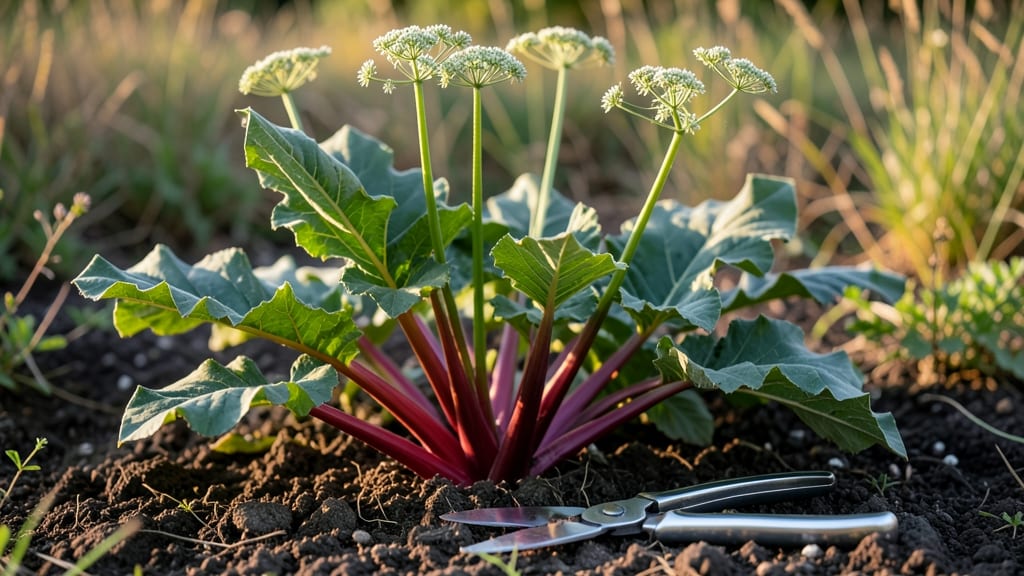
When rhubarb goes to seed, your harvest disappears faster than a summer storm. 🌱 I’ve watched my own plants bolt—those tall, flower-stalked stalks that turn crisp red stalks into bitter, stringy sticks. The good news? You can still save the plant and plan for next year’s crop.
Bolting happens when rhubarb senses it’s time to reproduce, often triggered by age, stress, or sudden heat. Older plants (5+ years) are especially prone, but even young ones may bolt if they’re water-stressed or crowded.
The key is acting fast—once those flower stalks appear, the stalks become tough and woody within days.
Here’s the game-changer: cut the flower stalks at the base immediately, and keep the plant well-watered. You can still harvest the stalks below the bolt for a few weeks, though they’ll be smaller.
For next year, divide the crown in early spring to rejuvenate the plant—it’s like hitting the reset button on your rhubarb’s productivity.
Even if your plant bolts, don’t toss it. With the right care, it’ll bounce back stronger, and you’ll learn which conditions to avoid next season. My rhubarb’s still producing after three years of bolting—proof that persistence pays off in the garden.
When Rhubarb Decides to Flower
If your rhubarb plants are suddenly producing long, skinny seed stalks instead of the tender stalks you love, don’t panic—it’s a natural (if frustrating) response to specific growing conditions.
Understanding why your rhubarb goes to seed helps you prevent it next season and even save your favorite varieties for future harvests. Here’s what triggers this botanical rebellion and how to decode the signals your plants are sending.
Rhubarb plants are perennial workhorses, but even the toughest gardeners need a break. After 3–5 years of heavy production, many rhubarb varieties shift their energy from leaf and stalk growth to reproductive mode.
This is their biological way of ensuring survival—older plants prioritize seed production to propagate the species, even if it means sacrificing your dinner plans.
Why it happens:
- Energy redistribution: As roots age, they become less efficient at storing carbohydrates. The plant perceives this as a signal to "reproduce before it’s too late," diverting nutrients to flower stalks instead of edible stalks.
- Hormonal shifts: Gibberellins (growth hormones) decline in older plants, while florigen (a flowering hormone) increases. This chemical tug-of-war tips the balance toward seed production.
- Crowded roots: If your rhubarb’s root system is overgrown or competing with neighboring plants, the stress can accelerate the flowering response.
Actionable fix: 💡 Divide your rhubarb every 3–4 years to rejuvenate the crown. Cut out the oldest, woody center and replant the younger, outer sections. This resets the plant’s energy reserves and delays flowering for another growing season.
Rhubarb is a short-day plant, meaning it’s sensitive to daylight length and temperature shifts. If your climate or seasonal changes throw off its internal clock, it might bolt prematurely—sending up seed stalks when you’d rather enjoy a harvest.
Why it happens:
- Extended daylight: In regions with long summer days (14+ hours of light), rhubarb may interpret the extra sunlight as a signal to flower early. This is especially common in Zone 6 and above, where summers stretch longer.
- Cold snaps or late frosts: A sudden drop in temperatures (even in spring) can shock the plant into thinking winter is over, triggering the flowering response.
- Unseasonably warm winters: If your rhubarb experiences mild winters (e.g., 30–40°F instead of sub-freezing temps), it may skip its dormant period and bolt earlier than expected.
Actionable fix:
🌡️ Use shade cloth or row covers during peak summer to reduce daylight exposure by 20–30%. Alternatively, plant cold-hardy varieties like ‘Canada Red’ or ‘Valentine’, which are less prone to early bolting.
✨ Mulch heavily in fall with straw or leaves to insulate roots and encourage a proper winter dormancy period. Rhubarb is a heavy feeder, but too much (or too little) of the wrong nutrients can send it into seed mode. Water stress and imbalances in nitrogen, phosphorus, or potassium disrupt the plant’s growth priorities, often leading to premature flowering. 🔥 Water deeply but infrequently—rhubarb prefers 1–1.5 inches per week, with soil staying consistently moist but not soggy. When rhubarb faces physical stress—whether from pests, disease, or even you harvesting too aggressively—it may interpret the damage as a signal to reproduce before it’s too late. Think of it as a plant’s last-ditch effort to pass on its genes. 👨🍳 Harvest strategically: Always cut stalks at ground level, leaving the crown and leaves intact to fuel regrowth.
Cause
Effect on Rhubarb
Signs to Watch For
Nitrogen deficiency
Limits leaf and stalk growth, forcing the plant to focus on reproductive survival.
Yellowing lower leaves, stunted stalks, weak stems.
Excess phosphorus
Overstimulates root and flower development at the expense of edible stalks.
Purplish stems, dense foliage with few harvestable stalks.
Drought stress
Triggers a survival response, redirecting water to seed production.
Wilting, crispy leaf edges, bolted stalks in dry spells.
Overwatering
Roots suffocate, leading to poor nutrient uptake and stress-induced flowering.
Yellowing leaves, mushy crown, moldy soil.
Actionable fix:
🛡️ Protect your rhubarb with row covers or neem oil sprays for pests. Remove and destroy infected leaves immediately to prevent spread.
Revive Your Rhubarb Before It’s Too Late
When rhubarb goes to seed, it’s not the end of the world—just a sign your plants need a little TLC. The good news? With the right steps, you can salvage this year’s harvest and prevent it from happening next time.
Below, we’ll tackle the most common causes of premature seeding and provide practical, step-by-step fixes to keep your rhubarb productive and delicious.
If your rhubarb stalks are thin, woody, or producing seed stalks early, your plants may be too old or overworked. Rhubarb naturally declines in vigor after 5–10 years, and stress from poor care can speed up its decision to go to seed.
How to Fix It:
✅ 🔪 Cut Back Aggressively
- In early spring (before new growth starts), severely prune the plant by cutting back all stalks and leaves to 1–2 inches above the crown.
- This forces the plant to redirect energy into new, healthy growth instead of seed production.
✅ 🌱 Divide and Rejuvenate
- Dig up the entire plant and split the crown into smaller sections, ensuring each has at least one healthy bud.
- Replant the divisions in fresh, well-draining soil with plenty of compost. This mimics natural propagation and resets the plant’s energy.
✅ 💡 Pro Tip:
- If your rhubarb is older than 8 years, consider replacing it entirely—new plants are far more productive and less prone to seeding early.
Rhubarb is a heavy feeder, and when soil lacks key nutrients (especially phosphorus and potassium), it may shift energy toward seed production instead of stalks.
How to Fix It:
✅ 🥄 Feed with the Right Fertilizer
- In early spring, apply a balanced fertilizer (10-10-10 or 5-10-10) or a high-phosphorus option like bone meal.
- Follow up with a potassium-rich fertilizer (like greensand) in mid-summer to support stalk development.
✅ 🌱 Boost Organic Matter
- Amend the soil with well-rotted compost or aged manure (avoid fresh manure—it can burn roots).
- Rhubarb prefers slightly acidic to neutral soil (pH 6.0–7.0). Test your soil and adjust with lime (to raise pH) or sulfur (to lower pH) if needed.
✅ 💡 Pro Tip:
- Mulch heavily (3–4 inches of straw or wood chips) to retain moisture and slowly release nutrients. Avoid nitrogen-heavy mulches like grass clippings—they can encourage leafy growth at the expense of stalks.
Crown rot, aphids, or Japanese beetles can weaken rhubarb, triggering premature seeding as a survival mechanism. If your plants look wilting, spotted, or chewed, pests or disease may be the culprit.
How to Fix It: ✅ 🚫 Eliminate Pests Immediately
- Aphids: Spray with soapy water (1 tbsp mild soap per gallon) or introduce ladybugs.
- Japanese Beetles: Handpick and drop into soapy water.
Use neem oil as a deterrent. - Slugs/Snails: Set out beer traps or apply iron phosphate bait.
✅ 🌡️ Treat Fungal Issues
- If you see black spots or mold, remove affected leaves and apply copper fungicide or a baking soda spray (1 tbsp baking soda + 1 quart water + a drop of soap).
- Prevent future rot by ensuring proper drainage—rhubarb hates soggy roots!
✅ 💡 Pro Tip:
- Rotate crops—never plant rhubarb in the same spot year after year. This reduces soil-borne disease buildup.
Rhubarb that gets too much shade or inconsistent water may struggle to produce stalks, leading to early seeding.
How to Fix It:
✅ 🌞 Optimize Sunlight
- Rhubarb needs full sun (6+ hours daily). If your plants are in shade, thin nearby trees/shrubs or relocate them to a sunnier spot.
✅ 💧 Water Consistently
- Keep soil evenly moist (but not waterlogged). Deep water 1–2 times per week during dry spells.
- Mulch to lock in moisture and regulate soil temperature.
✅ 💡 Pro Tip:
- Avoid overhead watering in the evening—this encourages fungal growth. Water at the base instead.
Once you’ve revived your rhubarb, lock in its productivity with these long-term strategies:
🔹 📅 Harvest Strategically
- Only pick outer stalks in the first year to avoid stressing the plant.
- In later years, harvest in early spring (before seed stalks appear) and stop by mid-summer to let the plant recharge.
🔹 🌱 Plant Varieties Less Prone to Seeding
- Some cultivars (like ‘Victoria’ or ‘Strawberry’ rhubarb) are more stalk-focused and less likely to bolt early.
🔹 ⏰ Time It Right
- Never harvest in the second year—let the plant establish fully before taking stalks.
🔹 🛠️ Tool Maintenance
- Sterilize pruners with rubbing alcohol between cuts to prevent disease spread.
By addressing the root cause (literally!) of your rhubarb’s early seeding, you’ll not only save this year’s crop but also set up next year’s plants for success.
With a little effort, you’ll be back to enjoying plump, tangy stalks instead of seed stalks—without the guilt of wasted effort! 🍽️🌿
Frequently asked questions about rhubarb flowering
Why does my rhubarb suddenly grow tall flower stalks instead of edible stalks?
Your rhubarb is entering its reproductive phase—a natural response to age (typically 3-5+ years) or stress like drought, poor nutrition, or sudden temperature shifts. These flower stalks signal the plant's priority shift from producing food for you to creating seeds for next season's growth.
Can I still harvest rhubarb stalks after the plant starts flowering?
Yes, but the quality declines quickly. For the first 2-3 weeks after flowering appears, you can still harvest the lower stalks (below the flower stalk) for cooking. After that, the stalks become tough and woody. The plant's energy is now focused on seed production, so expect smaller yields.
What's the best way to prevent rhubarb from flowering next year?
Start by dividing your rhubarb crown every 3-4 years to rejuvenate it. Cut back all stalks to 1-2 inches above the crown in early spring. Also ensure proper care: 1-1.5 inches of water weekly, balanced fertilizer (10-10-10), and full sun. For stubborn bolters, try shade cloth during peak summer to reduce daylight exposure.
Can I save seeds from my rhubarb's flowers for planting?
While you can collect seeds, they won't produce true-to-type plants like the parent variety. Rhubarb seeds create genetic variations. For reliable results, stick to dividing mature crowns or purchasing certified seeds. The seeds themselves aren't edible—only the stalks are safe to eat.
Will cutting off the flower stalks stop my rhubarb from going to seed?
Cutting flower stalks at the base will prevent seed production for that season, but it won't stop the plant's biological clock. The plant may still bolt again next year if underlying issues (age, stress, or poor nutrition) persist. Think of it as a temporary solution while you address the root causes.