Lawn
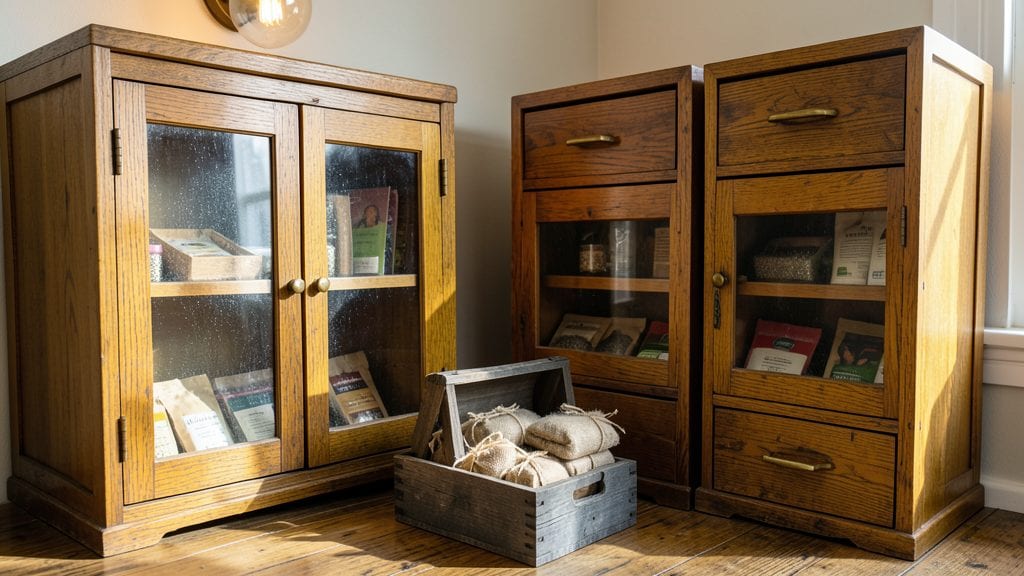
Climate-controlled seed storage cabinets are the secret weapon for gardeners who refuse to waste another seed packet. 🌱 I’ve watched heirloom tomato seeds lose viability within months when stored in a damp basement—until I invested in a proper seed cabinet, and now my seeds stay fresh for years, ready to grow exactly as the seed packet promised.
The right cabinet keeps seeds at 35-40°F with 30-50% humidity, blocking light, pests, and moisture that turn seeds to mush. You don’t need a fancy setup—look for models with built-in fans, moisture absorbers, and clear labels for easy organization.
A small unit fits under a desk, while larger ones handle thousands of seeds for serious gardeners.
What you’ll gain is peace of mind: no more sprouting weak seedlings or wondering if last year’s seeds will even germinate. Properly stored seeds maintain 90%+ viability for five years or more, and heirloom varieties stay true to type.
The payoff? A garden that starts strong every season, no matter how old your seed stash gets.
Works for home gardeners, seed savers, and even small businesses selling seeds. Here’s how to pick the perfect one for your collection—and keep it running like new for decades.
📚 In This Guide
- What you need
- Instructions
- Tips and common mistakes
- Wrapping up and next steps
What you need
- ● Seed Storage Cabinet (or DIY alternative): Pre-built climate-controlled cabinet (e.g., Meyer or SeedVault models) with temperature/humidity controls.
- ● OR A repurposed insulated cabinet (e.g., Styrofoam-cooled or refrigerator-based) with custom modifications.
- ● Temperature & Humidity Monitor: Digital hygrometer-thermometer (e.g., Acurite or Thermopro) with logging capabilities.
- ● Ideal specs: ±1% humidity accuracy, -10°F to 140°F range.
- ● Desiccant Packets: Silica gel or clay-based desiccants (e.g., DampRid or Weber). Quantity: 1 packet per 10 lbs of seeds (or as recommended by the cabinet manufacturer).
- ● Air-Tight Seed Containers: Mylar bags with oxygen absorbers (e.g., Seed to Seed brand) OR Glass jars with rubber gaskets (e.g., Ball Mason jars).
- ● Cooling System (if DIY): Mini fridge or chest freezer (e.g., Igloo or Dana models) with adjustable thermostat.
- ● Power supply: 120V outlet or portable power station (e.g., Jackery).
- ● Insulation Materials (DIY only): Foam board (1–2 inches thick) or reflective insulation (e.g., Reflectix).
- ● Thermal sealant (e.g., Loctite) for airtight gaps.
- ● Backup Power: Solar panel kit (e.g., Renogy) or battery backup (e.g., APC UPS).
- ● Alarm System: Humidity/temperature alert sensor (e.g., Aqara or Nest) for notifications.
- ● Seed Labeling Kit: Waterproof labels + archival pens (e.g., Sharpie permanent markers).
- ● Spreadsheet template for tracking seed batches (e.g., Excel or Google Sheets).
- ● UV-Protective Film: For DIY cabinets to block light (e.g., 3M window film).
- ● Dehumidifier (Small): For cabinets in humid climates (e.g., Pro Breeze).
How to set up a climate-controlled seed storage cabinet
Here's my go-to method for creating a simple, effective seed storage system that extends viability for years.
🪴 Step 1: Select the Right Cabinet and Location
Choose a small, airtight cabinet or container with a tight-sealing lid—think of a 5-cubic-foot space for home use. I like wooden cabinets with glass doors because they block light while still letting you see your seed collection. Place it in the coolest, most stable spot in your home, ideally a basement or closet that stays between 32-41°F.
If you don't have a naturally cool space, a refrigerator's crisper drawer works in a pinch—just avoid the main compartment where temperature fluctuates. The key is consistency: seeds stored in a cabinet with wild temperature swings will lose viability faster. Test your chosen spot with a thermometer for 7 days before storing seeds to confirm it stays within the ideal range.
💧 Step 2: Control Humidity with Absorbers and Moisture Barriers
Seeds need 30-40% humidity to stay viable long-term. Start by placing a small container of silica gel packets or uncooked rice in the bottom of the cabinet—they'll absorb excess moisture. I also line the interior shelves with parchment paper to create a moisture barrier between the wood and your seeds.
For extra protection, include a digital hygrometer to monitor humidity levels. If readings climb above 45%**, add more silica gel or consider a small dehumidifier designed for cabinets. Never use chemical air fresheners—they can leave residues that harm seed germination. The goal is to keep seeds dry but not desiccated; think of it like storing them in a desert climate.
☀️ Step 3: Organize Seeds with Proper Packaging
Transfer seeds to airtight, moisture-proof containers like glass jars with rubber gaskets or Mylar bags with oxygen absorbers. I label each container with the seed type, variety, and storage date using a permanent marker—ink fades over time, so avoid pens. Store seeds in small batches (about 1/4 cup per container) to prevent moisture buildup from condensation.
Place containers on the middle or upper shelves to keep them away from any potential ground moisture. Avoid stacking containers directly on top of each other—this creates pressure points that can crack glass or damage Mylar seals. Leave 1 inch of space between containers for airflow. If using paper envelopes, transfer seeds to better packaging within 6 months to prevent degradation.
⏰ Step 4: Monitor and Maintain Conditions Long-Term
Check your seed storage cabinet every 3 months to verify temperature and humidity levels. Replace silica gel packets if they turn from blue to pink (a color change means they've absorbed moisture). I also rotate seed containers annually to ensure none get overlooked—older seeds should be tested for germination before use.
Never open the cabinet more than necessary, as each time you do, warm humid air enters and can condense on cold surfaces. If you must add or remove seeds, do so quickly and close the cabinet immediately. For maximum longevity, store seeds in the cabinet for at least 1 year before using—this lets them acclimate to stable conditions. The first year is critical for breaking any dormancy cycles and ensuring consistent germination.
Tips & tricks for perfect seed storage cabinets
Real talk: The devil is in the details when it comes to seed longevity. Here's how to make sure your climate-controlled setup actually works as intended.
The Temperature Factor: That 32-41°F range isn't just arbitrary—it's the sweet spot for seed viability. I learned this the hard way after storing seeds in my garage that fluctuated between 45°F and 70°F. Use a thermometer for those 7 days before storing to catch any sneaky warm spots. If your basement runs cooler than 32°F, consider adding a small space heater with a thermostat to maintain that lower limit.
Humidity Hack: The 30-40% range is critical, but here's what nobody tells you—your hygrometer needs to be accurate. I've seen cheap ones off by 10% or more. For the most reliable readings, place the hygrometer at the same level where your seeds will sit. If you notice condensation forming on the inside of your cabinet after opening it, that's your sign the humidity is too high. The silica gel packets should be your first line of defense, but don't forget to replace them when they turn from blue to pink.
Packaging Strategy: Those 1/4 cup batches might seem small, but they're essential. I used to store seeds in larger containers and noticed condensation forming between batches. The key is creating airflow between containers—think of it like giving each batch its own little climate-controlled micro-environment. For extra protection, place a small piece of parchment paper between each container to catch any potential moisture transfer. And if you're using Mylar bags, make sure they're properly sealed with an oxygen absorber—this prevents oxidation that can shorten seed life.
Long-Term Maintenance: The annual rotation isn't just about organization—it's a germination test. I've found seeds that looked perfectly fine but had 0% viability after 5 years. Test a small sample from each container every year by planting them in soil. If germination drops below 80%, it's time to refresh that batch. Also, mark your calendar for those 3-month humidity checks—setting a phone reminder helps me remember when I'm otherwise busy with gardening tasks.
Pro Tips for Seed Storage Cabinets
- Real talk: The devil is in the details when it comes to seed longevity.
- The Temperature Factor: That 32-41°F range isn't just arbitrary—it's the sweet spot for seed viability.
- Humidity Hack: The 30-40% range is critical, but here's what nobody tells you—your hygrometer needs to be accurate.
Frequently asked questions
Got questions about seed storage cabinets?
You’re not alone! Here are some of the most common concerns—and their answers—to help you make the best choice for preserving your seeds long-term.
What temperature and humidity levels are ideal for seed storage cabinets?
Aim for 32–41°F (0–5°C) and 30–50% humidity for optimal seed viability. Lower temps slow aging, while controlled humidity prevents moisture damage. Most climate-controlled cabinets automatically maintain these conditions—just check the specs before buying!
How long can seeds last in a seed storage cabinet?
With proper conditions, some seeds (like beans or peas) stay viable for 5–10 years, while others (e.g., lettuce or corn) may last 1–3 years. Heirloom varieties often outlast hybrids. Always label seeds with storage dates to track freshness!
Are seed storage cabinets worth the investment over DIY solutions?
DIY options (like coolers or refrigerators) work short-term, but cabinets offer consistent climate control, low-energy operation, and built-in monitoring. For serious gardeners or seed banks, the long-term savings on seed replacement justify the cost.
What should I do if my seeds develop mold or condensation in the cabinet?
First, remove affected seeds immediately to prevent spread. Wipe down shelves with a 50/50 vinegar-water solution, then run a desiccant pack inside for 24 hours. If condensation persists, check the cabinet’s humidity settings or seal gaps.
Can I store seeds in paper envelopes inside the cabinet?
Yes! Paper envelopes are breathable and moisture-resistant—just avoid plastic bags (they trap humidity). For extra protection, place envelopes in airtight mylar bags with a silica gel packet to absorb excess moisture.
Wrapping up and next steps
Investing in a seed storage cabinet is one of the smartest ways to preserve your seeds for years—even decades—while shielding them from humidity, temperature swings, and pests.
Whether you're a gardener, farmer, or seed saver, climate-controlled storage ensures your precious varieties stay viable and ready to grow whenever you need them. 🌱
Now that you’re equipped with the knowledge, take the next step: assess your seed collection’s needs and choose a cabinet that fits your space and long-term goals. Your future harvests will thank you!