Planting
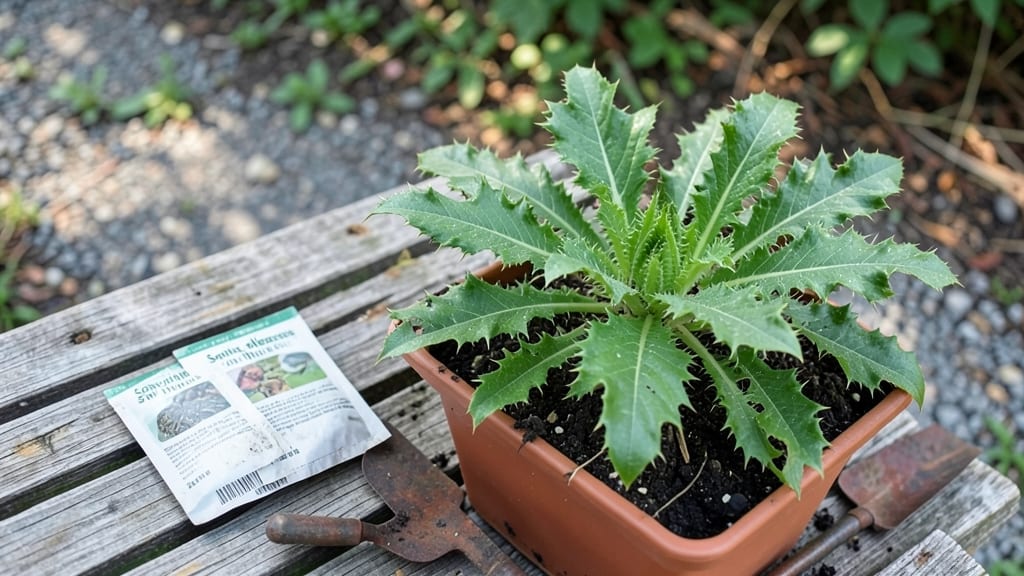
To keep your thistle seeds viable for years, you must sow thistle seeds in a dry place—or watch them crumble into dust within months. 🌱 I learned this the hard way when my first batch turned to dust after just six months in a damp basement.
The key is keeping them in a cool, dry place with airflow, not an airtight container.
For sowing, you’ll need well-draining soil, a sunny spot, and patience—thistles grow wild but thrive with minimal fuss. Scatter seeds lightly on the surface since they need light to germinate, then press them into the top inch of soil. Water gently but don’t drown them; thistles hate soggy roots.
Expect sprouts in 10-20 days, though some varieties take longer. Once established, they’re tough as nails—drought-resistant, low-maintenance, and perfect for pollinators. Just watch for slugs and snails, which love young seedlings. A little diatomaceous earth keeps them at bay.
Store leftover seeds in paper envelopes with silica gel packets to maintain viability for years. This way, you’ll always have fresh seeds ready when the urge to grow strikes again. The secret? Dry storage and a little extra care.
📚 In This Guide
- What you need
- Instructions
- Tips and common mistakes
- Wrapping up and next steps
What you need
- ● Sow thistle seeds – 1–5 lbs (0.5–2.3 kg), depending on your storage needs (organic, untreated preferred).
- ● Air-tight storage containers – Mason jars (pint or quart size), vacuum-sealed bags, or food-grade buckets with lids (must be hermetically sealed).
- ● Silica gel packets – 2–4 packets (5–10g each) to absorb moisture.
- ● Desiccant or uncooked rice – ½ cup (alternative to silica gel) for moisture control.
- ○ Food-grade oxygen absorber packets – 1–2 per container (optional but highly recommended for long-term storage).
- ● Fine-mesh strainer or sifter – To remove debris before storage.
- ● Paper towels or coffee filters – For drying seeds if slightly damp.
- ● Permanent marker – To label containers with seed type, date, and storage conditions.
- ● Small funnel – For easy seed transfer into containers.
- ○ Refrigerator or freezer – Optional for ultra-long-term storage (below 40°F/4°C).
- ● Seeds fully dried (moisture content 8%). Test by crushing a seed—it should crumble, not stick.
- ● Clean, dry workspace to avoid contamination.
- ● Cool, dark storage spot (ideal temp: 32–50°F / 0–10°C).
Step-by-Step guide to storing thistle seeds for long-term viability
Here's how to keep your thistle seeds fresh and ready to plant whenever inspiration strikes.
🌱 Step 1: Harvest Seeds at Peak Ripeness
Wait until thistle seed heads turn a deep golden brown and begin to rattle when shaken—this signals full maturity. Harvest on a dry, sunny morning when humidity is low to prevent moisture absorption. Use clean, sharp scissors to snip entire seed heads rather than picking individual seeds; this preserves viability and avoids damage.
Lay the harvested heads on a clean, dry towel in a single layer. Let them air-dry indoors for 3-5 days in a well-ventilated area away from direct sunlight. You'll know they're ready when the seed heads crumble easily between your fingers and seeds release with minimal pressure.
💧 Step 2: Clean and Separate the Seeds
Spread the dried seed heads on a large sheet of newspaper or a clean, flat surface. Gently rub the heads with your hands or a soft brush to release the seeds. Avoid vigorous shaking—this can damage the delicate seed coats. Use a fine-mesh strainer or sifter to separate seeds from chaff and debris.
For stubborn seeds still clinging to fluff, place the mixture in a paper bag and shake it vigorously. The lighter debris will float to the top while heavier seeds settle at the bottom. Discard any seeds that appear discolored, shriveled, or damaged—these won't store well.
☀️ Step 3: Dry the Seeds Further for Storage
Spread the cleaned seeds in a thin layer on a paper towel or clean, dry tray. Place the tray in a warm, dry location with good airflow, like a sunny windowsill or near a fan. Let the seeds dry for an additional 2-3 days until they feel completely dry to the touch and have a papery texture.
Test for proper dryness by picking up a few seeds—if they feel slightly crisp and don't leave a damp residue on your fingers, they're ready for storage. Moisture is the enemy of long-term seed viability, so take your time here. Rushing this step can lead to mold or spoilage during storage.
🪴 Step 4: Choose and Prepare Storage Containers
Select airtight containers like glass jars, plastic containers with tight-sealing lids, or even resealable plastic bags. Avoid cardboard or paper bags—these absorb moisture and won't protect seeds effectively. Label each container with the seed type and harvest date using a permanent marker.
Place a small silica gel packet or a few uncooked rice grains in the bottom of the container to absorb any residual moisture. Fill the container with seeds, leaving about 1 inch of space at the top to prevent pressure buildup. Seal the container tightly, ensuring no air can escape.
⏰ Step 5: Store in a Cool, Dark, and Stable Environment
Store the sealed containers in a cool, dark place with stable temperatures, like a pantry, basement, or refrigerator. Ideal storage conditions include temperatures between 32-41°F and relative humidity below 40%. Avoid storing seeds in the freezer unless you plan to use them within a few months—frequent temperature fluctuations can reduce viability.
Check your stored seeds annually for signs of moisture or pest activity. If you notice any mustiness, condensation, or small insects, discard the seeds immediately and repeat the drying process with fresh seeds. With proper storage, thistle seeds can remain viable for 2-5 years, though germination rates may decline over time.
Tips & tricks for perfect thistle seed storage
Preserving thistle seeds properly can mean the difference between fresh planting material and wasted effort. Here are my battle-tested strategies to maximize viability and avoid common pitfalls.
Harvest Timing is Everything: Don't rush harvesting when seed heads first appear—wait until they're deep golden brown and rattle when shaken. I've learned the hard way that harvesting too early means immature seeds that won't store well. The 3-5 day drying period in Step 1 is non-negotiable; this is when seeds develop their protective outer layers that prevent moisture damage during storage.
Drying Technique Matters: For Step 3's additional 2-3 days of drying, I recommend placing seeds on a tray near a fan rather than just on a windowsill. This creates consistent airflow that prevents any lingering moisture pockets. The papery texture you're testing for should feel dry enough to hear a slight crinkle when handled—this is your cue they're ready for storage.
Container Selection Secrets: While glass jars are ideal, I've had great success with resealable plastic bags for small seed quantities. The key is creating an airtight seal—test this by squeezing the container after sealing; if it doesn't hold its shape, air is getting in. That 1-inch headspace in Step 4 is crucial for preventing condensation buildup during temperature fluctuations.
Storage Environment Watch: Your refrigerator's crisper drawer (around 41°F) makes an excellent storage spot if you don't have a basement. Just avoid the door shelves where temperature swings occur. I've noticed that seeds stored in the fridge maintain viability up to 5 years, while those in warmer pantries degrade faster—especially if humidity creeps above 40%.
Pro Tips for Sow Thistle Seeds
- Preserving thistle seeds properly can mean the difference between fresh planting material and wasted effort. Here are...
- Harvest Timing is Everything: Don't rush harvesting when seed heads first appear—wait until they're deep golden brown...
- Drying Technique Matters: For Step 3's additional 2-3 days of drying, I recommend placing seeds on a tray near a fan ...
Frequently asked questions
Got questions about storing sow thistle seeds? You’re not alone!
Here are some of the most common concerns—and practical answers—to keep your seeds viable and ready for planting.
How long can I store sow thistle seeds before they lose viability?
With proper dry storage (cool, dark, and low-humidity conditions), sow thistle seeds typically stay viable for 1–3 years. Test germination rates annually by planting a small batch—if fewer than 50% sprout, replenish your supply. Pro tip: Label seed packets with the harvest date to track freshness!
Do sow thistle seeds need to be refrigerated, or is room temperature okay?
Room temperature (below 70°F/21°C) is fine for short-term storage, but for long-term preservation, refrigeration (35–40°F/2–4°C) extends viability. Avoid freezing—moisture buildup can trigger mold. Use airtight containers with silica gel packets to absorb excess humidity. Bonus: A basement or root cellar works well if humidity is controlled!
Can I store sow thistle seeds in the freezer for extra longevity?
Freezing isn’t ideal for sow thistle seeds—they’re not cold-hardy like some vegetables. Freezer burn or condensation can damage them. If you must, dry seeds completely (0% moisture) first, then store in vacuum-sealed bags. Test a few seeds after thawing to check viability. For best results, stick to cool, dry conditions!
What’s the best container for long-term seed storage?
Opt for airtight, moisture-proof containers like:
- Mylar bags with oxygen absorbers (gold standard!)
- Glass jars with tight-sealing lids
- Plastic containers with desiccant packets
My sow thistle seeds smell musty—what went wrong?
A musty odor signals moisture or mold, which kills seeds fast. Discard affected seeds immediately. To prevent this:
- Ensure seeds are fully dry before storage (no dampness!).
- Store in a cool, dark place (basement, fridge).
- Check containers every 6 months for condensation.
Are there alternatives to traditional seed storage for sow thistle?
If you’re short on space or supplies, try these low-tech methods:
- Paper envelopes in the fridge (short-term, 6–12 months).
- Clay pots buried in dry sand (traditional method; works for 1–2 years).
- Vacuum-sealed bags (removes oxygen to slow aging).
Wrapping up and next steps
Sowing thistle seeds successfully boils down to proper drying, airtight storage, and patience—but with these dry storage secrets, you’re now equipped to keep them viable for months (or even years!).
Whether you’re a seasoned gardener or just starting out, every seed you save today could bloom into tomorrow’s harvest. 🌱
Ready to put your new knowledge into action? Start by gathering your dried seeds, labeling those containers, and storing them in a cool, dark spot. Then, mark your calendar to check their viability before your next planting season—because the best time to grow is now!