
Container Gardens
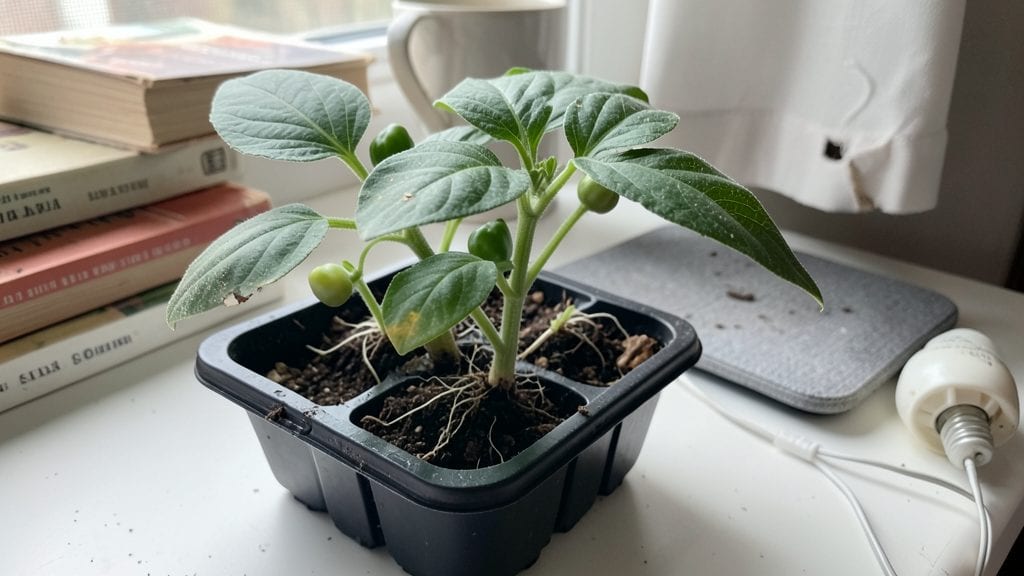
Starting jalapeno seeds indoors gives you a three-month head start on fiery harvests that store-bought plants can't match. 🌱 I learned the hard way that peppers hate cold soil—my first batch bolted before transplanting, and I swore off the grocery store peppers after that.
The secret lies in heat, light, and patience, not fancy equipment.
You’ll need just three simple supplies: seed-starting trays, a 75°F heat mat (or a sunny windowsill as backup), and a basic grow light. Plant seeds ¼-inch deep, keep soil damp but never soggy, and expect sprouts in 7-14 days—though jalapenos are slow starters compared to tomatoes.
The real magic happens when you provide 14+ hours of light daily from day one.
By transplanting time, you’ll have stocky, dark-green seedlings with multiple sets of true leaves—nothing like the weak nursery plants. These babies thrive in containers or the garden, and with proper care, your first harvest could come as early as late summer.
The kick? You’ll control the heat level from mild to nuclear.
This method works for any pepper variety, from sweet bananas to ghost peppers, and adapts to small spaces with grow lights. The only rule? Don’t rush it—jalapenos reward patience with bold flavor and prolific fruit. Let’s get those seeds going!
📚 In This Guide
- What you need
- Instructions
- Tips and common mistakes
- Wrapping up and next steps
What you need
- ● Ready to grow fiery, flavorful jalapeños from seed? 🌱🔥 Here’s everything you’ll need to kickstart your indoor pepper adventure—no green thumb required!
Step-by-step instructions for starting jalapeno seeds indoors
Here's the foolproof method I use to get vigorous, heat-loving jalapeño seedlings ready for transplanting.
🌱 Step 1: Prepare Containers and Seed Starting Mix
Use the 4-inch deep seedling trays with cell packs to give each seedling its own space. Fill each cell with sterile seed starting mix—pack it lightly but firmly to eliminate air pockets. The mix should feel like a damp sponge when squeezed; if it crumbles, add a spray of water. I always pre-warm the mix in the microwave for 30 seconds to mimic the warm soil jalapeños crave in their native regions.
Leave about ½ inch of space below the tray rim—jalapeños grow fast, and you'll need room to water without spilling. Tap the tray gently on the table to settle the mix evenly. This step ensures roots won't struggle for space or oxygen later.
🌱 Step 2: Sow Seeds at Proper Depth and Warmth
Plant 2 seeds per cell at a depth of ¼ inch—any deeper and they'll take forever to germinate. Use the seed starting tool to make a small hole, then drop in the seeds. Cover them with a light dusting of mix, just enough to hide them. I label each tray with the variety and date (jalapeños can cross-pollinate, so keep them separate if growing multiple types).
Place the tray on a seedling heat mat set to 75-85°F—jalapeños need warmth to germinate. Cover the tray with clear plastic wrap to trap humidity, but leave it slightly ajar to prevent condensation buildup. Germination takes 7-14 days, but don't be tempted to water yet. The heat mat and plastic create a self-regulating moisture system.
☀️ Step 3: Provide Light and Prevent Leggy Growth
Once seeds sprout, remove the plastic immediately—excess moisture now causes damping-off. Move the tray under a grow light positioned 2-3 inches above the seedlings. Jalapeños need 14-16 hours of light daily to prevent leggy, weak stems. You'll know the light is right when seedlings grow thick stems and dark green leaves with no gaps between them.
Rotate the tray quarter-turn daily so plants don't lean toward the light. If you notice seedlings stretching toward the window (a sign of insufficient light), lower the grow light closer. After 3-4 weeks, when seedlings have 4-6 true leaves, it's time to harden them off.
⏰ Step 4: Harden Off and Prepare for Transplanting
Start hardening off 2 weeks before your last frost date. Place seedlings outside in a shaded, sheltered spot for 1 hour the first day, gradually increasing time by 1 hour daily. Jalapeños are sensitive to cold, so avoid nights below 55°F. You'll see them adjust when leaves stop wilting and stems remain upright.
After 10-14 days, if seedlings tolerate a full day outside without stress, they're ready for transplanting. Choose a warm, cloudy afternoon to move them to the garden. Water deeply before and after transplanting to reduce shock. The slow-release fertilizer you'll mix into the soil later will give them the boost they need to thrive.
Tips & tricks for starting jalapeño seeds indoors
Don't let these common pitfalls derail your jalapeño seedlings—these tricks ensure robust, heat-loving plants that'll thrive in your garden.
Heat Mat Precision: The 75-85°F range on your seedling heat mat is non-negotiable for germination. I've found that placing a thermometer directly on the mat (not just under it) gives the most accurate reading—jalapeños are tropical plants and won't germinate well below 75°F. If your home runs cool, consider using a second heat mat or placing the tray on top of your refrigerator to maintain consistent warmth.
Lighting Strategy: Those crucial 14-16 hours of daily light aren't just about duration—they're about intensity. LED grow lights are ideal because they produce less heat than traditional bulbs, preventing leggy growth. Position your light so the seedlings' tops just brush against it; this creates the perfect balance between growth and energy conservation. I rotate my trays every 8 hours (not just daily) to ensure even light exposure on all sides.
Germination Timeline: While 7-14 days is the standard window, don't be surprised if some seeds take up to 21 days—jalapeños are notoriously slow starters compared to lettuce or radishes. The key is patience and consistency. I mark each tray with the sowing date and germination day to track progress, which helps me adjust my hardening-off schedule accordingly. If no sprouts appear after 21 days, gently check one seed per cell—they might be viable but buried too deep.
Harden-Off Gradually: The 1-hour daily increments during hardening-off are critical, but the real secret lies in the timing. Always introduce seedlings to outdoor conditions in the morning when temperatures are cooler and humidity is higher. I've learned this the hard way—rushing the process can shock delicate seedlings, especially when nighttime temps drop below 55°F. A small greenhouse or cold frame during this period can be a game-changer for extending your growing season.
Pro Tips for Starting Jalapeno Seeds Indoors
- Don't let these common pitfalls derail your jalapeño seedlings—these tricks ensure robust, heat-loving plants that'll thrive in your garden.
- Heat Mat Precision: The 75-85°F range on your seedling heat mat is non-negotiable for germination.
- Lighting Strategy: Those crucial 14-16 hours of daily light aren't just about duration—they're about intensity.
Frequently asked questions
about starting jalapeño seeds indoors—because every gardener deserves a little clarity before diving in!When is the best time to start jalapeño seeds indoors?
Start seeds 8–10 weeks before your last frost date—typically March to early April in most climates. Jalapeños thrive in warmth, so don’t rush! Seedlings need time to mature before transplanting. Use a seed-starting heat mat (70–85°F) to speed up germination.
Why are my jalapeño seeds taking so long to sprout?
Patience is key! Jalapeño seeds can take 10–21 days to germinate, especially if soil temps are below 70°F. Keep soil moist but not soggy and use a heat mat. If seeds stay dry or cold, they may rot—adjust your setup and try again. No sprouts after 3 weeks? Test viability by soaking seeds in water; floating ones are likely dead.
Can I use regular potting soil for jalapeño seeds?
Nope! Jalapeños need well-draining, sterile seed-starting mix—regular potting soil can compact or harbor fungi. Mix in perlite or vermiculite (20% of the blend) for aeration. Avoid garden soil; it’s too dense and may introduce pests. Pro tip: Sterilize your mix by baking it at 200°F for 30 minutes to kill pathogens.
What’s the best light setup for indoor jalapeño seedlings?
Jalapeños crave 14–16 hours of light daily—natural sunlight isn’t enough! Use a grow light (LED or fluorescent) 2–3 inches above seedlings. Rotate trays daily to prevent leggy growth. Skip the window sill; seedlings will stretch toward light and become weak. Yellowing leaves? They’re begging for more light!
How do I harden off jalapeño seedlings before transplanting?
Start 1–2 weeks before moving outdoors by placing seedlings in a shady, sheltered spot for 1–2 hours daily, gradually increasing time. Avoid direct sun or wind at first. By day 7, they should handle full sun. Water deeply the day before transplanting to reduce shock. No rush! Wait until night temps stay above 55°F.
What if I don’t have a heat mat? Can I still germinate jalapeño seeds?
Yes! Place seed trays on top of your refrigerator (top surface) or near a sunny window with a clear plastic cover to trap heat. Alternatively, use a DIY heat source like a warm (not hot) water bottle wrapped in a towel. Just ensure soil stays consistently warm (70–85°F)—cold soil = slow or failed germination.
Wrapping up and next steps
Starting jalapeño seeds indoors is a rewarding way to grow bold, flavorful peppers—especially when you give them the early warmth they crave! 🌱 With the right setup, patience, and care, you’ll soon be harvesting fiery peppers straight from your own container garden.
Now that you’re armed with tips and tricks, it’s time to roll up your sleeves and plant those seeds—your future harvest is waiting!
Ready to dive in? Kick off your growing season today and watch those tiny seeds transform into spicy, sun-loving plants. Happy gardening! 🌶️