Propagation
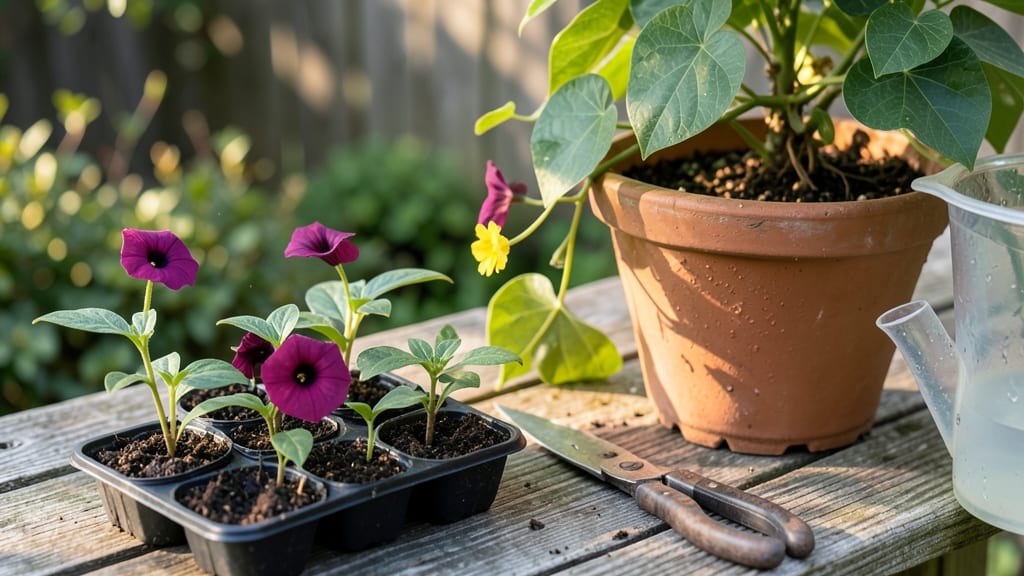
Growing Thunbergia from seed gives you those shockingly lush purple-black blooms with neon yellow centers that transform a fence or trellis into a tropical dream. ✨ I’ve started seeds indoors in early March, and by June, my balcony is draped in vines heavy with flowers—all from tiny seeds that took just 10 days to sprout.
The key isn’t just patience; it’s mimicking the warm, humid conditions these tropical climbers crave from day one.
You’ll need three simple supplies: seed-starting mix, small pots or a seed tray, and a heat mat or sunny windowsill. Thunbergia seeds germinate best at 75–80°F, so if your home runs cooler, a heat mat cuts germination time in half.
Once sprouted, keep them bright but not scorched—morning sun is ideal until they’re hardened off. The real magic happens when you transplant them outside after the last frost, where they’ll climb 10–15 feet in a single season.
By late summer, you’ll have a vine so vigorous it feels like cheating—velvety leaves and clusters of blooms that last until frost. The secret to avoiding leggy seedlings? Rotate pots daily for even growth, and pinch back the tips after transplanting to encourage bushier vines.
Even if germination feels slow (it often takes 2–3 weeks), stick with it—once established, these plants are nearly indestructible.
Works for Thunbergia alata (Black-eyed Susan vine) and other varieties, whether you’re training them up a trellis, over an arbors, or spilling from containers. Here’s how to get those first sprouts without the usual headaches—because nothing beats watching a seed turn into a living waterfall of color.
📚 In This Guide
- What you need
- Instructions
- Tips and common mistakes
- Wrapping up and next steps
What you need
- ● Thunbergia seeds: 5–10 seeds (non-GMO, untreated for best germination).
- ● Seed-starting mix: 1–2 gallons of sterile, well-draining potting soil (or coco coir + perlite blend for moisture control).
- ● Containers: 4–6 small pots (3–4" diameter) or
- ● 1 long seed tray with drainage holes (10–12" length).
- ● Grow lights or sunny window: A full-spectrum LED grow light (12–16 hrs/day) or a south-facing window (6+ hrs of sunlight).
- ● Misting bottle: For gentle hydration (avoid soaking!).
- ● Plastic wrap or humidity dome: To retain moisture during germination.
- ○ Fertilizer (optional but helpful): A balanced liquid fertilizer (5-5-5 or 10-10-10) diluted to half-strength.
- ● Drainage trays: To catch excess water and prevent root rot.
- ● Twine or small stakes: For supporting seedlings as they grow (3–4" long).
- ○ Heat mat (optional): If your home is seedling heat mat speeds up germination.
- ● Pruning shears: For trimming leggy vines later.
- ● Trellis or climbing structure: A 4–6' tall metal or wooden trellis (or a sturdy fence) for mature plants.
- ● Warmth: Ideal germination temp: <70–75°F (21–24°C).
- ● Patience: Germination takes —stay consistent!
- ● Space: Mature Thunbergia can climb 10+ feet; plan for vertical growth.
Step-by-Step instructions for growing Thunbergia from seed
Here's how I transform delicate seeds into vibrant, fast-growing climbers that thrive in just 90 days.
🌱 Step 1: Start Seeds Indoors with Warmth and Humidity
Thunbergia seeds need consistent warmth to germinate—aim for 70-75°F soil temperatures. I use a seedling heat mat beneath my trays because my home stays cooler than ideal. Fill your 4-inch pots with moistened seed-starting mix, pressing it down gently to remove air pockets but not compact it.
Sow 1-2 seeds per pot at a depth of 1/4 inch, just below the surface. Cover lightly with additional mix and mist the surface until evenly damp. Place the pots in a clear plastic bag or under a humidity dome to trap moisture. Check daily—condensation should form on the inside of the bag, but never let water pool on the soil surface.
Germination takes 10-21 days, so patience is key. You'll see the first tiny leaves (cotyledons) emerge as a signal that roots are establishing. Once 50% of seeds sprout, remove the bag immediately to prevent fungal growth. Keep the soil consistently moist but never soggy—thunbergia seedlings hate wet feet.
☀️ Step 2: Provide Bright, Indirect Light for Strong Seedlings
Thunbergia seedlings need 12-14 hours of light daily to prevent leggy growth. A south-facing window rarely provides enough intensity, so I supplement with a grow light positioned 3-4 inches above the plants. Use a timer to automate 14-hour light cycles—this consistency is critical for sturdy stems.
Watch for first true leaves (the second set after cotyledons) as your signal to assess light needs. If seedlings stretch toward the light with pale stems, move the grow light closer. Strong seedlings will have deep green leaves and compact spacing between nodes. Rotate pots quarter-turn daily so they grow straight rather than leaning.
When seedlings reach 2 inches tall with 4-5 true leaves, they're ready for their first fertilizer. Use a diluted liquid fertilizer at half-strength to avoid burning tender roots. I apply it every 2 weeks to encourage balanced growth without excessive foliage.
🪴 Step 3: Harden Off and Transplant After Frost
Thunbergia thrives in warm climates but can't tolerate frost. Wait until after your last frost date and soil temperatures reach 60°F before moving outdoors. Start hardening off 2 weeks prior by placing seedlings in a sheltered spot for 1 hour daily, gradually increasing time to full sun exposure over 7-10 days.
Choose a sunny location with a trellis or sturdy support—thunbergia vines can reach 10-15 feet. Dig holes slightly larger than the root balls and space plants 12-18 inches apart. Transplant in the late afternoon to reduce shock, and water deeply at the base. Mulch with 2-3 inches of organic mulch to retain moisture and regulate soil temperature.
After transplanting, watch for new leaf growth within 7-10 days as confirmation the plant is establishing. The first flowers typically appear 60-90 days after sowing, but don't rush—let the vines grow strong first. Prune leggy stems back by 1/3 to encourage bushier growth and more blooms.
✂️ Step 4: Train Vines and Maintain Through the Season
Thunbergia needs support to climb, so gently tie new growth to the trellis with soft plant ties as vines reach 6-12 inches tall. Avoid metal ties—they can damage stems as the plant grows. Let the vines twine naturally around the structure; they'll grip tightly once established.
Water deeply 2-3 times per week during the first month, then adjust based on rainfall. The soil should be dry to touch 1-2 inches down before watering again. Overwatering leads to root rot, while underwatering causes buds to drop. I check soil moisture in the late afternoon to avoid overestimating needs.
Fertilize monthly with a balanced liquid fertilizer during the growing season. Stop fertilizing 6 weeks before first frost to allow flowers to set properly. Deadhead spent blooms regularly to encourage continuous flowering. By late summer, you'll have a vibrant vertical display that attracts hummingbirds and butterflies.
Tips & tricks for perfect Thunbergia growth from seed
Transforming delicate thunbergia seeds into thriving vines takes precision—here's how I ensure every step delivers the bold climbers promised in just 90 days.
Temperature Control: The 70-75°F soil temperature range in Step 1 is non-negotiable for germination. If your home stays cooler, I recommend placing pots on a heating pad set to low—this mimics tropical conditions without risking overheating. Pro tip: Test soil temperature with a thermometer before sowing to avoid false starts.
Light Strategy: For the critical 12-14 hours of light in Step 2, position your grow light so the seedlings' tops just brush the fixture. This creates optimal intensity without scorching. I've found LED grow lights with a 6500K color temperature work best for thunbergia's vibrant growth. Watch for leaves touching the light—this indicates it's too close.
Harden Off Gradually: The 2-week hardening process in Step 3 is where many beginners rush. Start with just 1 hour of outdoor exposure on day 1, then increase by 30 minutes daily. I've seen seedlings shocked by sudden full sun exposure after only 3 days—take it slow! The goal is to toughen leaves, not burn them.
Pruning Technique: When pruning leggy stems in Step 4, always cut just above a leaf node where new growth emerges. This encourages bushier vines with more blooms. I use clean, sharp scissors to make precise cuts—never tear stems, as this invites disease. The 1/3 reduction rule works perfectly for thunbergia's rapid growth pattern.
Pro Tips for Thunbergia From Seed
- Transforming delicate thunbergia seeds into thriving vines takes precision—here's how I ensure every step delivers th...
- Temperature Control: The 70-75°F soil temperature range in Step 1 is non-negotiable for germination. If your home sta...
- Light Strategy: For the critical 12-14 hours of light in Step 2, position your grow light so the seedlings' tops just...
Frequently asked questions
Got questions about growing Thunbergia from seed? You’re not alone! Here are some of the most common concerns—and straightforward answers—to help you succeed.
How long does it take for Thunbergia seeds to germinate?
Most Thunbergia seeds sprout within 10–21 days when kept in warm (70–75°F), moist conditions. Pro tip: Use a heat mat or place seeds on top of a fridge (not inside) for faster results. Patience is key—some varieties may take up to 30 days!
Can I grow Thunbergia from seed indoors before transplanting?
Start seeds indoors 8–10 weeks before your last frost date. Use small pots (2–3 inches deep) with well-draining soil, and provide bright, indirect light (or grow lights). Harden off seedlings for 1–2 weeks before moving them outside after all frost risk has passed.
Why aren’t my Thunbergia seeds sprouting? Troubleshooting tips.
Seeds may fail to sprout due to cold soil, dryness, or old seeds. Try these fixes:
- Warmth check: Ensure soil stays above 65°F (use a heat mat if needed).
- Moisture: Keep soil consistently damp (not soggy) with a spray bottle.
- Fresh seeds: Store-bought seeds are usually viable for 1–2 years; older seeds may need scarification (lightly nicking the seed coat).
- Light: Seeds need darkness to germinate—cover pots with a damp paper towel until sprouts appear.
What’s the best way to support a fast-growing Thunbergia vine?
Thunbergia (like Thunbergia alata, the "Black-eyed Susan vine") grows aggressively—up to 10–15 feet in one season! Use a trellis, pergola, or sturdy fence for vertical growth. For extra speed, train vines early with soft ties or twine. Pro tip: Prune leggy stems to encourage bushier, flower-heavy growth!
Are there easy alternatives to Thunbergia for beginners?
If Thunbergia seems tricky, try these beginner-friendly climbers:
- Morning Glory (Ipomoea spp.): Fast-growing, colorful, and forgiving.
- Sweet Pea (Lathyrus odoratus): Fragrant and easy from seed.
- Nasturtium (Tropaeolum spp.): Edible, pest-repellent, and thrives in partial shade.
Wrapping up and next steps
Growing Thunbergia from seed is a rewarding journey that brings vibrant blooms and lush greenery to your space in just 90 days! With the right soil, sunlight, and a little patience, you’ll enjoy a thriving climber that adds beauty to walls, trellises, or containers.
Whether you’re a beginner or a seasoned gardener, this bold plant is a fantastic way to experiment with propagation.
Ready to dive in? Start by gathering your seeds and supplies—then follow the steps to nurture your Thunbergia from seed to stunning vine. Happy growing! 🌱✨