
Propagation
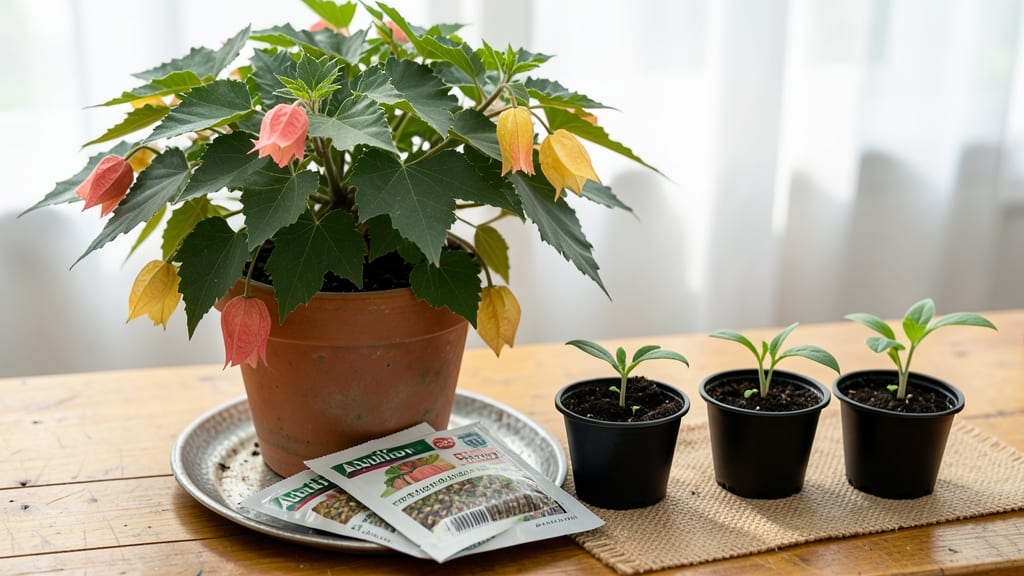
Growing abutilon from seed delivers vibrant blooms faster than you'd expect—no cold treatment needed. 🌱 I've grown these from seed three times now, and each batch surprises me with how quickly they transform from tiny specks into lush, flowering shrubs by summer.
The secret lies in warmth and patience. Abutilon seeds germinate best in 70-75°F soil, so a seedling heat mat or sunny windowsill speeds things up. You'll see sprouts in 10-14 days if kept consistently moist but not soggy.
The real magic happens when those first true leaves unfurl—each one signals another step toward bold, maple-like foliage and clusters of bell-shaped blooms.
By month three, your seedlings will be ready for transplanting into individual pots. With proper light and occasional pinching, they'll reward you with continuous blooms from late spring through fall.
The best part? These plants thrive in containers, making them perfect for patios or small yards where space is limited.
Fair warning: Overwatering is the #1 killer of young abutilon. Let the top inch of soil dry between waterings, and you'll keep those delicate roots happy. Once established, they're shockingly low-maintenance—just feed them monthly during growing season, and they'll keep flowering like clockwork.
📚 In This Guide
- What you need
- Instructions
- Tips and common mistakes
- Wrapping up and next steps
What you need
- ● Abutilon seeds: 5–10 seeds (ensure they’re fresh for best germination rates).
- ● Seed-starting mix: 1–2 quarts of lightweight, sterile potting soil (avoid garden soil—it’s too dense!).
- ● Seed trays or small pots: 2–4 shallow containers (2–3 inches deep) with drainage holes.
- ● Clear plastic domes or plastic wrap: To create a mini greenhouse and retain humidity.
- ● Spray bottle: For gentle watering (avoid soaking the soil!).
- ● Grow lights or sunny windowsill: Abutilon seeds need bright, indirect light (6+ hours daily).
- ○ Heat mat (optional but helpful): Keeps soil warm (70–75°F) to speed up germination.
- ● Small hand trowel or spoon: For planting seeds without disturbing them.
- ● Fertilizer (balanced, water-soluble): Diluted to half-strength once seedlings sprout (e.g., 5-5-5 or 10-10-10).
- ● Scissors or knife: For pricking out seedlings later (if transplanting).
- ● Labels & markers: To track seed varieties and planting dates.
- ○ Humidity tray (optional): A shallow tray with pebbles and water to boost moisture levels.
Step-by-Step instructions for growing abutilon from seed
Here’s how to coax vibrant, fast-growing abutilon from seed—no cold treatment needed!
🌱 Step 1: Prepare Containers and Seed Starting Mix
Fill small 2-3 inch deep pots with a well-draining seed-starting mix—never garden soil, which can smother delicate roots. I like to mix mine with 20% perlite to prevent compaction. Moisten the mix until it’s damp like a wrung-out sponge, but not soggy. Press it down lightly so the surface is firm but still crumbly.
The reason we use fresh mix is that abutilon seeds germinate best in sterile, airy conditions. Tap the container gently to settle the soil, then make a tiny depression with your finger—just enough to hold a single seed. This prevents over-deep planting, which delays germination.
🌱 Step 2: Sow Seeds and Create Ideal Germination Conditions
Place 1-2 seeds per pot into the depression, spacing them ¼ inch apart. Cover them with a thin layer of mix—just enough to obscure the seeds, no more. Mist the surface lightly with water until the soil looks evenly moist. Abutilon seeds need warmth to sprout, so place the pots in a 75-80°F environment, like on top of a refrigerator or under a seedling heat mat.
Here’s the thing—abutilon seeds germinate in 10-21 days, but they need consistent moisture without being waterlogged. I cover the pots with plastic wrap to trap humidity, but I check daily to prevent mold. Once you see the first sprouts, remove the wrap immediately to avoid damping-off, a fungal disease that can kill seedlings overnight.
☀️ Step 3: Provide Bright, Indirect Light for Seedlings
As soon as the first true leaves appear—those are the second set after the initial seed leaves—move the seedlings to a spot with bright, indirect light. A south-facing window works, but direct sun can scorch tender leaves. I use a grow light on a 14-hour timer if natural light is insufficient. The goal is to keep seedlings compact and sturdy; leggy growth means they’re stretching for light and will never recover.
Watch for the first true leaves—they’ll look like tiny versions of the mature plant’s foliage. This is your signal to start fertilizing lightly with a diluted liquid fertilizer (half-strength) every 2 weeks. Too much fertilizer now burns young roots, so less is more.
🪴 Step 4: Transplant and Encourage Bushy Growth
When seedlings reach 3-4 inches tall and have 4-5 true leaves, transplant them into 4-inch pots with fresh potting mix. Handle the roots gently—abutilon is sensitive to root disturbance, so tease out any tangled roots with your fingers. Water deeply after transplanting to settle the soil and reduce shock.
Pinch back the tips of the main stems when they’re 6 inches tall to encourage bushier growth. This might seem counterintuitive, but it triggers side branches, which is where those signature abutilon blooms appear. You’ll see new leaves sprouting from the sides within a couple of weeks—that’s your reward for pinching!
✂️ Step 5: Maintain and Prune for Continuous Blooms
Once abutilon is established in its final pot (or garden spot), it thrives with morning sun and afternoon shade. Water when the top inch of soil feels dry, but avoid soggy conditions—root rot is the #1 killer of mature plants. Feed with a balanced fertilizer every 4-6 weeks during the growing season to keep blooms vibrant.
Prune lightly after flowering to remove spent blooms and shape the plant. Abutilon responds well to pruning, so don’t be shy—cutting back by ⅓ in early spring encourages dense, bushy growth. You’ll be rewarded with nonstop blooms from late spring through fall, and with care, your plants can live for years!
Tips & tricks for growing abutilon from seed without cold stratification
Here's what I've learned from growing abutilon from seed—these tricks will help you avoid common pitfalls and get those bold blooms faster!
Warmth is Key: That 75-80°F range in Step 2 is non-negotiable for germination. I use a seedling heat mat set to 80°F and place my pots directly on top. If your home stays cooler than 70°F, consider a small greenhouse or clear plastic dome over the pots to create a mini greenhouse effect. The goal is to mimic tropical conditions where abutilon naturally thrives.
Lighting Strategy: In Step 3, when you're setting up that 14-hour grow light timer, position the light just 2-3 inches above the seedlings. Abutilon seedlings grow surprisingly fast once they sprout, so you'll need to adjust the height every few days. Watch for leaves touching the light—this causes scorching that can't be reversed.
Transplanting Hack: When you reach Step 4 and it's time to transplant, I've found that gently tapping the pot sides helps loosen the root ball without damaging delicate abutilon roots. This makes the transition to 4-inch pots much smoother. Also, avoid fertilizing for the first 2 weeks after transplanting—new roots are sensitive and can burn easily.
Pruning Timing: The ⅓ pruning in early spring mentioned in Step 5 is your secret weapon for bushy growth. But here's what nobody tells you—abutilon responds just as well to light pruning throughout the growing season. Pinch back those side branches whenever they reach 6 inches, and you'll get continuous blooms instead of waiting for one big flush in spring.
Pro Tips for Abutilon From Seed
- Here's what I've learned from growing abutilon from seed—these tricks will help you avoid common pitfalls and get those bold blooms faster!
- Warmth is Key: That 75-80°F range in Step 2 is non-negotiable for germination.
- Lighting Strategy: In Step 3, when you're setting up that 14-hour grow light timer, position the light just 2-3 inches above the seedlings.
Frequently asked questions
How long does it take for abutilon seeds to germinate?
Most Abutilon seeds sprout within 7–21 days when kept warm (70–80°F) and moist. Use a seedling heat mat if your home runs cooler—patience is key! If nothing emerges after 3 weeks, try gently pressing the seeds into fresh, damp soil to encourage contact.
Can I grow abutilon from seed indoors without sunlight?
Yes, but you’ll need a grow light (LED or fluorescent) for 12–14 hours daily. Place seedlings 2–3 inches below the bulb. Without light, they’ll grow leggy and weak. Once true leaves appear, rotate the tray daily for even growth.
Why are my abutilon seedlings dying after sprouting?
Overwatering or damping-off fungus are the top culprits. Use sterile potting mix, water only when the top inch feels dry, and avoid crowding seedlings. If stems turn mushy at the base, snip affected plants and treat remaining soil with a hydrogen peroxide spray (3%).
Will abutilon grown from seed bloom as fast as nursery plants?
Seed-grown abutilons typically bloom in 6–12 months, while mature nursery plants may flower sooner. To speed things up, provide bright light, balanced fertilizer (10-10-10), and prune leggy growth to encourage bushier, flower-heavy stems.
Can I save seeds from my abutilon flowers for next year?
Let flowers fade into seed pods (they’ll turn brown and papery). Open them to reveal flat, dark seeds—store in a cool, dry place for up to 2 years. Just note: Seed-grown plants may not match the parent’s exact color or size, but the blooms will still be stunning!
Wrapping up and next steps
Growing abutilon from seed is a rewarding journey that delivers stunning, velvety blooms in just a few months—no cold stratification required! 🌱 With the right mix of warmth, light, and patience, you’ll witness vibrant foliage and cascading flowers that brighten any space.
Whether you’re a beginner or a seasoned gardener, this fast-growing plant is a fantastic way to add texture and color to your collection.
Ready to dive deeper? Start with a small batch of seeds and experiment with your growing setup—soon, you’ll be sharing your abutilon success with fellow plant lovers! 🌸