Featured
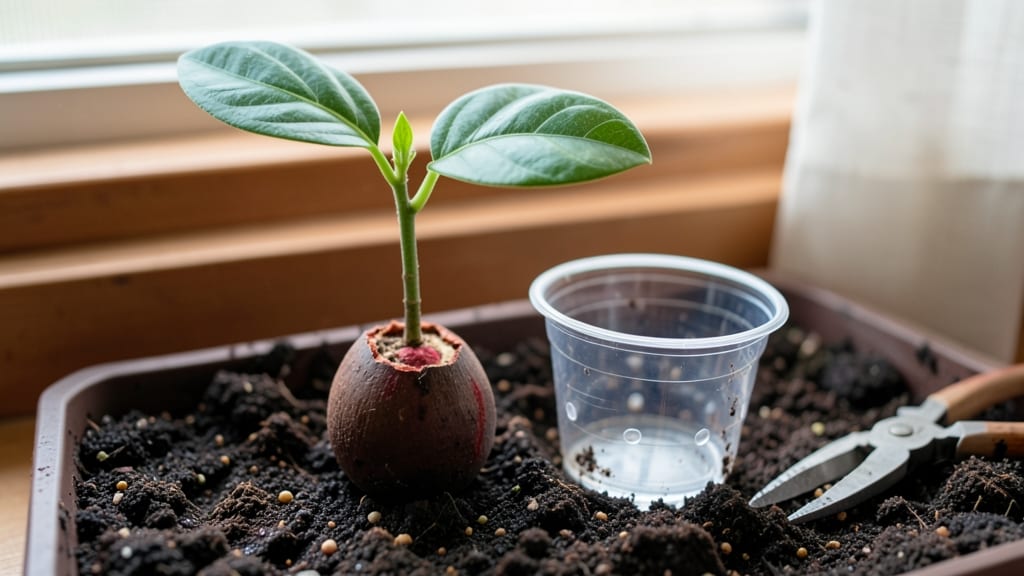
Growing avocado plants from red seeds is one of those gardening miracles that feels like magic—especially when you see those first dark green leaves unfurl. 🌱 I’ve started dozens from store-bought pits, and the red-seeded varieties actually have a slight edge: their seedlings often grow faster and develop sturdier stems right from the start.
The toothpick method makes it foolproof, even for beginners who’ve drowned their fair share of houseplants.
Here’s the secret: soak that seed for 24 hours in warm water, then prop it over a glass with toothpicks until roots dip into water below. Within 2-4 weeks, you’ll spot roots—then transplant into soil when the stem reaches 6 inches.
The key? Bright, indirect light and keeping the soil just damp, not soggy. Red-seeded avocados tend to handle humidity better than their green cousins, making them perfect for bathrooms or kitchens.
By month three, you’ll have a 3-foot-tall plant with glossy leaves that actually looks like it belongs in a nursery. The real payoff? Those first tiny yellow-green flowers appear by year two, and with patience, you might even get fruit—though it’ll take 3-5 years.
The journey is what makes it rewarding, especially when neighbors ask where you got that "exotic" plant.
Slow growth and root rot are the biggest pitfalls, but a well-draining mix of potting soil and perlite keeps roots happy. Water when the top inch feels dry, and rotate the pot weekly for even growth.
Red-seeded avocados are just as hardy as green ones—they just get less attention. Let’s get those seeds sprouting!
Understanding The Red Seed Mystery
If you’ve ever split open an avocado and found a deep red or maroon-colored seed instead of the usual pale green or brown, you might’ve wondered: Why does this happen? The answer lies in a mix of biology, genetics, and even the plant’s survival strategies.
Let’s break down the science behind this striking color shift—because it’s not just about aesthetics, it’s about how avocado trees prepare for their next generation.
Avocado seeds (or pits) come in a spectrum of colors, from pale green to deep red, and even shades of brown or purple. The reddish hue is primarily due to anthocyanins, the same pigments that give blueberries, raspberries, and red cabbage their vibrant colors.
In avocados, these compounds act as a natural sunscreen and antioxidant, protecting the seed from UV damage while it develops inside the fruit.
- Why red? Anthocyanins accumulate in response to light exposure. If the avocado fruit grows in bright sunlight or on the shadier side of the tree, the seed may develop more (or less) pigmentation.
- Genetics play a role: Some avocado varieties, like the Hass or Fuerte, are more prone to producing red-tinted seeds due to their natural genetic makeup. If you’re growing from seed, the parent tree’s traits will influence the color.
- No harm, no foul: Seed color does not affect the tree’s ability to germinate or grow. It’s purely an evolutionary quirk!
Pro Tip: 💡 If you’re saving seeds to plant, don’t let color fool you—red seeds germinate just like any other! The key is moisture, warmth, and patience.
Avocado seeds don’t just turn red because of genetics—environmental stress can also kickstart pigment production. Think of it like a plant’s way of saying, “Hey, things are getting tough, so let’s ramp up our defenses!”
| Stress Factor | How It Affects Seed Color | Real-World Example |
|---|---|---|
| 🌡️ Extreme Heat or Cold | Fluctuating temperatures can speed up anthocyanin production as a protective measure. | A seed ripening in a hot summer may develop a darker red hue faster than one in a cooler climate. |
| ☀️ High Light Exposure | Direct sunlight increases UV stress, prompting the seed to produce more pigments for shielding. | Avocados grown in full sun (like in California) often have redder seeds than those in shaded groves. |
| 💧 Water Stress (Drought or Overwatering)** | Both too little and too much water can trigger oxidative stress, leading to pigment changes. | A tree struggling with irregular watering may produce seeds with patchy red or purple tones. |
Key Takeaway: If you’re growing avocados in harsh conditions, the seeds may turn redder as a survival tactic. But don’t worry—your tree will still thrive!
Avocado trees are not self-pollinating—they rely on bees, wind, or even birds to transfer pollen between different trees. When two genetically distinct avocado trees cross-pollinate, their offspring (including the seeds) can exhibit unpredictable traits, such as vibrant red hues.
- Hybrid seeds = more color variety: If you’re growing avocados from seeds in an area with multiple varieties, the seeds may inherit a mix of pigments from both parents.
- Wild vs. cultivated: Avocados grown from wild or heirloom seeds often have more dramatic color variations than those from commercial groves, which are bred for consistency.
- No guarantee, but fun surprises!: Since seed color isn’t a controlled trait in avocados, you might get a batch of red, green, or even striped seeds from the same tree.
Fun Fact: ✨ Some rare avocado varieties, like the Mexicola or Lamb Hass, naturally produce seeds with deep red or almost black tones—nature’s way of keeping things interesting!
Now that you know why avocado seeds turn red, you’re one step closer to growing your own vibrant avocado tree! The next step? Learning how to germinate those seeds like a pro—stay tuned!
Quick fixes for red avocado seeds
If your avocado seed is turning red instead of sprouting, don’t panic—this is often a sign of stress or improper conditions, and it’s usually reversible! Below are practical, step-by-step solutions tailored to the root causes, plus prevention tips to keep your seed healthy and thriving.
A red-tinged seed usually means it’s either drying out or sitting in too much water, both of which can stunt growth. Here’s how to balance it:
🔥 If the Seed Looks Dry or Shriveled
- Rehydrate gently: Soak the seed in room-temperature water for 4–6 hours (no longer, or it’ll rot).
- Drain well: After soaking, place it on a paper towel to absorb excess moisture.
- Repot in fresh medium: Use a well-draining mix (50% potting soil + 50% perlite or vermiculite) to prevent future dryness.
🍳 If the Seed is Waterlogged or Moldy
- Remove it immediately from standing water or soggy soil.
- Rinse with clean water to remove excess moisture.
- Let it air-dry for 1–2 hours before repotting in drier, aerated soil.
- Prevent future issues: Use a small pot with drainage holes and water only when the top inch of soil feels dry.
💡 Pro Tip: Overwatering is the #1 killer of avocado seeds! Stick your finger in the soil—if it’s damp, wait before watering again.
Avocado seeds thrive in warmth (70–85°F) and moderate humidity. If your seed is red, it may be too cold or too dry.
✨ Adjusting Temperature
- Move to a warmer spot: Place near a sunny window (but avoid direct scorching sunlight).
- Use a heat mat (optional): If your home stays cool, a seedling heat mat (set to 75°F) can speed up germination.
- Avoid drafts: Keep away from AC vents, fans, or open windows.
🎯 Boosting Humidity
- Cover with a plastic bag (temporarily): Create a mini greenhouse effect by loosely covering the pot with a clear plastic bag (remove daily for airflow).
- Use a humidity dome: If repotting, choose a clear plastic propagator to retain moisture.
- Mist lightly 1–2 times daily (but avoid soaking the soil).
🔥 Warning: Too much humidity leads to fungus—always allow some airflow to prevent mold.
Redding can also signal sunburn or lack of light, both of which stress the seed.
👨🍳 If the Seed is Bleached or Red from Sunburn
- Move to indirect light: Place near an east-facing window (gentle morning sun) or under fluorescent grow lights (12–14 hours/day).
- Avoid direct midday sun: South- or west-facing windows can overheat the seed.
- Use sheer curtains if needed to diffuse harsh light.
🥘 If the Seed is Leggy or Pale (Not Enough Light)
- Gradually increase light: Start with 4–6 hours of indirect light daily, then slowly add more.
- Supplement with grow lights: A basic LED grow bulb (6000K–6500K) works well for seedlings.
- Rotate the pot weekly to prevent uneven growth toward the light.
💡 Pro Tip: Yellowing leaves + red stems = too much sun. Wilting + slow growth = too little light.
Sometimes, avocado seeds take their time—but these tricks can encourage faster sprouting.
🔪 Quick Germination Hacks
- Peel the seed slightly: Gently score the seed coat (where the root emerges) with a knife or sandpaper to help water penetrate.
- Use a rooting hormone (optional): Dip the scored area in natural rooting powder (like willow water) before planting.
- Try the toothpick method: If the seed won’t sprout upright, prop it on its side with toothpicks to keep it stable while it grows.
🌱 Patience is Key
- Germination can take 2–8 weeks—don’t give up if nothing happens in the first week!
- Keep soil moist (not soggy) and consistent with light/temperature.
🎯 Prevention Tip: Soak your seed in warm water for 24 hours before planting to soften the shell and speed up germination.
To avoid red seeds in the future, follow this simple maintenance guide:
| Issue | Prevention Tip |
|---|---|
| Overwatering | Water only when the top inch is dry; use pots with drainage holes. |
| Underwatering | Use a humidity tray or mist lightly 1–2x daily. |
| Temperature swings | Keep in a consistent 70–85°F range; avoid cold drafts. |
| Poor light | Start with bright indirect light; supplement with grow lights if needed. |
| Slow germination | Score the seed and soak it before planting for faster results. |
Final Thought: A red avocado seed is not a death sentence—it’s just a cry for help! By adjusting moisture, light, and warmth, you’ll see green growth in no time. Stick with it, and you’ll have a thriving avocado plant in just a few weeks! 🌱✨
Frequently asked questions
Why does my avocado seed turn red instead of sprouting?
Red coloring often signals stress from overwatering, drought, or temperature swings. The seed isn’t dead—it’s just reacting to environmental factors. Rehydrate gently (soak for 4-6 hours), then repot in well-draining soil to revive it.
Does a red avocado seed grow differently than a green one?
Not at all! Seed color (red, green, or brown) has zero impact on germination success or plant development. The red hue comes from anthocyanins—nature’s sunscreen—so your seed will grow just like any other. Focus on moisture and warmth instead!
Can I still use a red avocado seed for planting?
Red seeds germinate the same way. Start with the toothpick method: suspend the seed over water with toothpicks, keeping the bottom half submerged. Roots typically appear in 2-4 weeks—just maintain 70-85°F temperatures and indirect light.
Will my red-seed avocado tree produce fruit?
Yes, but it’ll take 3-5 years and requires cross-pollination (plant two trees). Red seeds come from healthy parent trees, so your seedling has great potential—just provide bright light, well-draining soil, and consistent care. Patience pays off with homegrown avocados!
How do I prevent my avocado seed from turning red?
Keep soil moist but not soggy (water when top inch dries), maintain 70-85°F temps, and use indirect light. Avoid cold drafts and extreme humidity. A humidity dome can help maintain stable conditions during germination.