
Advice
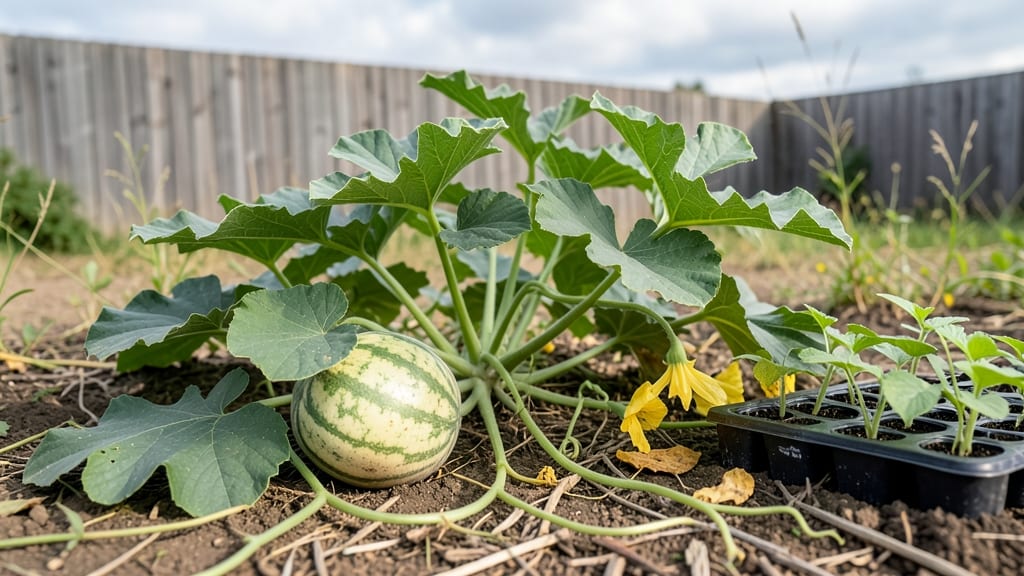
You can absolutely grow watermelon from watermelon seeds, whether store-bought or saved from your own fruit. These seeds produce vigorous plants with reliable fruit quality when planted 1 inch deep in warm soil after the last frost, spaced 3-4 feet apart, and given full sun exposure for maximum growth and sweetness.
Watermelon seeds are surprisingly resilient—many store-bought varieties are hybrid seeds specifically bred for germination success, while heirloom seeds from saved fruit can produce even more flavorful results over generations. 🌱 The key to starting strong lies in soil temperature (at least 70°F) and consistent moisture during germination, which typically takes 7-10 days.
I've found that planting in raised beds gives seedlings a head start against soilborne diseases common in heavy garden plots.
What many gardeners overlook is how watermelon vines need space to thrive—those 3-4 feet between plants isn't just about fruit size, but also airflow that prevents powdery mildew. My favorite trick? Trellising the vines vertically in containers saves space while directing energy upward for faster ripening.
The first harvest-worthy melons often appear around 70-90 days, but patience pays off with sweeter fruit when left on the vine until fully mature.
💡 In This Article
- Watermelon Seed Germination and Planting Conditions
- Caring for Watermelon Plants from Seed to Harvest
Watermelon seed germination and planting conditions
Watermelon seeds need precise conditions to germinate successfully, starting with soil temperatures above 70°F—any cooler and they won't sprout. The seeds contain enzymes that activate only when warmed, triggering metabolic processes that break down stored nutrients.
This is why gardeners in cooler climates often use black plastic mulch or cold frames to create microclimates. The ideal germination window occurs when nighttime temperatures stay above 60°F, as chilly nights slow down the enzymatic activity needed for root development.
Moisture plays an equally critical role—seeds require consistent dampness but not soggy conditions. Think of it like a damp sponge: the soil should hold moisture without pooling water. I've found that using a spray bottle to mist seeds before covering them with 1 inch of soil creates an ideal environment.
Too much water can cause seeds to rot, while too little prevents the seed coat from softening enough for the radicle (embryonic root) to emerge. Most seeds sprout within 7-10 days, but some heirloom varieties may take up to 14 days in cooler conditions.
Soil composition matters more than most gardeners realize. Watermelons thrive in well-draining soil with a pH between 6.0-6.8, as acidic soils inhibit nutrient uptake while alkaline conditions reduce iron availability.
Sandy loam soils—those with a mix of sand, silt, and organic matter—provide the perfect balance of drainage and moisture retention. Amending heavy clay soils with compost improves aeration, while container growers should use a blend of potting mix and perlite to prevent compaction.
The key is creating an environment where roots can spread freely without suffocating.
When it comes to timing, planting after the last frost ensures seeds won't encounter freezing temperatures, which can kill emerging seedlings. In USDA zones 3-5, this typically means waiting until late May or early June, while zone 7-10 gardeners can start as early as March.
I've learned that monitoring soil temperature with a thermometer is more reliable than checking air temperature—seeds need warmth at the planting depth, not just above ground. For container gardening, black plastic pots absorb heat faster than traditional containers, giving seeds a head start in cooler climates.
Seed-saving introduces another layer of consideration. Hybrid seeds (common in store-bought watermelons) may not produce true-to-type fruit, while heirloom seeds maintain consistent characteristics. To test viability, place seeds in a jar of water—if they sink, they're likely viable; if they float, they're probably too old.
For maximum germination rates, store seeds in a cool, dry place (around 40°F) in airtight containers. I've saved seeds from my best-tasting melons for years, and each generation seems to produce even sweeter fruit, proving that seed-saving pays dividends in flavor and reliability.
One common mistake is planting seeds too deeply. While 1 inch is ideal, some gardeners bury them 2 inches deep, which can delay germination by weeks. The seed coat needs proximity to moisture and warmth, and deeper planting forces the seedling to use more energy breaking through additional soil layers.
For container growers, using seed-starting mix (which is lighter than garden soil) helps prevent over-compaction around the seeds. The goal is to create conditions where the seedling can emerge with minimal stress, setting the stage for vigorous vine growth.