
Pruning
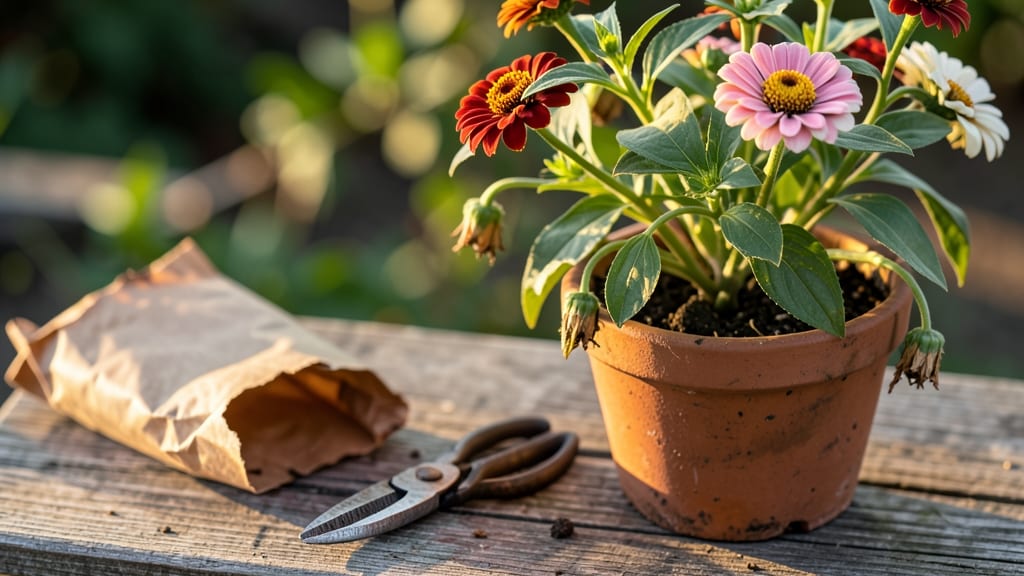
Deadheading zinnias for seeds is the secret to extending their blooming season while saving heirloom varieties for next year. I’ve learned that simply snipping spent blooms at the right time transforms zinnias from one-season wonders into reliable seed producers—something store-bought hybrids can’t offer.
The process is straightforward but requires timing and precision to avoid sacrificing both flowers and seeds.
You’ll need sharp pruning shears, a small paper bag for seed collection, and a sunny spot where zinnias thrive. The key is to deadhead after the blooms fade but before seed heads fully mature—typically mid-to-late summer in most climates.
Cut just above the first set of healthy leaves to encourage new growth while allowing seed development on the remaining stems. This method preserves both aesthetics and seed viability.
After deadheading, zinnias will reward you with fresh blooms for weeks while the remaining flowers develop plump, papery seed heads. Once fully dry, gently rub the heads to release seeds into your bag—store them in a cool, dry place until spring.
The result? A steady supply of vibrant zinnias year after year, without the cost or guesswork of buying new plants.
This technique works best for heirloom varieties, which often produce more robust seeds than hybrids. For container gardeners, use smaller shears and shallow trays to collect seeds without losing them to wind.
The trade-off? Fewer blooms on seed-bearing stems, but the payoff in saved seeds and extended flowering makes it worth it.
📚 In This Guide
- What you need
- Instructions
- Tips and common mistakes
- Wrapping up and next steps
What you need
- ● Pruning shears or sharp garden scissors – Choose bypass pruners (not anvil-type) to avoid crushing stems. A 5-inch pair works best for precision.
- ○ Gloves (optional but recommended) – Wear nitrile or leather garden gloves to protect against thorns and dirt.
- ● Paper bags or seed-saving envelopes – Collect at least 5–10 dried flower heads per variety for reliable seed yield.
- ● Permanent marker or labels – Label bags/envelopes with the zinia variety name and harvest date.
- ● Damp paper towels or a drying tray – Spread seeds on 2–3 layers of paper towels to dry for 1–2 weeks.
- ● Disinfectant (70% isopropyl alcohol or bleach solution) – Wipe pruners between cuts to prevent disease spread.
- ● Knee pad or stool – For comfort if deadheading large zinnias or working in the garden for extended periods.
- ● Camera or phone – Snap photos of your zinnias before deadheading to track varieties for next season!
- ● Seed storage container (airtight) – Store dried seeds in a cool, dark place (like a jar or envelope) for long-term viability.
Instructions for deadheading zinnias to save seeds
Here’s how to preserve zinnia seeds while keeping your plants blooming—no wasted flowers or guesswork.
Identify and Select Seed-Heads
Wait until your zinnias produce fully mature, brown seed heads—these are the ones to save. Look for dried petals that have fallen away naturally, leaving behind a papery, round head. I pick these in late summer or early fall, when most flowers have already faded. Avoid green or partially open blooms; they won’t have viable seeds yet.
Use clean, sharp scissors to snip the entire seed head from the stem, leaving about ½ inch of stem attached. This prevents moisture from seeping into the seed head and causing rot. Place the cuttings in a paper bag or envelope—this keeps seeds contained while they dry.
Dry and Store Seed Heads
Let the seed heads dry in a warm, dry, well-ventilated spot for 7-10 days. I hang mine upside down from a clothesline in my garage, where airflow circulates but humidity stays low. You’ll know they’re ready when the seed heads crumble easily between your fingers and the seeds inside look plump and dark.
Once dry, gently rub the seed head between your palms over a clean sheet of paper. The seeds will fall out while the chaff (dried plant debris) stays behind. Sift through the seeds to remove any remaining debris, then store them in a small envelope or airtight container labeled with the variety and harvest date.
Deadhead for Continuous Blooms
While saving seeds, keep your zinnias flowering by deadheading spent blooms regularly. Pinch or cut off wilted flowers just above a set of healthy leaves—this encourages the plant to produce new side shoots and more blooms. I do this every 2-3 days during peak bloom season to prevent the plant from wasting energy on seed production.
For the best results, deadhead in the early morning when the flowers are still firm. Avoid cutting into green stems—this can invite disease. If you notice any yellowing leaves or weak stems, trim those back immediately to redirect the plant’s energy toward new growth.
Prepare Seed Heads for Planting Next Year
In early spring, take your dried seed heads and repeat the rubbing process to separate fresh seeds. Test a few by pressing them between your fingers—if they feel firm and intact, they’re ready to plant. Scatter seeds directly onto prepared soil in full sun (zinnias thrive with 6-8 hours of sunlight daily).
Lightly cover the seeds with ¼ inch of soil and water gently. You’ll see sprouts in 7-14 days, depending on your climate. Thin seedlings to 12 inches apart once they’re 2-3 inches tall to give each plant room to grow. This ensures strong, healthy plants that will bloom abundantly next season.
Tips & tricks for perfect zinnia seed preservation
These simple strategies will help you maximize your zinnia seed harvest while keeping your plants thriving all season long.
Timing is Everything: In Step 1, when selecting seed heads, wait until the petals have completely fallen away and the center turns a deep, papery brown. Green or partially open blooms won't produce viable seeds—this is the most common mistake I see. I always check my zinnias in late summer when most flowers have naturally faded, usually around mid-August in my climate zone. The 7-10 day drying period in Step 2 is crucial—don't rush it, even if your seed heads look dry earlier. Proper drying prevents mold and ensures seed viability.
Drying Conditions Matter: For the drying process in Step 2, I've found that a well-ventilated garage with indirect sunlight works best. If you're drying indoors, place seed heads near an open window or use a small fan to circulate air. Humidity is the enemy—if your area is particularly damp, consider using a dehumidifier or drying rack. The upside-down hanging method prevents moisture from seeping back into the seed heads through the stems. You'll know they're perfectly dry when they crumble easily between your fingers without any resistance.
Labeling System: When storing your seeds in Step 2, create a simple labeling system that includes both the zinnia variety and the harvest year. I use small masking tape labels on my envelopes with a permanent marker. This prevents mix-ups between varieties and helps you track which seeds are freshest. I also note the date when I first planted them—this helps me remember which seeds to use first for spring planting. A well-organized seed collection makes next year's garden planning much easier.
Deadheading Discipline: The 2-3 day deadheading schedule in Step 3 makes all the difference for continuous blooms. I set a reminder on my phone for every Tuesday and Friday during peak bloom season to stay consistent. When deadheading in Step 3, always cut just above a set of healthy leaves—this encourages new growth from the side shoots. I've found that early morning deadheading prevents wilting and keeps flowers looking fresh longer. If you notice any yellowing leaves or weak stems during this process, trim them back immediately to maintain plant health.
Pro Tips for Deadheading Zinnias For Seeds
- These simple strategies will help you maximize your zinnia seed harvest while keeping your plants thriving all season long.
- Timing is Everything: In Step 1, when selecting seed heads, wait until the petals have completely fallen away and the center turns a deep, papery brown.
- Drying Conditions Matter: For the drying process in Step 2, I've found that a well-ventilated garage with indirect sunlight works best.
Frequently asked questions
Got questions about deadheading zinnias for seeds? You’re not alone! Here are some of the most common queries—and their answers—to help you master the process like a pro.
When is the best time to deadhead zinnias for seeds?
Deadhead zinnias after they’ve bloomed but before the seeds fully mature (usually late summer to early fall). Aim for mid-to-late afternoon when blooms are spent but still vibrant. This gives seeds time to develop while preventing self-seeding where you don’t want it.
Do I need to leave the seed heads on the plant for long?
Leave seed heads on the plant for 2–4 weeks after deadheading to allow them to fully dry and mature. Once they turn brown and papery, they’re ready for harvesting. Rushing this step can result in poor germination rates.
What if my zinnias don’t produce seeds after deadheading?
If seeds aren’t forming, check for these issues:
- Pests: Aphids or spider mites can stress plants. Treat with neem oil if needed.
- Overcrowding: Thin plants to improve airflow and sunlight exposure.
- Late deadheading: If you prune too late in the season, the plant may not have energy left to set seeds.
Can I deadhead zinnias for seeds and still enjoy flowers?
Deadheading for seeds doesn’t mean sacrificing blooms. Simply leave a few flowers per plant to go to seed while trimming the rest for continuous color. This balances aesthetics and seed production effortlessly.
How do I store zinnia seeds for next year?
Once harvested, let seeds dry completely (1–2 weeks in a cool, dry place). Store them in a paper envelope or airtight container in a dark, cool spot (below 40°F). Label with the variety and date—seeds stay viable for 2–3 years!
Wrapping up and next steps
Deadheading zinnias for seeds is a simple yet rewarding task that ensures next year’s garden will burst with color while supporting pollinators. By following these steps, you’ll maximize seed yield, extend blooming seasons, and even create stunning dried arrangements. Your efforts today will pay off with vibrant, healthy zinnias tomorrow!
Ready to take it further? Try saving and planting your seeds—it’s a cost-effective way to grow heirloom varieties and deepen your gardening skills. Happy growing! 🌱💛