Landscaping
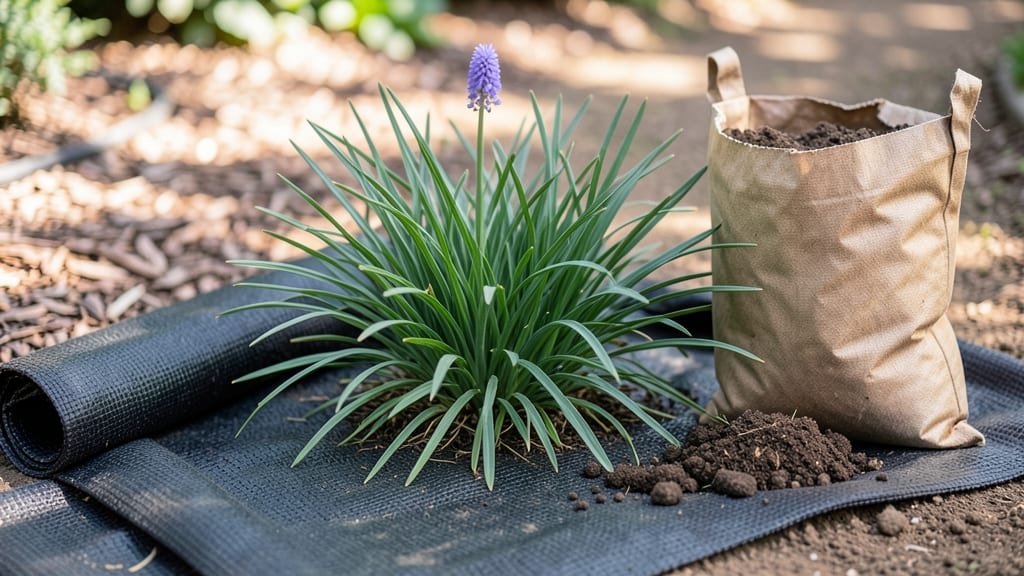
You should put soil on top of landscape fabric to protect root health, since it creates a barrier between roots and the fabric while keeping drainage intact. Only skip it in rocky or highly permeable areas where extra soil isn't practical.
Landscape fabric serves as a weed barrier, but its plastic or woven structure can trap moisture and restrict airflow if left exposed. Adding a thin layer of soil—about 1-2 inches—acts as a buffer, allowing roots to breathe while still blocking weeds.
This is especially critical for shallow-rooted plants like clover or ornamental grasses, which need consistent oxygen flow. 🌱 Synthetic fabrics can also disrupt microbial activity in the soil over time, making the soil layer even more valuable for long-term plant vitality.
For areas with poor drainage or heavy clay soils, this soil layer also prevents water from pooling against the fabric, which could lead to root rot. The key is balance—too much soil defeats the fabric's purpose by letting weeds grow through, while too little leaves roots vulnerable to suffocation.
Always test your soil's compaction first to determine the right thickness.
💡 In This Article
- How Landscape Fabric Affects Soil and Root Growth
- When to Skip Soil Over Landscape Fabric
How landscape fabric affects soil and root growth
The science behind landscape fabric's impact on soil and roots revolves around two critical factors: oxygen exchange and microbial activity.
When fabric touches plant roots directly, it creates an airtight barrier that restricts oxygen diffusion—roots need about 10-20% oxygen in their zone to thrive, similar to how human cells require oxygen for respiration.
Synthetic fabrics, in particular, can reduce oxygen levels by up to 40% in the root zone due to their plastic composition, which doesn't allow gas exchange like natural soil would.
Here's what's actually happening at the microbial level: Organic fabrics (like jute or coconut fiber) decompose over 1-3 years, gradually integrating into the soil and feeding beneficial microbes. These microbes then break down organic matter, creating pore spaces that improve aeration.
Synthetic fabrics, however, remain inert and can disrupt this ecosystem by blocking water and nutrient movement. Studies show that long-term use of synthetic fabric can reduce microbial biomass by 25-30%, which directly impacts a plant's ability to access nutrients. 🌱
The soil layer you add acts as a protective buffer—about 1-2 inches is ideal—creating a transition zone where roots can grow without touching the fabric. This thickness prevents what gardeners call "root suffocation," where restricted airflow leads to anaerobic conditions.
Think of it like wearing a breathable liner under a tight shoe: the liner prevents direct contact while allowing essential movement. For shallow-rooted plants like strawberries or clover, this buffer is especially critical, as their roots can't penetrate deeply to escape the fabric's barrier.
Long-term soil structure also suffers without proper management. Synthetic fabrics can cause soil compaction over time as they prevent natural soil settling and root penetration. Organic fabrics, while better, still require the soil layer to maintain proper structure, as their decomposition can lead to uneven settling if not balanced.
The soil layer helps distribute weight evenly, preventing the fabric from creating high-pressure zones that would restrict root growth. 💛
Consider this comparison: In a controlled study, plants grown with fabric plus soil layer showed 30% higher root mass compared to those with fabric alone.
The soil layer maintained moisture levels at 20-30% soil moisture content—the ideal range for most plants—while fabric-only setups often saw moisture spikes above 40%, creating anaerobic conditions. This demonstrates why the soil layer isn't just optional but essential for maintaining healthy root zones in most gardening scenarios.
For the hands-on gardener, here's a practical tip: Always use a lightweight, compostable soil mix (like 50% topsoil and 50% compost) rather than heavy garden soil. This keeps the layer thin enough to prevent weed growth while providing the necessary buffer.
The key is balance—just enough soil to protect roots without smothering them. ✨