Trees
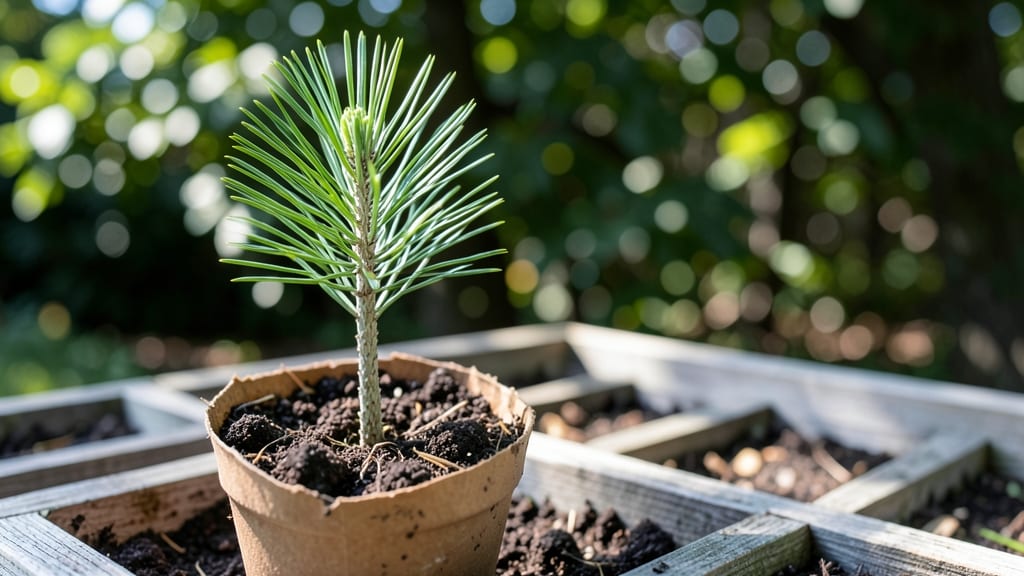
Growing a pine cone seedling starts with soaking fresh pine cones in water for 24-48 hours to break dormancy, then planting the extracted seeds in well-draining soil while keeping them in partial shade until they sprout (usually within 4-12 weeks).
A pine cone seedling's journey begins with understanding its natural dormancy cycle. 🌱 Unlike many plants, pine seeds need this initial soaking to mimic winter conditions, which helps trigger germination.
The key is patience—some varieties take longer to crack open their tough outer shells, and consistent moisture (without soggy soil) keeps the seeds from rotting before they sprout.
I've found that using a mix of peat moss and perlite creates the perfect airy environment for those first delicate roots to establish.
Once the seeds sprout, the real challenge begins: maintaining that balance between moisture and airflow. Young pine seedlings are prone to fungal issues if their environment stays too damp, so I recommend using a small fan nearby to promote airflow while keeping the soil lightly moist.
The partial shade requirement isn't just about light levels—it's also about protecting tender new growth from temperature swings that can stress the plant during its vulnerable early stages.
💡 In This Article
- Key Factors for Successful Pine Seed Germination
- Step-by-Step Guide to Planting and Caring for Pine Seedlings
Key factors for successful pine seedling germination
Pine seeds enter a natural state of dormancy due to their hard, resinous outer shells and internal chemical inhibitors that prevent premature germination. This built-in delay ensures seeds only sprout when conditions are optimal for survival.
The soaking process you perform mimics natural winter rainfall, which softens the seed coat and leaches out germination inhibitors. Scientifically, this is called stratification, and it requires both moisture and time—typically 24-48 hours of soaking at room temperature (65-75°F) to effectively break dormancy in most pine species.
The soil environment plays a critical role in germination success. Pine seedlings thrive in slightly acidic conditions with a pH range of 5.0-6.5, which mimics their natural forest floor habitat.
Too alkaline (above 7.0) can lock out essential nutrients like iron and manganese, while overly acidic (4.0 or lower) may harm root development. The moisture balance is equally delicate—soil should remain consistently damp (not soggy) to prevent fungal rot while providing enough hydration for root establishment.
Think of it like a damp sponge: enough moisture to support growth, but with plenty of airflow to prevent suffocation.
Temperature control is where many growers stumble. Pine seeds need a consistent range of 60-70°F during germination, with nighttime temperatures not dropping below 50°F. Below 50°F, metabolic processes slow dramatically, delaying or even preventing germination. Above 75°F, seeds may rot before sprouting.
I've found that using a seedling heat mat set to 65°F creates ideal conditions while preventing temperature fluctuations. This warmth also helps activate the seed's internal enzymes that break down stored nutrients for early growth.
Light exposure during early stages is often misunderstood. While pine seedlings eventually need full sun, the germination phase benefits from partial shade (30-50% sunlight). This protects tender new shoots from intense UV radiation that can scorch delicate tissue while still providing enough light for photosynthesis.
Direct sunlight at this stage can cause rapid moisture loss through transpiration, leading to stress. The partial shade also helps maintain more stable soil temperatures—critical for young roots that are still developing their vascular system to regulate water uptake.
What most people don't realize is how critical the seed-to-soil contact ratio is. Pine seeds should be planted at a depth equal to 2-3 times their diameter—typically about 1/4 to 1/2 inch deep. Planting too shallow risks drying out the seed, while burying too deep can suffocate it.
The seed's natural oils need both air and moisture to initiate germination. I've had the best success with a peat-perlite mix (70% peat, 30% perlite) that holds moisture while allowing oxygen circulation. This combination creates the perfect microclimate for those first critical cell divisions.
Timing is everything when it comes to light exposure after germination. Once the first true needles appear (typically 4-8 weeks after planting), you can gradually increase sunlight exposure over 2-3 weeks to prevent shock.
Young seedlings develop a protective layer of cutin on their needles that helps them tolerate more direct light, but this hardening process takes time. The transition should be gradual—think of it like acclimating to a new climate.
Sudden full sun exposure can cause what's called "sunburn" in seedlings, where the chlorophyll breaks down and leaves white or brown patches on the needles.