
Vegetables
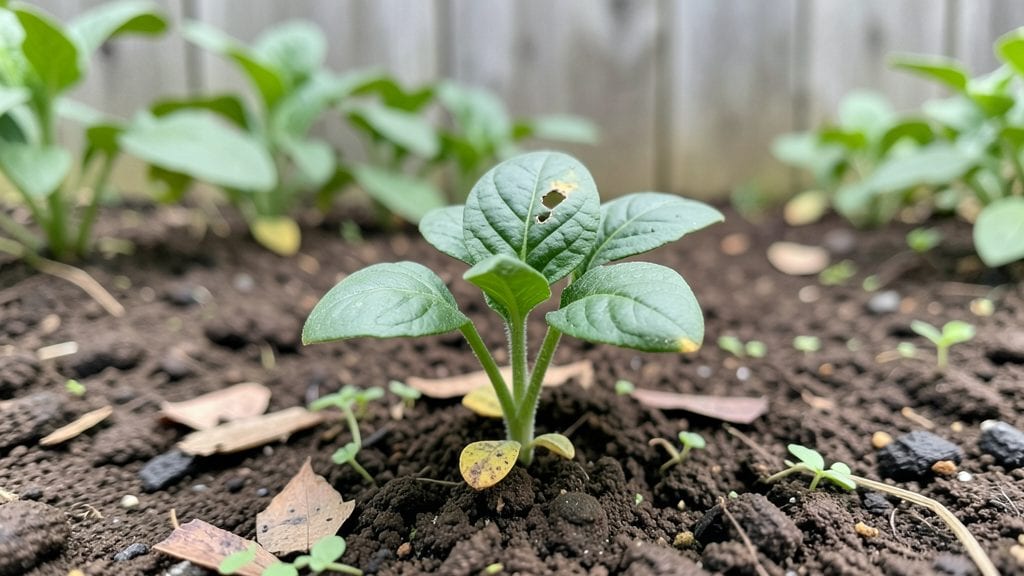
The key to accurate spinach seedling identification starts with spotting those first true leaves—because those early sprouts can be deceiving. 🌱 I’ve spent years watching seedlings, and the moment true leaves appear is when things get exciting.
Those initial round cotyledons (the baby leaves) are just placeholders, but the real spinach leaves—saw-toothed edges and all—tell you the plant is ready to grow.
Here’s the quick trick: count the leaves. Cotyledons come in pairs, but true spinach leaves grow one at a time from the center. They’ll be darker green, narrower, and have those signature jagged edges.
Weeds or other seedlings usually have smoother leaves or grow in clumps—spinach stays neat and upright once it gets going.
Once you spot those true leaves, keep them happy with bright light and consistent moisture. Overwatering drowns roots, while dry soil stunts growth. A simple tray under the seedlings catches excess water, and a south-facing window or grow light keeps them thriving.
Mistakes happen when you confuse cotyledons for true leaves or pull weeds too early. Wait until you see at least three true leaves before thinning—now you’re ready to tell the difference for good.
What Triggers Confusion in Seedlings
Identifying spinach seedlings correctly is the first step toward a thriving garden, but missteps often happen due to natural growth patterns or environmental factors. Understanding why seedlings look the way they do helps you spot true leaves early and avoid common pitfalls.
Here’s a breakdown of the key culprits behind identification mix-ups:
Spinach seedlings follow a predictable genetic timeline, and confusion often arises from not recognizing these stages. The first "leaves" you see aren’t actually true leaves—they’re cotyledons, the seed’s built-in food storage and photosynthesis starters. These look different from later leaves because they’re designed for a different job:
- Shape & Structure: Cotyledons are usually thicker, rounder, or more spoon-shaped (like tiny shields) to protect the seedling’s delicate stem. True leaves, by contrast, are thinner, more lobed, or serrated, optimized for light capture.
- Color Clues: Young cotyledons may appear darker green or purple-tinged due to anthocyanins (pigments that shield the seedling from intense light). True leaves often lighten as they mature.
- Arrangement: Cotyledons typically emerge in pairs (one on each side of the stem), while true leaves grow in a spiral or alternate pattern.
Pro Tip: 💡 If your seedlings have only 1–2 leaves and they’re plump and shield-like, you’re still in the cotyledon phase. Wait for the third leaf—that’s when true leaves appear!
Harsh or inconsistent growing conditions can distort seedling development, making true leaves harder to spot. Spinach, in particular, is sensitive to temperature swings and moisture extremes. Here’s how the environment plays tricks:
| Factor | How It Affects Seedlings | What It Looks Like |
|---|---|---|
| 🔥 Overheating (e.g., direct sun, poor ventilation) | Cotyledons may scorch or curl prematurely, mimicking true leaves. | Bleached or crispy edges; seedlings lean away from light. |
| ❄️ Cold Snaps (below 40°F/4°C) | Growth slows, and cotyledons stay small and underdeveloped. | Pale, stunted leaves; delayed true leaf emergence. |
| 💧 Overwatering or Poor Drainage | Cotyledons swell unnaturally, looking puffy or translucent. | Yellowing at the base; mushy stems (early rot signs). |
| 🌬️ Low Humidity (dry air) | True leaves may emerge crinkled or curled, resembling stressed cotyledons. | Dull, papery texture; edges may brown. |
Fix It: 🌡️ Maintain consistent temps (50–75°F/10–24°C), use shade cloth for young seedlings, and water at soil level to avoid wetting leaves. Spinach thrives in cool, moist conditions—mimic its native habitat!
Tiny invaders or diseases can alter leaf shape and size, making seedlings look abnormal. Since spinach is a magnet for pests, these disruptions often happen before you even notice the problem:
- Flea Beetles (🐜): These jumpers chew tiny holes in cotyledons, creating a "lace-like" appearance that can be mistaken for true leaf serration.
- Downy Mildew (🍃): Causes yellowing or white fuzz on leaves, making cotyledons look diseased or stunted before true leaves form.
- Aphids (🐝): Cluster on new growth, distorting leaves into curled or puckered shapes that resemble early true leaves.
- Fungal Infections (e.g., damping-off): Rot at the stem base can make seedlings collapse, leaving only cotyledons visible—tricking you into thinking true leaves never arrived.
Prevent It: ✨ Use row covers to block flea beetles, space seedlings for airflow, and avoid overhead watering. If you spot damage, isolate affected plants and treat with neem oil or copper fungicide.
By recognizing these causes, you’ll stop second-guessing your seedlings and start celebrating their progress. Next up: How to Tell True Leaves Apart—where we’ll give you a foolproof checklist!
Quick Fixes for Seedling Confusion
Identifying spinach seedlings correctly can feel like solving a puzzle, especially when distinguishing between cotyledons and true leaves. But don’t worry—once you know the root causes of the mix-ups, you can tackle them with simple, practical steps.
Below, we’ve mapped out the most common issues and their fixes, so you can confidently tell the difference and nurture healthy seedlings.
If you’re still unsure whether those first leaves are cotyledons or true leaves, you might be checking too early. Cotyledons (the seed leaves) appear first and look simpler, while true leaves develop later with more defined shapes and serrations.
How to Fix It: ✅ 🔍 Wait for True Leaves to Emerge
- Cotyledons are typically round, smooth, and lack veins. True leaves, on the other hand, are more elongated, jagged, or lobed.
- Give your seedlings 10–14 days to grow before making your call.
True leaves usually appear after the first set of cotyledons falls off or shrinks.
✅ 📸 Take Reference Photos
- Snap a picture of your seedlings at different stages. Compare them to a spinach seedling growth chart for clarity.
- Look for the vein pattern: True leaves have a more complex network of veins, while cotyledons are usually smoother.
💡 Pro Tip: If your seedlings are still tiny, use a hand lens (magnifying glass) to inspect the leaf edges and undersides for subtle differences.
Sometimes, what looks like a true leaf might actually be a sign of downy mildew, insect damage, or nutrient deficiency. These issues can distort leaf shape, making identification tricky.
How to Fix It: ✅ 🦋 Check for Pests or Fungal Spots
Downy mildew causes yellow or brown patches on leaves, often with a fuzzy underside.
True leaves won’t have this—it’s a red flag for disease. - Look for holes or chew marks (signs of slugs, aphids, or caterpillars). Healthy true leaves are intact.
✅ 💧 Adjust Watering or Fertilizer
- Overwatering can cause yellowing or wilting, while underwatering may lead to curled or stunted leaves.
- If leaves appear purple or stunted, your seedlings might need more nitrogen (a balanced fertilizer helps).
🌡️ Pro Tip: Keep seedlings in a well-ventilated area (like a greenhouse with airflow) to prevent fungal growth. If you spot mildew, treat with a neem oil spray or copper fungicide.
Poor lighting or extreme temperatures can stunt growth, making leaves look abnormal and harder to identify. Seedlings grown in low light or cold drafts may develop odd shapes or slow growth.
How to Fix It:
✅ 💡 Optimize Light Exposure
- Place seedlings near a south-facing window or under grow lights (12–16 hours/day).
- If leaves are long and leggy, they’re stretching for light—move them closer to the source.
✅ 🌡️ Maintain Ideal Temperatures
- Spinach thrives in 55–75°F (13–24°C). Avoid cold drafts or heaters too close to seedlings.
- If nights are chilly, use a row cover or move pots indoors temporarily.
✨ Pro Tip: Rotate seedlings quarter-turn daily to ensure even light exposure and prevent lopsided growth.
Once you’ve solved the confusion, keep these tips in mind to make identification easier next time—and ensure your spinach grows strong!
How to Prevent Mix-Ups:
📊 📝 Keep a Seedling Journal
- Record growth stages with dates and photos. Note when cotyledons appear and when true leaves emerge.
🌱 🌱 Start with Healthy Seeds
- Use certified organic or heirloom seeds from reputable suppliers to avoid weak or diseased seedlings.
🔄 🔄 Thin Seedlings Early
- Overcrowded seedlings compete for nutrients, leading to weak, hard-to-identify leaves. Thin to 2–3 inches apart once true leaves appear.
💡 💡 Label Your Trays
- If growing multiple varieties, label each tray or pot to track growth patterns without guesswork.
With these fixes, you’ll never second-guess whether those leaves are cotyledons or true leaves again. Happy growing—and may your spinach be lush and leafy! 🍃
Frequently asked questions
How do I tell if my spinach seedlings are real leaves or just cotyledons?
Look for the third leaf—that’s when true spinach leaves appear! Cotyledons (the first leaves) are round, smooth, and come in pairs. True leaves are darker green, have jagged edges, and grow one at a time from the center stem. Use a magnifying glass if needed to spot the serrated edges.
Why do my spinach seedlings look weak or stunted?
Weak seedlings often mean overwatering, low light, or cold temperatures. Spinach thrives in 55–75°F (13–24°C) and needs bright indirect light. Keep soil moist (not soggy) and use grow lights if natural light is weak. Yellowing leaves? Check for nutrient deficiency or fungal issues.
Can I transplant spinach seedlings too early?
Wait until seedlings have 3–4 true leaves and are at least 2–3 inches tall. Transplanting too early stresses delicate roots. Harden off seedlings by placing them outdoors for 1–2 hours daily for a week before full transplant. Use a south-facing window or grow light to keep them strong.
What should I do if I accidentally pull weeds instead of spinach seedlings?
Don’t panic! Weeds often have broader, smoother leaves than spinach’s serrated true leaves. For future batches, thin seedlings to 2–3 inches apart once true leaves appear. Use a hand lens to inspect leaves before pulling—spinach stays neat and upright, while weeds sprawl.
How long does it take for spinach seedlings to develop true leaves?
True leaves usually appear 10–14 days after germination, depending on temperature and light. Cotyledons (the first leaves) last only 5–7 days before true leaves take over. Keep seedlings in warmth (60–70°F/15–21°C) and bright light to speed up growth.